Stephen Gray’s Contribution To The World

Magnetic Boy

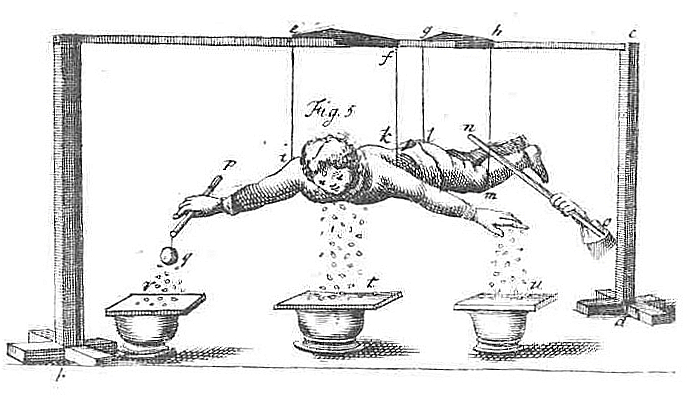
Stephen Gray was pursuing a long series of experiments with electricity. In producing charge on a long glass tube, he discovered in 1729 that he could communicate the electrical effect to other objects by direct connection. Using string, he could charge an object over 50 feet from the rubbed tube, but oddly enough some other substances, such as silk thread, would not carry charge. Brass wire would transmit charge even better. These experiments with charged strings and glass tubes revealed the properties of conduction, insulation, and transmission.

The depiction above shows one of Gray’s most famous experiments, in which he showed that a boy suspended by (insulating) silk cords could be charged (with the glass tube) and then as a (conducting) body could (electrostatically) attract small objects. Dramatic experiments such as these became quite well-known. Finally, after Newton’s death in 1732, Gray was admitted as a member of the Royal Society in recognition of his efforts, but he died destitute a few years later in 1736. [via]

[Image found here.]
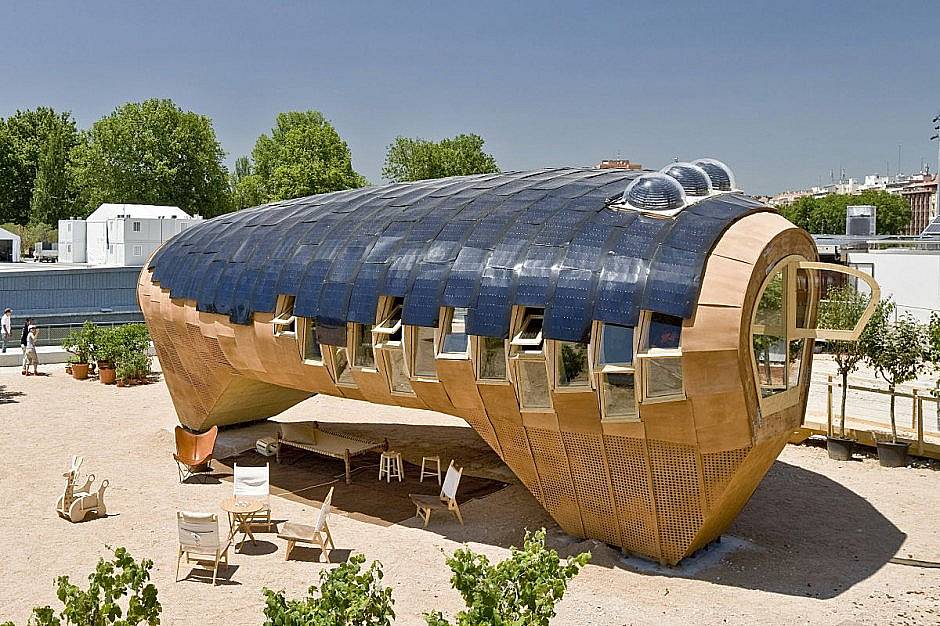
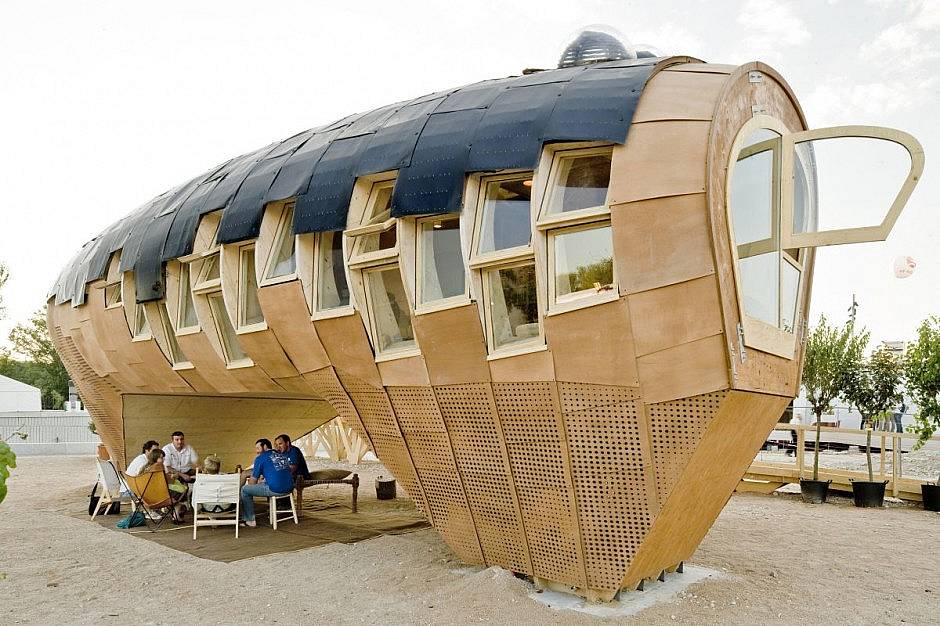
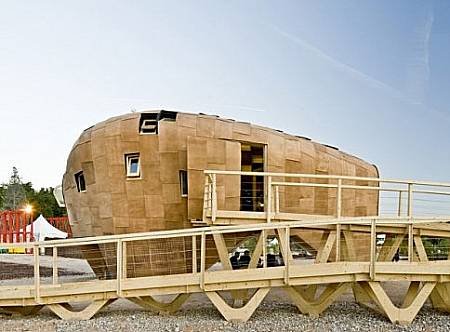
Casa de Coprolite

It’s a house. It’s a very ugly house. It’s a very ugly house created for a competition by people who have no concept of aesthetics, let alone standard construction practices. Here’s a partial description justifying the brilliance of the design:

DISTRIBUTED INTELLIGENCE
Faced with the typical house model of a “box construction” made up of standard industrialized components, we chose to build a clever house with systemic logic components, rising into what we call a distributed intelligence. This means that each component of the prototype contains the same level of technology, energy, structural, etc… With this we say that the logic of all is found in each of the parts, and not vice versa.

That is, distributed intelligence can be understood as the development in fusion research systems and materials, implying a change of procedures, multi functionality in the construction field. Opening the possiblities of digital parametric design from the traditional assembly of standardized industrial components of the home-computer.

In other words, they’ve not only designed one of the ugliest dwellings ever imagined, they’ve invented a brand new lexicon to justify it. Archibabble at its worst. Phew.

To be fair, the design is clever in one respect, that the shape was generated based upon solar tracking, that is, a computer model engineered a shape that maximizes the amount of surface area that receives direct sunlight throughout the day and throughout the year, thus determining the configuration of the solar panels. Win.

Unfortunately, the maximum efficiency is compromised by site orientation, its global latitude, and, um, unpredictable cloud cover. And it’s ugly. Fail.

[More info and images here via here.]