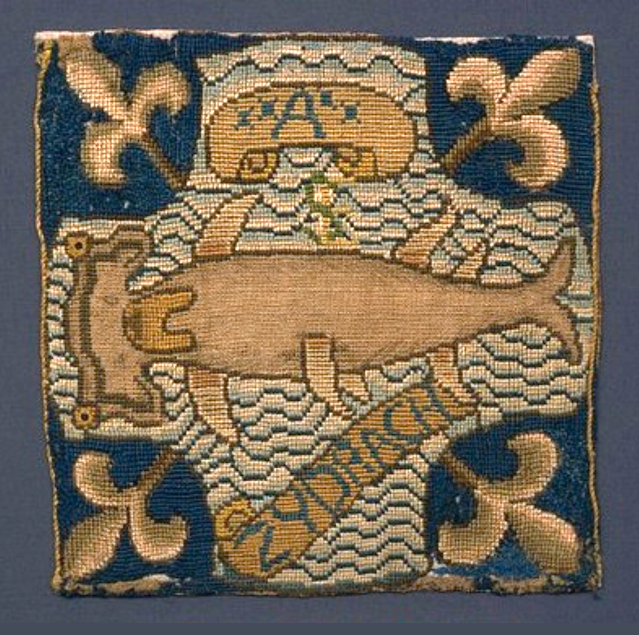
Mary Queen of Scots (1542-1587) embroidered these panels with Elizabeth Talbot, Countess of Shrewsbury (Bess of Hardwick) and ladies of the household, during her imprisonment. Mary may have intended the large central panel as a cushion for Philip Howard, Earl of Arundel (1557-1595), an English Catholic courtier imprisoned in London by Elizabeth I.
Kitty Viljoen captured elephants enjoying the snow in the Sneeuberg – which translates to Snow Mountain – on the Western Cape of South Africa, where snow set in late last week. She also photographed giraffes in snow in the Karoo semi-desert region. […] Snowfalls are not infrequent across parts of South Africa during the winter, though this cold snap comes late in the season. In July, parts of the country were blanketed after several days of heavy snowfall. The Guardian, 10 September 2018
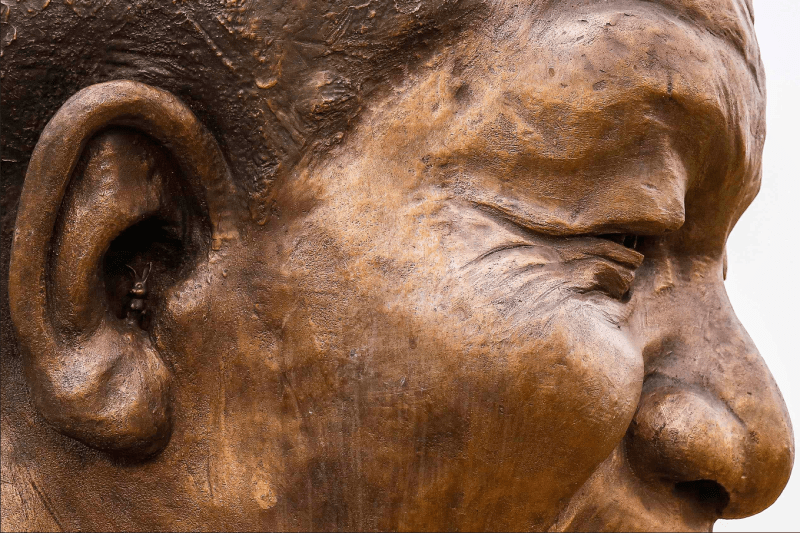
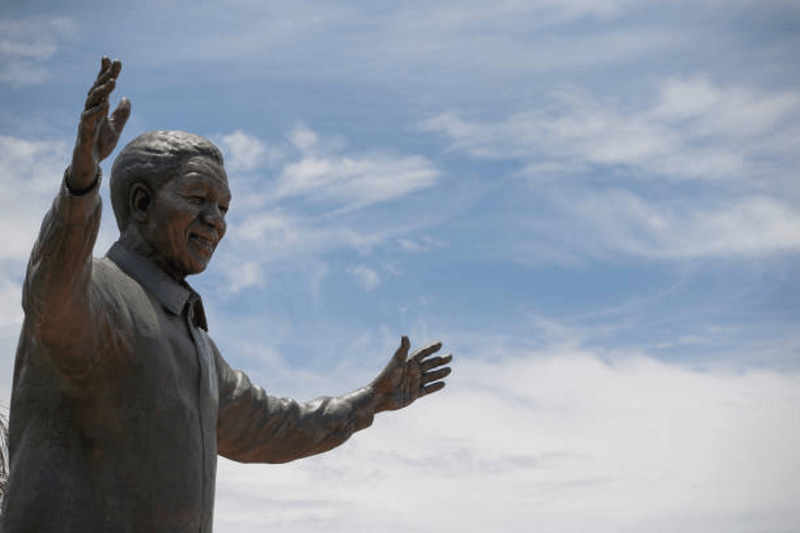
A 30-foot tall bronze statue of South African president Nelson Mandela was unveiled on the Union Grounds of Pretoria, South Africa, ten days after Mandela’s death in December 2013. The artists, Ruhan Janse van Vuuren and Andre Prinsloo, were not allowed to engrave their names on their work.
After the unveiling, government officials spotted a little brass rabbit inside Mandela’s right ear – the sculptors’ trademark. The Afrikaans word for rabbit is haas, and represents the speed at which their work was completed.
The government officials were not amused.
“We don’t think it’s appropriate because
Nelson Mandela never had a rabbit in his ear.” –Government spokesman Mogomotsi Mogodiri.
The sculptors were made to apologize and removed the offensive bunny.
[Image found here via here. Background story here.]
Tali Shaul and Hagit Morevski are friends from Even Yehuda in Israel. The pair were enthusiastic to work together on a creative project and were inspired by an article on alternative housing they read in a women’s magazine. They bought this 12 foot long bus from a scrapyard and have since completely redesigned the interior transforming it into this sophisticated luxury living space.
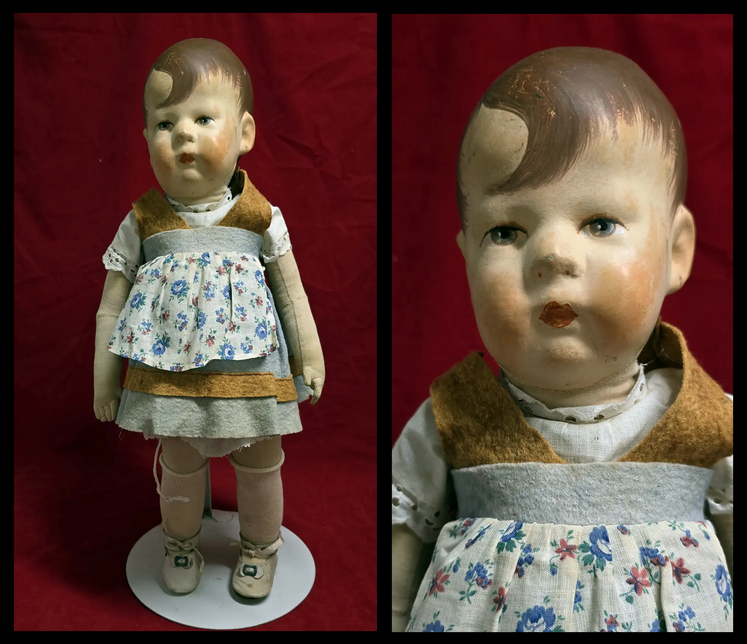
In the early 1900s a German, Max Kruse, criticized commercially made baby dolls as being “hideous” and refused to buy them for his kids, so his wife Käthe began making her own, modeling them after their own children. It became a hobby. She started taking orders for the handmade dolls, made of muslin stuffed with reindeer hair, and heads of painted papier maché.
The dolls were popular in Germany, and a 1910 exhibition in New York City brought her dolls international attention. In 1916 she received two orders (750 dolls) from a large New York toy retailer and she opened a successful manufacturing business.
After the deaths of two sons and her husband during WWII, Käthe Kruse began painting sorrowful faces on her dolls. Chancellor Hitler noticed and personally ordered her factory shut down in 1944 – the dolls didn’t look cheerful and optimistic enough for wartime (and she had refused to dismiss her Jewish employees).
In the 1950s her custom doll manufacturing business resumed, but with difficulty. It eventually recovered and her name brand is still going. Käthe Kruse passed away in 1968, just shy of her 85th birthday.
Antique Käthe Kruse “Little Hempel” dolls are collectors items (beware of counterfeits) and can fetch up to $1,200 0n Ebay.
[Images at top found here.]
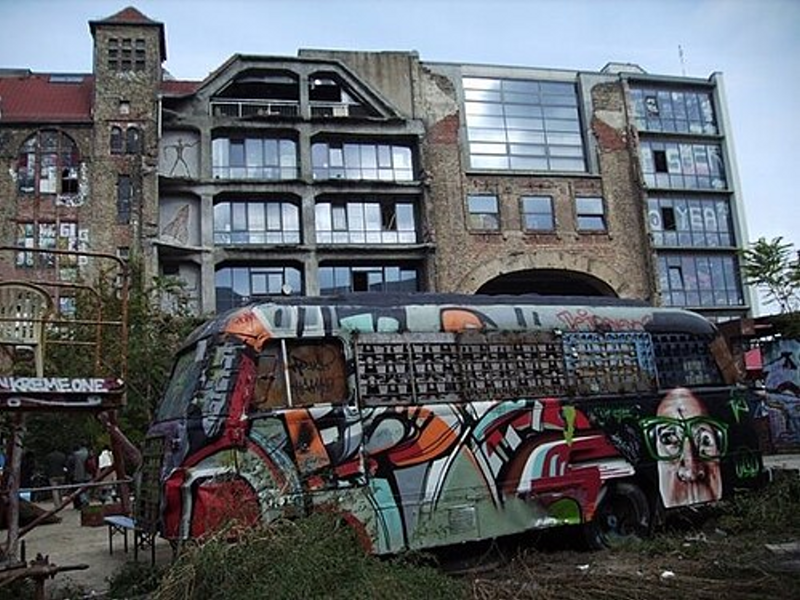
The former Kunsthaus Tacheles (Art House Tacheles) in Berlin, Germany, was a large art center and squatters’ building located in the Mitte district. The building sat in a “no man’s land” near the Berlin Wall during the communist era and was taken over by artists after the wall fell in November 1989. It served as a hub for studios, workshops, a nightclub, and a cinema, with its walls covered in extensive graffiti and street art. The art center was eventually evicted and closed in 2013, though the building itself remains a landmark of Berlin’s post-Wall art scene.
The Story of Kunsthaus Tacheles is an homage of sorts, with a documentary trailer that includes brief interviews with some of the artistic squatters.
[Images found in here; click for full-size. Caption from Google AI.]
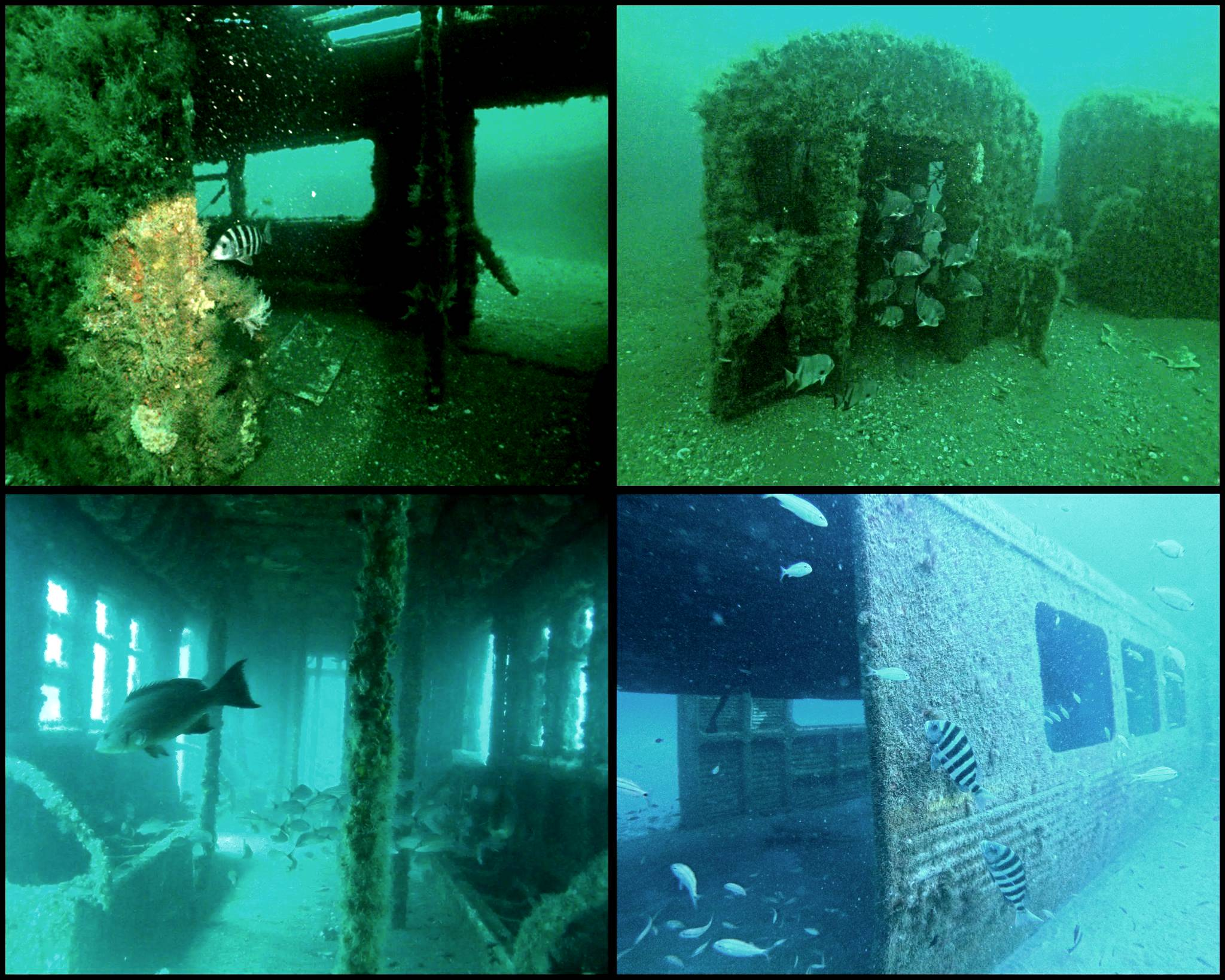
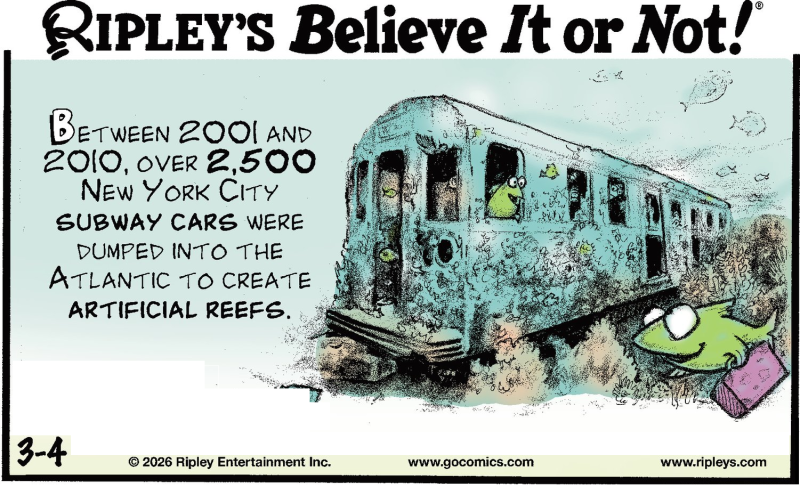
The New York City Metropolitan Transit Authority (MTA) deposited thousands of retired subway cars into the Atlantic, and used them to create artificial reefs off the coasts of New Jersey, Delaware, Maryland, Virginia, South Carolina, and Georgia.
The reefing program began with the mass decommissioning of “Redbird” cars in 2000, followed by the “B-Division/Brightliner” cars. From 2001 to 2003, 1,269 carbon steel Redbird cars were cleaned, stripped to the shells, and sunk. From 2008 to 2010, 1,311 of the stainless steel “B-Division/Brightliner” cars settled on the ocean floor. The program came to a close on Earth Day in 2010.
No passengers were harmed during the process (yet some complained.)
[Images found here in response to RBON on FB. More info here.]
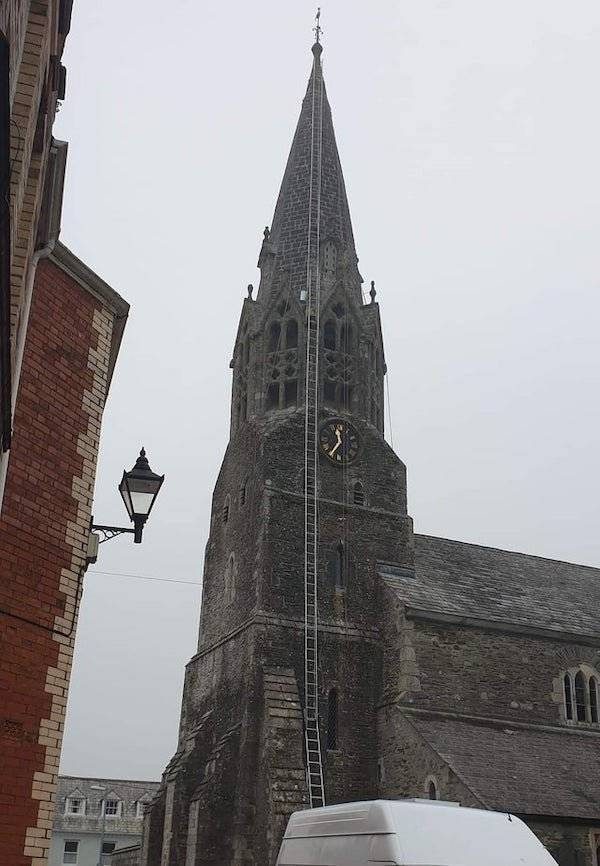
Church of St. Bartholomew (aka Saint Bart’s) is in the town of Lostwithiel, Cornwall, England. The church’s origins date back to the medieval period.
The first mention of the church appeared around 1220AD.
The earliest surviving part is the tower, which dates from the 13th century.
The main body of the present church was largely built around 1300AD (early 14th century in Early English Gothic style), with the spire added in the early 14th century, and other parts (like aisles) from the later 14th century.