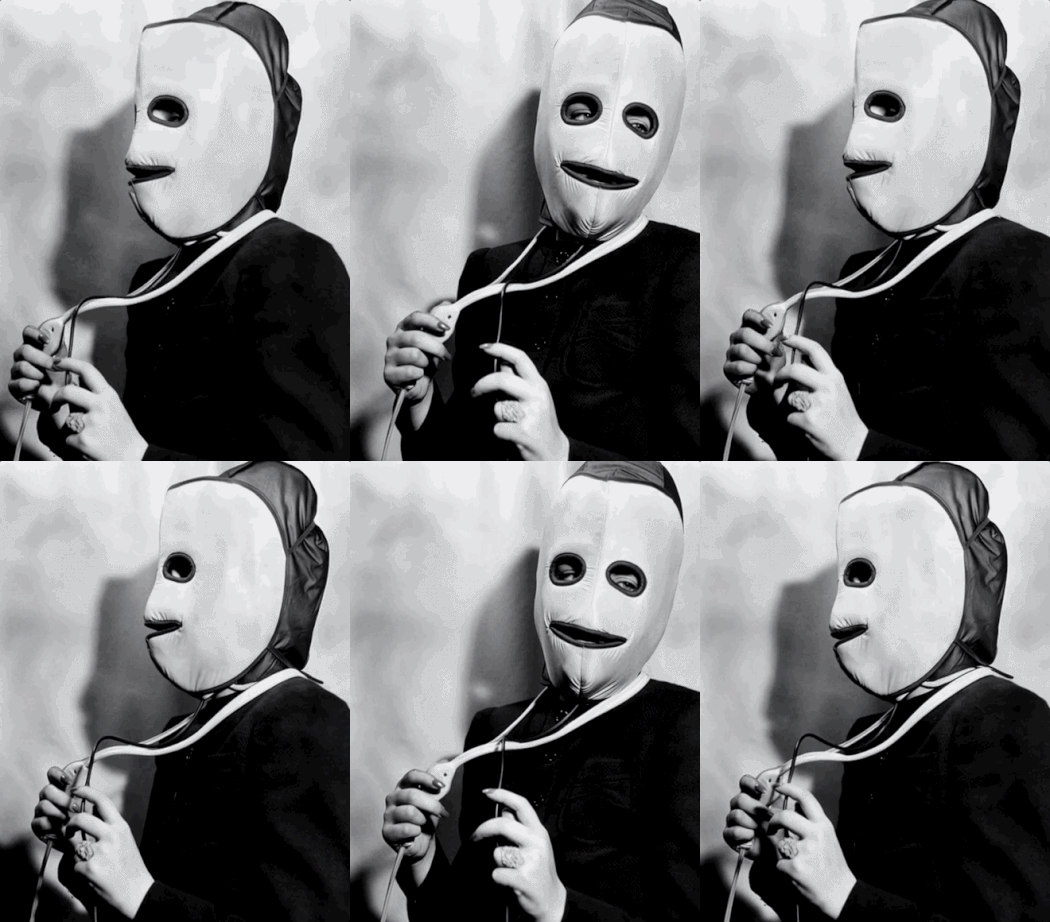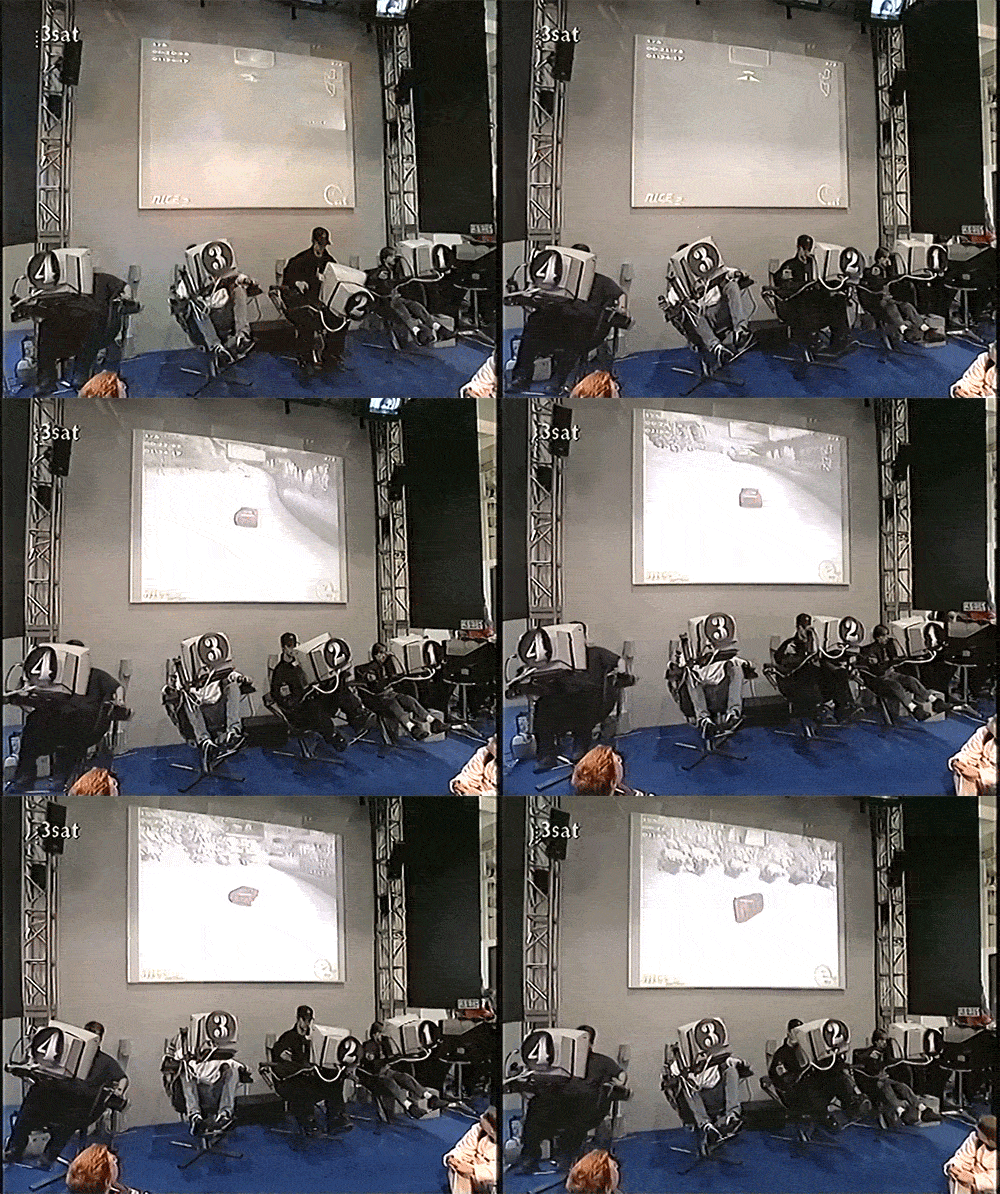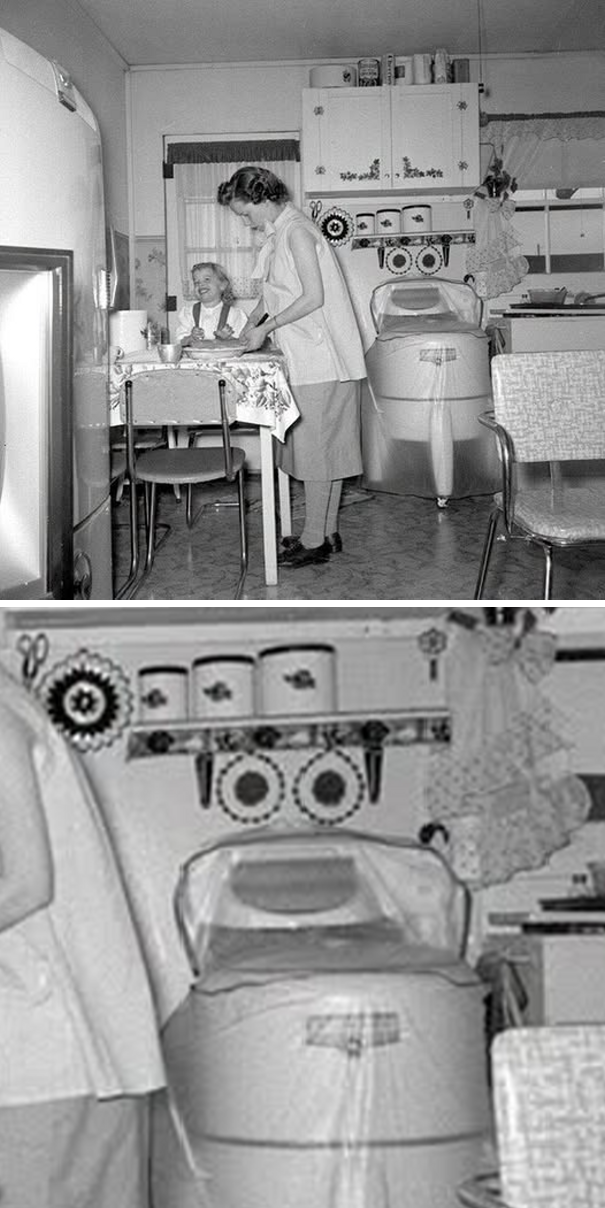
Norman Lerner worked as a fashion and commercial photographer in New York City from the early 50’s to the 70’s. He states that, “my photography did not end when the model left the studio. The city and its people were a part of me and I was part of them. Everything about the city fascinated me so it seemed only natural for me as a photographer to record the people and places in which I lived. When I left the studio the camera was always with me and it became an extension of my being. It was as natural as breathing.”
President and Mrs. Johnson and Vice President Humphrey watch Apollo 11 lift off at Cape Canaveral, July 1969. Photograph by Otis Imboden, National Geographic. [Found here.]
Four small nightmares. An abandoned stage set creates a terrifying forest setting for these visitors to a lonely theme park scene now closed. What horrible event was portrayed inside the forest with a bridge to nowhere but darker? – Jim Linderman / Dull Tool Dim Bulb
[Right click to enlarge; full size at link. Photos and description found here.]
The HP 9820A (AKA the 9800 series model 20) was HP’s third calculator. It made use of many of the same parts used to make the HP 9810. In fact, a number of PC boards were interchangeable between the two. There was, however, a major distinction: The HP 9820A was HP’s first algebraic calculator. It was a fully algebraic calculator with parentheses, precedence and even implied multiplication. (e.g., 2AB meant 2 times A times B.) The calculator displayed the expression as entered on a single line alphanumeric LED display (which showed 16 characters and scrolled as needed) and evaluated it when the EXECUTE key was pressed.
The HP 9820A was originally priced around $5,000 to $6,000 circa 1972, approximately $44K in 2026 USD.
[Unaltered image found here. Fake ad copy courtesy of Grok.]
Third Ave & Bowery, New York City, Tom Webb photographer, 1946.
Note that the shop advert is a screen; the windows are visible. It’s around the corner down the street somewhere (or was). Presumably the building shown is (or was) on Bowery Street. Original photo by Tom Webb found in here, overlaid colorized portion by unknown. [Related post here.]
In the early 1900s a German, Max Kruse, criticized commercially made baby dolls as being “hideous” and refused to buy them for his kids, so his wife Käthe began making her own, modeling them after their own children. It became a hobby. She started taking orders for the handmade dolls, made of muslin stuffed with reindeer hair, and heads of painted papier maché.
The dolls were popular in Germany, and a 1910 exhibition in New York City brought her dolls international attention. In 1916 she received two orders (750 dolls) from a large New York toy retailer and she opened a successful manufacturing business.
After the deaths of two sons and her husband during WWII, Käthe Kruse began painting sorrowful faces on her dolls. Chancellor Hitler noticed and personally ordered her factory shut down in 1944 – the dolls didn’t look cheerful and optimistic enough for wartime (and she had refused to dismiss her Jewish employees).
In the 1950s her custom doll manufacturing business resumed, but with difficulty. It eventually recovered and her name brand is still going. Käthe Kruse passed away in 1968, just shy of her 85th birthday.
Antique Käthe Kruse “Little Hempel” dolls are collectors items (beware of counterfeits) and can fetch up to $1,200 0n Ebay.
[Images at top found here.]