
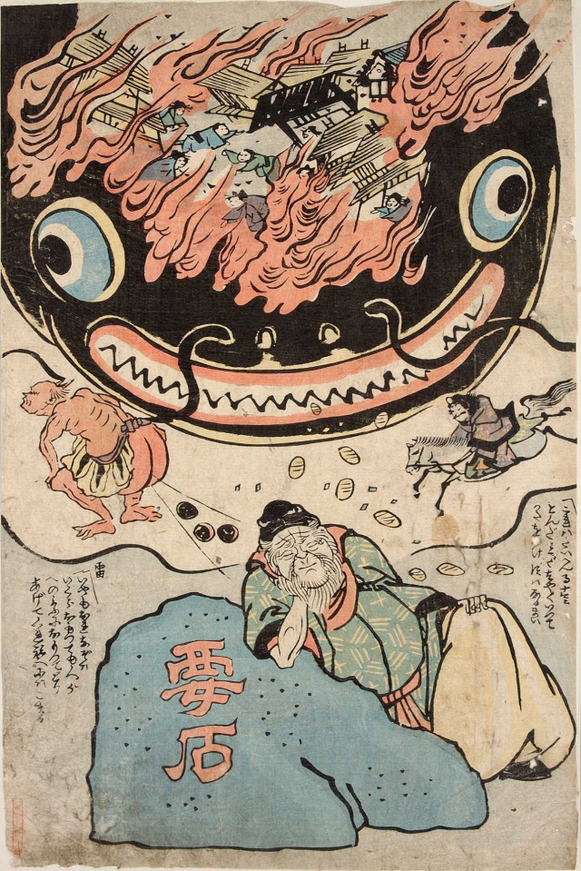
In November 1855, the Great Ansei Earthquake struck the city of Edo (now Tokyo), claiming 7,000 lives and inflicting widespread damage. Within days, a new type of color woodblock print known as namazu-e (lit. “catfish pictures”) became popular among the residents of the shaken city. These prints featured depictions of mythical giant catfish (namazu) who, according to popular legend, caused earthquakes by thrashing about in their underground lairs. In addition to providing humor and social commentary, many prints claimed to offer protection from future earthquakes.
Namazu are normally kept under control by the god Kashima using a large rock known as kaname-ishi. The Great Ansei Earthquake of 1855 is said to have occurred when Kashima went out of town and left Ebisu (god of fishing and commerce) in charge. In this print, the giant subterranean catfish unleashes destruction on the city while Ebisu sleeps on the job. Kashima rushes home on horseback while the city burns, and Raijin the thunder god defecates drums. Large gold coins fall from the sky, symbolizing the redistribution of wealth during the rebuilding phase.
[Full story and more images found here.]
 Tacky Raccoons