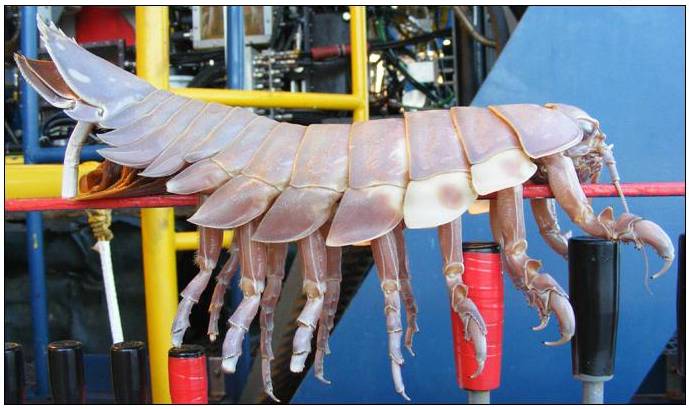
Giant Isopod! Yay!

These pups live in the deep, scrounging around in the darkness for rotted detritus, and occasionally they are captured on trawling lines. The one in the picture is about 2-1/2 feet long  and was found clinging to a submarine returning from an oil rig in the Gulf of Mexico. They’re related to common pillbugs, wood lice and lawn shrimp. Wikipiddlia has this:

“In northern Taiwan and other areas, they are common at seaside restaurants, served boiled and bisected with a clean lateral slice. The white meat, similar to crab or lobster in texture, is then easily removed.”

I’d eat it.

[Image with story found here. Crossposted here.]

You just can’t make this stuff up.

Giant Flying Piranhas_Fengtastic 090716

This is what Our President said will happen if we don’t nationalize the medical insurance industry immediately.  AM talk radio is next, followed by the hinternest…

YES.  REALLY.

[Image from Fengtastic. Dude.]

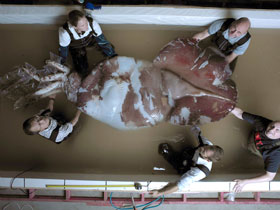
BIG ‘OL HONKIN’ SQUID

Seriously dead predator of the deep in preparation for the New Zealand Calamari Festival.

This Colossal Squid, caught in 2003, has been thawed and is being professionally dissected by The Society of Professional Squid Dissectors (TSPSD).  Video is promised by the second link below.

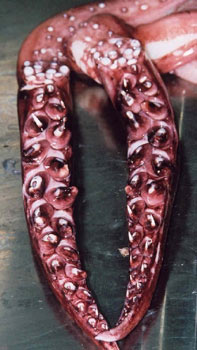
Tentacle clubs with swiveling hooks.

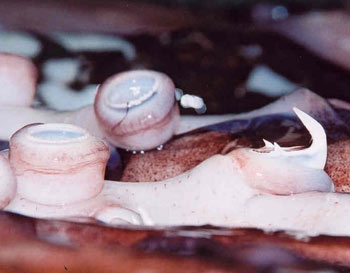
Mid-arm suckers and hook.

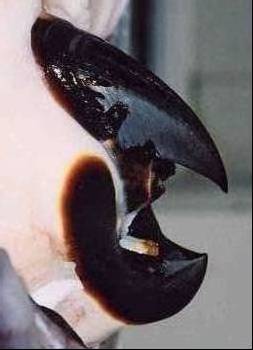
Squid Beak.
Prolly capable of cracking macadamia nuts if it wanted to.

[Appropriately enough, the source is Inky Circus; Images and captions in italics from The Museum of New Zealand. Related cephalopod posts here and  here.  Oh, yeah, and here, too.]

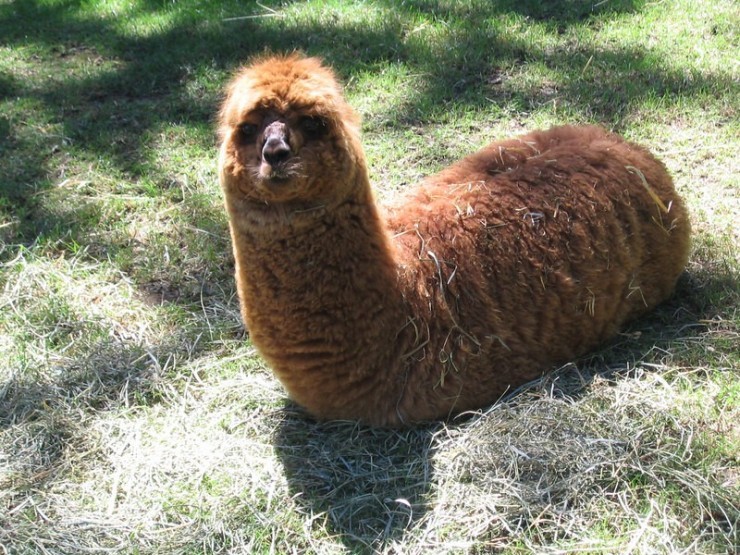
Giant Woolly Bear Caterpillar Discovered Near Las Cruces, NM, Predicts Global Warming for Decades to Come

ground-alapaca.jpg

Bunk grew up in the eastern U.S. Regional lore maintains that the severity of each coming winter can be predicted by examining the size of the brown band of the Woolly Bear Caterpillar:

According to legend, the severity of the upcoming winter can be judged by examining the pattern of brown and black stripes on woolly bear caterpillars–the larvae of Isabella tiger moths. If the brown stripe between the two black stripes is thick, the winter will be a mild one. A narrow brown stripe portends a long, cold winter.

This specimen from September shows no black bands at all, suggesting that the winter of 2007-08 will be one of the warmest on record and we’ll all be grilling hot dogs and burgers in January. You can find a couple of curious videos of these giant freaks of nature here.

Here’s a normal sized one, sleeping:

woolly-bear-caterpillar.jpg

[Quote from here. First image from a site with an unfortunately inappropriate name that we won’t post on this site. Second image from here.]