Abe– Here’s a start. https://www.history.com/topics/kent-state-shooting
It’s doesn’t tell the whole story, There were outside agitators who chose KSU over other midwestern universities for the disruption.
Bunk, I think you need to explain your thoughts on this. Here’s my take::
It was organized by the Governor; who wanted the young people to stop protesting the escalation of the Vietnam war to include invading Cambodia.
The goal was to get the students back to class, to have them stop disrupting societal norms and resisting authority.
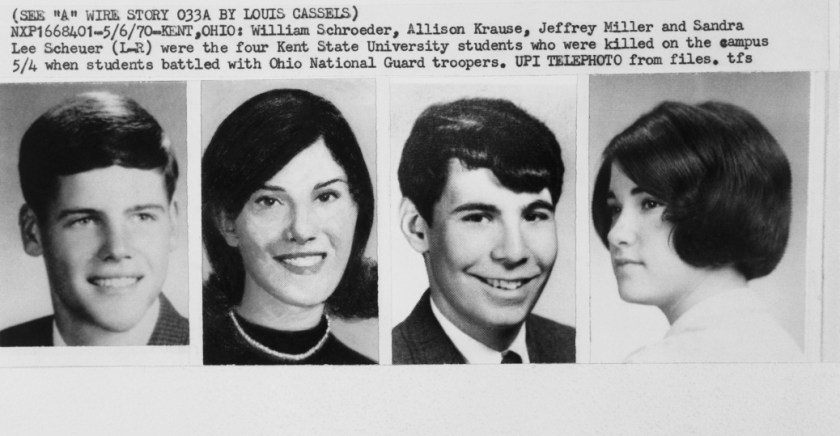
Only four students were killed; seven were wounded.
That particular protest was stopped dead (pun possibly intended). However:
Over 100 American campuses closed on strike each day for the remainder of the school week after the Kent massacre
Ultimately, nearly 5,000,000 American students joined the national student strike
More than 500 American colleges & universities were closed by mid-May
Over 900 colleges & universities closed before the end of May, 1970
Approximately 80% of US colleges & universities experienced protests
Approximately 175,000 faculty members joined the protests
Over 35,000 national guardsmen were called into action in 16 states
30 ROTC buildings were burned or bombed by students prior to May 16, 1970
At the University of Wisconsin alone, 27 firebombings were reported
In May, 1970, across America, there were more firebombings & arsons than in any month since those government statistics began
Highways, expressways, city streets & railroad tracks were barricaded across America
On May 9, 1970, over 150,000 protesters, mostly students, converged on Washington, DC,. President Nixon, Henry Kissinger & others were kept in the White House protected by armed military guards with machine guns. The White House was surrounded & protected by a cordon of bumper-to-bumper buses
On May 16, 1970, BUSINESS WEEK magazine warned:”This is a dangerous situation. It threatens the whole economic & social structure of the nation.”
President Nixon’s memoir reveals the days after Kent State as “…among the darkest” days of his presidency
Former Supreme Court Justice Earl Warren said Kent State sparked the worst American crisis since the Civil War
100 art museums & galleries closed in solidarity with the student strike
According to the WALL STREET JOURNAL, over 500 US GI’s deserted each day in May, 1970
According to THE LONDON EXPRESS & US military intelligence, each week in May, 1970, over 60 US troops in Vietnam (mostly African-Americans) crossed over & joined enemy forces–the Viet Cong
After the Kent massacre, entire companies of US troops in Vietnam refused orders to invade Cambodia
In solidarity with the US students, numerous US soldiers wore black armbands and refused to fight any longer in Vietnam
Combat refusal became so common that entire companies were established in Vietnam to include the many non-fighting soldiers
Vietnam Veterans Against the War, a group of anti-war veterans returned from Vietnam, increased their membership by 50% in May, 1970–they led many campus protests & strikes after Kent State
On Armed Forces Day, May 16,1970, there were marches, rallies & rock festivals at 22 US military bases involving 43 different anti-war veterans’ groups
Military leaders cancelled Armed Forces Day events at 28 other bases due to planned anti-war demonstrations
1,000 marched through the streets near Fort Hood, Texas, shouting “Avenge Kent State!”
Only a few days after Kent State, President Nixon limited the US invasion of Cambodia to 35 kilometers inside Cambodia & two months maximum duration
Within two months the US troops withdrew from Cambodia
Only a few months after Kent State, Congress rescinded the Gulf of Tonkin resolution authorizing US forces in southeast Asia
Congress passed the WAR POWERS ACT preventing the President from invading a country without the approval of Congress
According to Nixon’s aide H.R. Haldeman, “Kent State marked the beginning of Nixon’s downhill slide toward Watergate”:
In June, 1970, Nixon assembled his intelligence, military & law enforcement team to address his perceived threats from the anti-war & student activists, members of Congress, media personalities, authors, & even Hollywood celebrities (his “enemies list”). The abuses of Nixon’s repressive teams of agents & provacateurs led to Watergate and his resignation.
The anti-war & counter-cultural movements still blossomed:
The first gay-pride week was launched in New York on June 22, 1970, and the Gay Liberation Front sponsored their first national conference in San Francisco in August, 1970
Radical feminists emerged strongly & the women’s movement blossomed in the summer of 1970. Their symbol of the clenched fist inside the biological sign for women was created for their August 27, 1970, national women’s strike
On August 29, 1970, the Chicano Moratorium of Mexican-Americans against the war was viciously attacked by Los Angeles police–three died & hundreds were injured and arrested
In September, 1970, the Black Panthers sponsored a convention that attracted over 10,000 activists from various US nationalities & issues
Public opinion polls indicated the tide of public opinion shifted against the war
Nixon and the Pentagon were forced to seriously de-escalate the war, remove US troops & negotiate peace in Southeast Asia
The voting age was soon reduced from 21 to 18 in America for the first time.
Too much there to address in one blog post. My point was that the violence at Kent State was not a grassroots movement of students, but the result of outside agitators including the communist-backed Students for a Democratic Society. That’s not speculation – the agitators themselves admitted it.
As for the war itself, it was almost won in 1968. North Vietnam had had enough, and then Walter Kronkite described the Tet Offensive as a massive loss for the US when in fact it was a debilitating loss for the NVA. That’s not speculation either.
Nixon was right in going into Cambodia in 1970. Although Cambodia claimed to be a neutral country (mostly due to impoverishment), that’s where the Ho Chi Minh Trail ran, the primary supply line for the Viet Cong.
There’s an ongoing series of articles that’s running in Military (www.milmag.com) entitled “Comrades In Arms – How the Ameri-Cong won the Viet Nam War against the Common Enemy: America,/em>” by Roger Canfield Ph.D. Fascinating stuff. I knew about some of it, but had no idea how far the infiltration went.
The difference between the ‘agitators’ and the Government forces; one persuaded by communicating, one persuaded at gunpoint. No matter your feeling about the political realities, US troops shooting citizens – or even threatening them at gunpoint? That’s not good.
Flag wavers celebrating the open murder of unarmed civilians by armed military.
So patriotic
Too bad it wasn’t these flag wavers gunned down in cold blood


 Tacky Raccoons
I don’t understand this and I cannot find any links for an explanation. Thank you.
LikeLike
Abe– Here’s a start. https://www.history.com/topics/kent-state-shooting
It’s doesn’t tell the whole story, There were outside agitators who chose KSU over other midwestern universities for the disruption.
LikeLike
Bunk, I think you need to explain your thoughts on this. Here’s my take::
It was organized by the Governor; who wanted the young people to stop protesting the escalation of the Vietnam war to include invading Cambodia.
The goal was to get the students back to class, to have them stop disrupting societal norms and resisting authority.
Only four students were killed; seven were wounded.
That particular protest was stopped dead (pun possibly intended). However:
Over 100 American campuses closed on strike each day for the remainder of the school week after the Kent massacre
Ultimately, nearly 5,000,000 American students joined the national student strike
More than 500 American colleges & universities were closed by mid-May
Over 900 colleges & universities closed before the end of May, 1970
Approximately 80% of US colleges & universities experienced protests
Approximately 175,000 faculty members joined the protests
Over 35,000 national guardsmen were called into action in 16 states
30 ROTC buildings were burned or bombed by students prior to May 16, 1970
At the University of Wisconsin alone, 27 firebombings were reported
In May, 1970, across America, there were more firebombings & arsons than in any month since those government statistics began
Highways, expressways, city streets & railroad tracks were barricaded across America
On May 9, 1970, over 150,000 protesters, mostly students, converged on Washington, DC,. President Nixon, Henry Kissinger & others were kept in the White House protected by armed military guards with machine guns. The White House was surrounded & protected by a cordon of bumper-to-bumper buses
On May 16, 1970, BUSINESS WEEK magazine warned:”This is a dangerous situation. It threatens the whole economic & social structure of the nation.”
President Nixon’s memoir reveals the days after Kent State as “…among the darkest” days of his presidency
Former Supreme Court Justice Earl Warren said Kent State sparked the worst American crisis since the Civil War
100 art museums & galleries closed in solidarity with the student strike
According to the WALL STREET JOURNAL, over 500 US GI’s deserted each day in May, 1970
According to THE LONDON EXPRESS & US military intelligence, each week in May, 1970, over 60 US troops in Vietnam (mostly African-Americans) crossed over & joined enemy forces–the Viet Cong
After the Kent massacre, entire companies of US troops in Vietnam refused orders to invade Cambodia
In solidarity with the US students, numerous US soldiers wore black armbands and refused to fight any longer in Vietnam
Combat refusal became so common that entire companies were established in Vietnam to include the many non-fighting soldiers
Vietnam Veterans Against the War, a group of anti-war veterans returned from Vietnam, increased their membership by 50% in May, 1970–they led many campus protests & strikes after Kent State
On Armed Forces Day, May 16,1970, there were marches, rallies & rock festivals at 22 US military bases involving 43 different anti-war veterans’ groups
Military leaders cancelled Armed Forces Day events at 28 other bases due to planned anti-war demonstrations
1,000 marched through the streets near Fort Hood, Texas, shouting “Avenge Kent State!”
Only a few days after Kent State, President Nixon limited the US invasion of Cambodia to 35 kilometers inside Cambodia & two months maximum duration
Within two months the US troops withdrew from Cambodia
Only a few months after Kent State, Congress rescinded the Gulf of Tonkin resolution authorizing US forces in southeast Asia
Congress passed the WAR POWERS ACT preventing the President from invading a country without the approval of Congress
According to Nixon’s aide H.R. Haldeman, “Kent State marked the beginning of Nixon’s downhill slide toward Watergate”:
In June, 1970, Nixon assembled his intelligence, military & law enforcement team to address his perceived threats from the anti-war & student activists, members of Congress, media personalities, authors, & even Hollywood celebrities (his “enemies list”). The abuses of Nixon’s repressive teams of agents & provacateurs led to Watergate and his resignation.
The anti-war & counter-cultural movements still blossomed:
The first gay-pride week was launched in New York on June 22, 1970, and the Gay Liberation Front sponsored their first national conference in San Francisco in August, 1970
Radical feminists emerged strongly & the women’s movement blossomed in the summer of 1970. Their symbol of the clenched fist inside the biological sign for women was created for their August 27, 1970, national women’s strike
On August 29, 1970, the Chicano Moratorium of Mexican-Americans against the war was viciously attacked by Los Angeles police–three died & hundreds were injured and arrested
In September, 1970, the Black Panthers sponsored a convention that attracted over 10,000 activists from various US nationalities & issues
Public opinion polls indicated the tide of public opinion shifted against the war
Nixon and the Pentagon were forced to seriously de-escalate the war, remove US troops & negotiate peace in Southeast Asia
The voting age was soon reduced from 21 to 18 in America for the first time.
LikeLike
Dan–
Too much there to address in one blog post. My point was that the violence at Kent State was not a grassroots movement of students, but the result of outside agitators including the communist-backed Students for a Democratic Society. That’s not speculation – the agitators themselves admitted it.
As for the war itself, it was almost won in 1968. North Vietnam had had enough, and then Walter Kronkite described the Tet Offensive as a massive loss for the US when in fact it was a debilitating loss for the NVA. That’s not speculation either.
Nixon was right in going into Cambodia in 1970. Although Cambodia claimed to be a neutral country (mostly due to impoverishment), that’s where the Ho Chi Minh Trail ran, the primary supply line for the Viet Cong.
There’s an ongoing series of articles that’s running in Military (www.milmag.com) entitled “Comrades In Arms – How the Ameri-Cong won the Viet Nam War against the Common Enemy: America,/em>” by Roger Canfield Ph.D. Fascinating stuff. I knew about some of it, but had no idea how far the infiltration went.
LikeLike
Bunk – my info from here: http://alancanfora.com/
He was there, one of the wounded.
The difference between the ‘agitators’ and the Government forces; one persuaded by communicating, one persuaded at gunpoint. No matter your feeling about the political realities, US troops shooting citizens – or even threatening them at gunpoint? That’s not good.
LikeLike
Dan—
So your opinion is that the agitators / arsonists / felons should have been allowed to proceed? Take Alan Canfora with a grain of salt.
LikeLike
Flag wavers celebrating the open murder of unarmed civilians by armed military.
So patriotic
Too bad it wasn’t these flag wavers gunned down in cold blood
LikeLike
John– No idea what you’re talking about. Nobody is celebrating that.
LikeLike