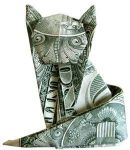
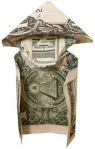
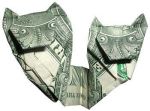
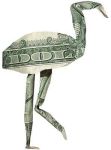
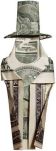
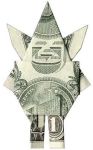
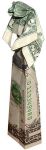
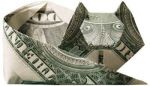
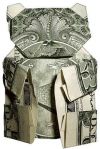
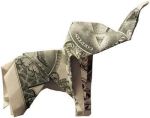
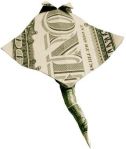
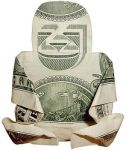
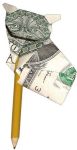
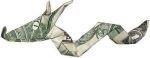
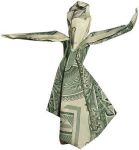
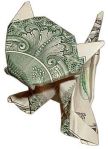
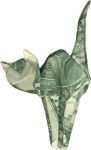
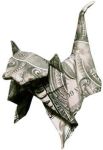
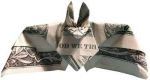
Make your US Dollars worth much more than a Euro with these simple patterns. (Clicky on each image for more bigossifyingness.)
I don’t know the original source for these. They were emailed to me by friend Dan S, a civil engineer who had a lemon-sized tumor taken out of his noggin after he went under the knife for surgery a coupla years ago for a late-blooming congenital heart defect. True story, and he’s okay now.
Proof that the news media is biased. Forget the pier! I wanna know more about the bear!
[From SPLHCS.]
“Stupid dopey trash-rap a-comin’, comin’ up. Whoa.
Guy in a bear suit, with rappin’ comin’ up. Whoa.
Patient wit da video, be patient comin’ up. Whoa.
Babe Magnet, bear suit, all be comin’ up. Whoa.”
[Lyrics from “In’ Up-Whoa” by MC Daddy BS, Strutts Music 2008.]
Actually SoulJah Bear is kinda funny to me, especially with the video editor’s comments. Kinda almost cool, just like The Howlies. Here’s SoulJah Bear’s obvious inspiration:
Bunky remembers Dancing Bear in black and white. Bunky really liked Captain Kangaroo. Bunky really didn’t like Scary Dancing Bear.
“Pachuca Sunrise,” Minus the Bear.
Daughter Bunkessa heard this song as “I Come From a Land of Hunger.” It’s got a bear in it, too.
FinPeng started up his online oddness a year ago today with “Sgt. Peppers’ Lonely Hearts Club Soda.” Go give him a “howdy” and a beer, here. While you’re at it, check out his new site, “The Awesome Squad.” That’s where FinPeng, I and several others will buy YOU a beer… as long as you behave yourself.
Now Ebo Walker was born in Kentucky, and raised by his daddy on a hillside farm,
He took up fiddle playing just for fun, that’s the last work that Ebo Walker done.
Well Ebo Walker, he left Kentucky
’cause Ebo’s daddy said durn your hide,
You won’t plant corn, and you won’t make hay,
you sit on the porch and play that thing all day.
Well Ebo Walker, he walked and he fiddled and he walked and he fiddled and he fiddled till he died,
But I’ve heard tell when the winds is down and the moon shines bright, and the leaves are brown,
You can hear old Ebo fiddlin’ all around.
The Dillards (as the Darling Boys) on the Andy Griffith Show, around 1960 sumpm.
Pure Oddness. Now for something completely different.
FZ on the Mike Douglas Show, 1976, playing “Black Napkins” with the studio band. Amazing benign culture clash. [This is part one of a two part interview… kinda slow to load, and we may have linked to this one before. So what.]
Zappa’s “Black Napkins” live on MTV’s Halloween BFD, 1981.



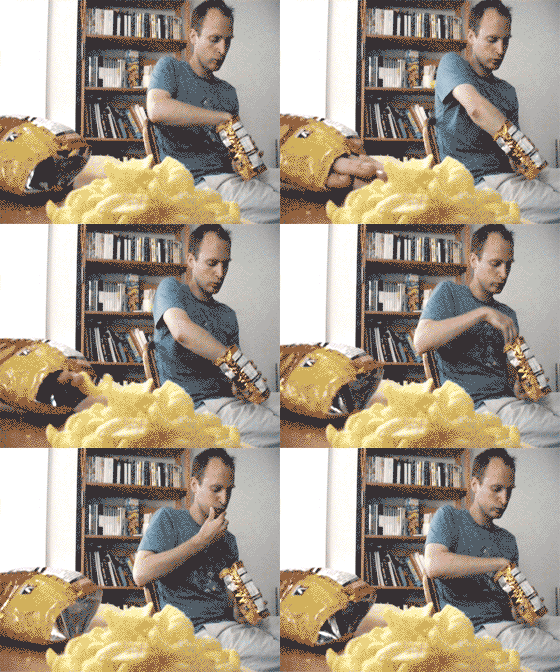



 Tacky Raccoons