
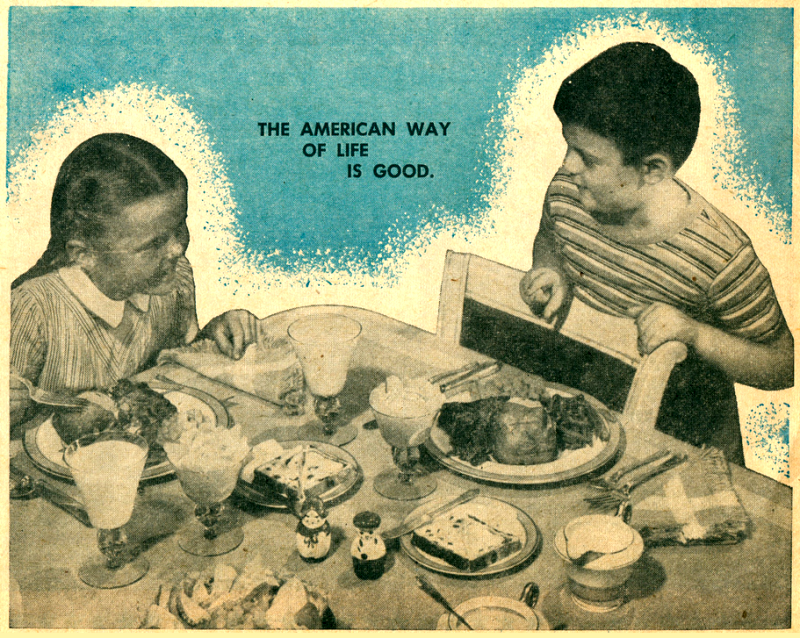

Category: Retro & Vintage
Fish Heads
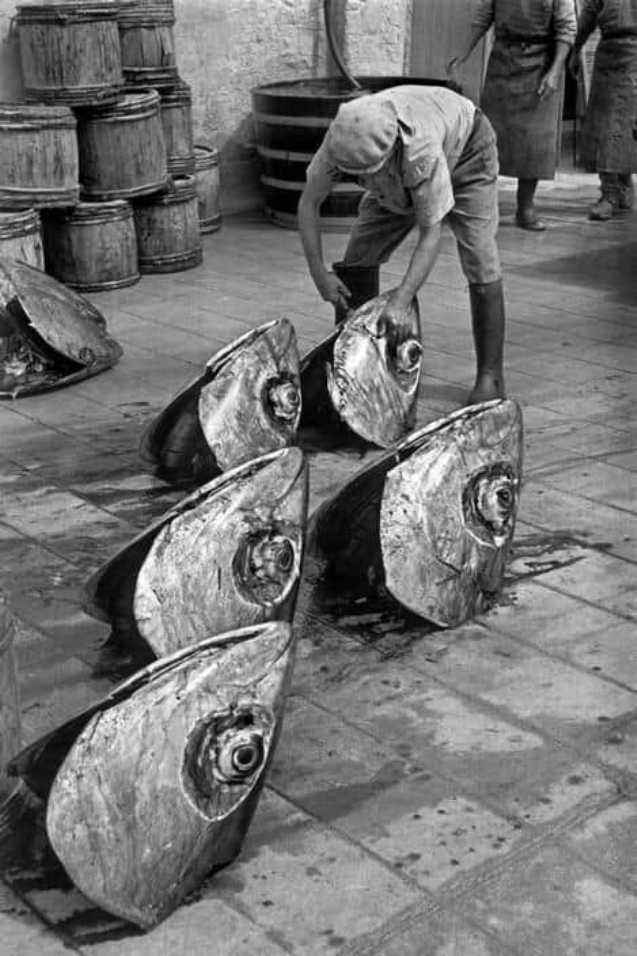
[Found here.]
Furciferous Hot Links
Stormy Weather, Reigning Sound (2019) Great garage punk cover of the classic torch song Stormy Weather, first recorded by Ethel Waters in 1933.
Isometric NYC [via Nav Tour].
MOBOT [via Thompson, blog].
Some people get all the credit.
A lot of drama in a little suburb.
Veering left [via Memo Of The Air].
Huang Yung-Fu, the village painter.
A Daily Cloud [via Everlasting Blört.]
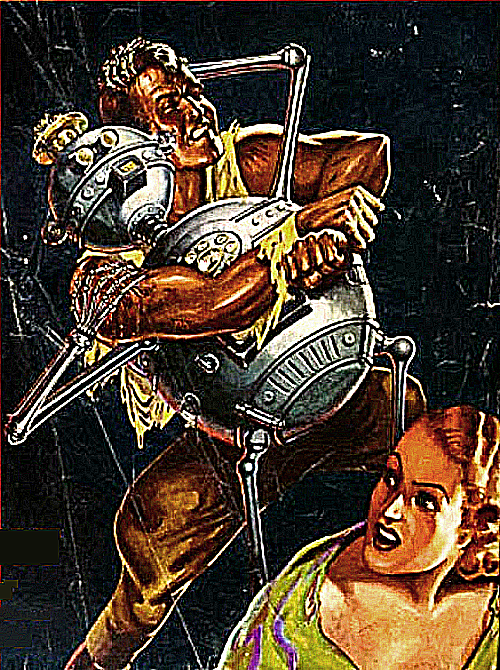
[Image at top: Cropped and modified image of cover art of the May 1939 issue of Fantastic Adventures, found in here.]
From the Archives: 1 year ago. 5 years ago. 10 years ago. 15 years ago.
Window People
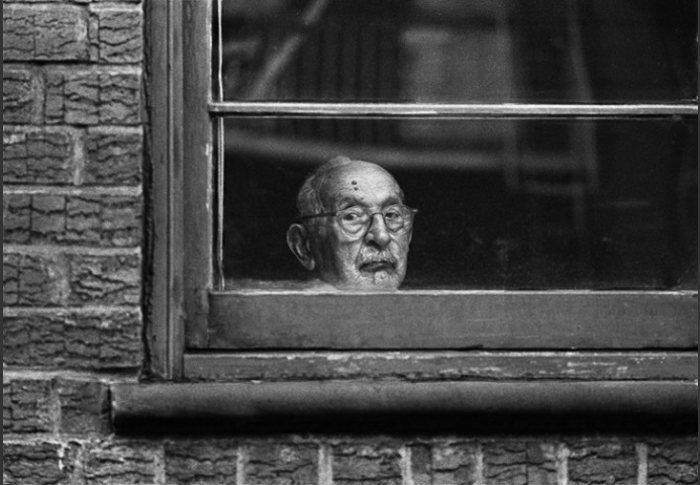


Norman Lerner worked as a fashion and commercial photographer in New York City from the early 50’s to the 70’s. He states that, “my photography did not end when the model left the studio. The city and its people were a part of me and I was part of them. Everything about the city fascinated me so it seemed only natural for me as a photographer to record the people and places in which I lived. When I left the studio the camera was always with me and it became an extension of my being. It was as natural as breathing.”
[Found here.]
LOOK UP


President and Mrs. Johnson and Vice President Humphrey watch Apollo 11 lift off at Cape Canaveral, July 1969. Photograph by Otis Imboden, National Geographic. [Found here.]
Space Bimbos V


[Found around the interverse. More Space Bimbos here.]
Panhygrous Hot Links
Man Child, Sam The Sham (1963)
Domingo Samudio, aka Sam The Sham, released his first 45rpm in 1962, a cover of Chick Willis’ Betty and Dupree; the B side was Man Child. Two years later, Sam The Sham & The Pharoahs’ hit Wooly Bully made No. 1 in Billboard’s Top 100 for 1965. Contrary to popular belief, Samudio wasn’t of Mexican ancestry; he was of Basque/Apache descent.
The Mystic Knights of the Oingo Boingo.
Tower Records 1971 [via Everlasting Blört.]
The new recipe smells just like the old recipe.
Headbanging with glasses [via Thompson, blog].
Chaco Chachalaca, Dickcissel & 98 more cool bird names
[via Memo Of The Air].
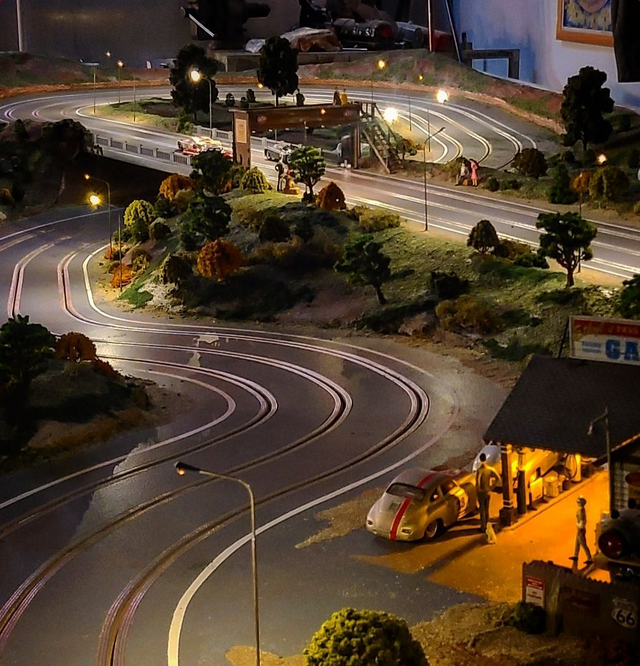
[Image at top: Slotville Gas by Jarel Built found here via here.]
From the Archives: 1 year ago. 5 years ago. 10 years ago. 15 years ago.
Young Family in a Dark Forest at a Bridge To Nowhere


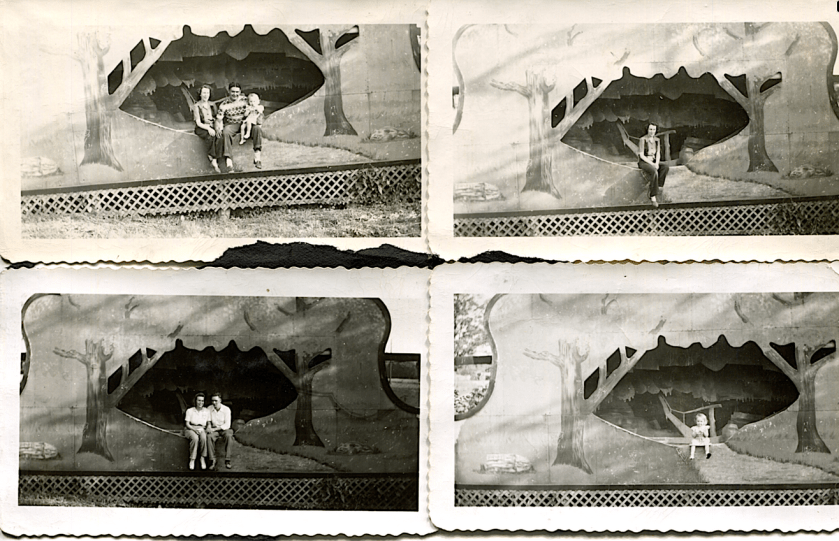
Four small nightmares. An abandoned stage set creates a terrifying forest setting for these visitors to a lonely theme park scene now closed. What horrible event was portrayed inside the forest with a bridge to nowhere but darker? – Jim Linderman / Dull Tool Dim Bulb
[Right click to enlarge; full size at link. Photos and description found here.]
Math is Fun.
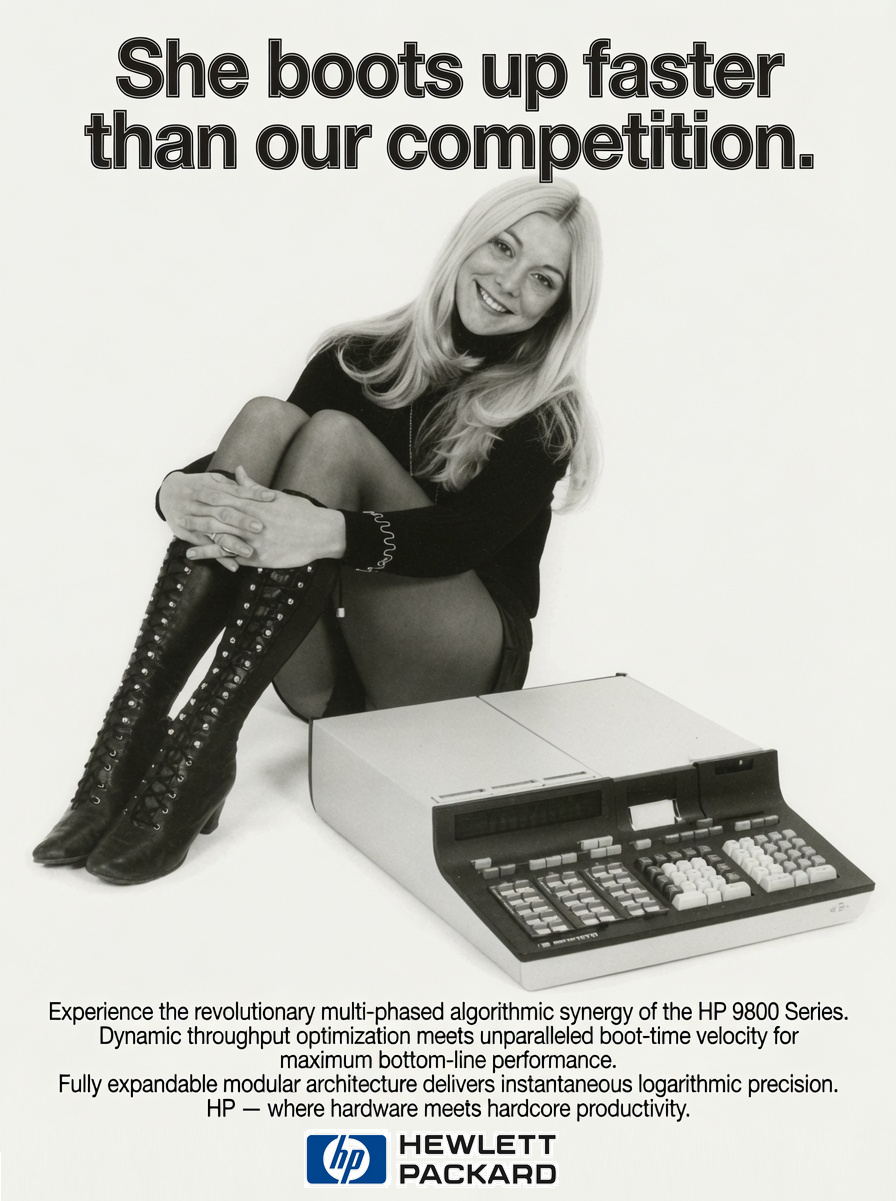
The HP 9820A (AKA the 9800 series model 20) was HP’s third calculator. It made use of many of the same parts used to make the HP 9810. In fact, a number of PC boards were interchangeable between the two. There was, however, a major distinction: The HP 9820A was HP’s first algebraic calculator. It was a fully algebraic calculator with parentheses, precedence and even implied multiplication. (e.g., 2AB meant 2 times A times B.) The calculator displayed the expression as entered on a single line alphanumeric LED display (which showed 16 characters and scrolled as needed) and evaluated it when the EXECUTE key was pressed.
The HP 9820A was originally priced around $5,000 to $6,000 circa 1972, approximately $44K in 2026 USD.
[Unaltered image found here. Fake ad copy courtesy of Grok.]
Third Ave & Bowery, NYC
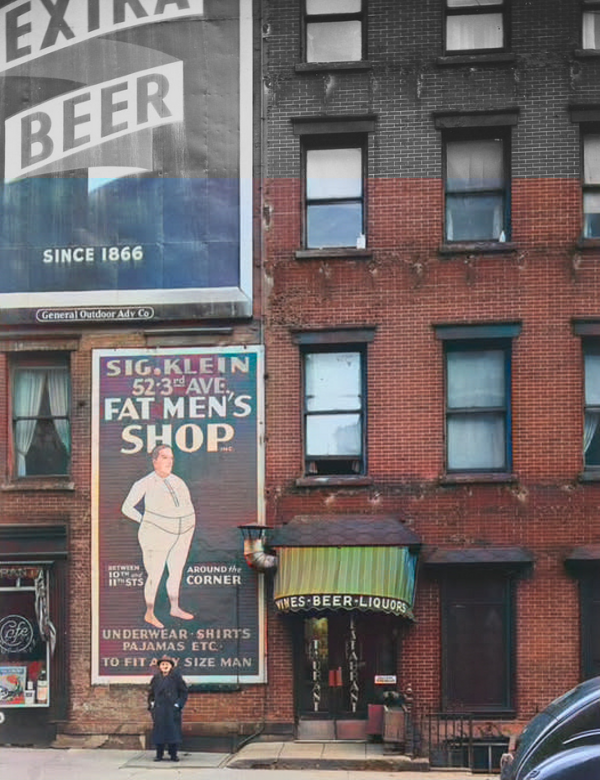
Note that the shop advert is a screen; the windows are visible. It’s around the corner down the street somewhere (or was). Presumably the building shown is (or was) on Bowery Street. Original photo by Tom Webb found in here, overlaid colorized portion by unknown. [Related post here.]

