[Found here.]

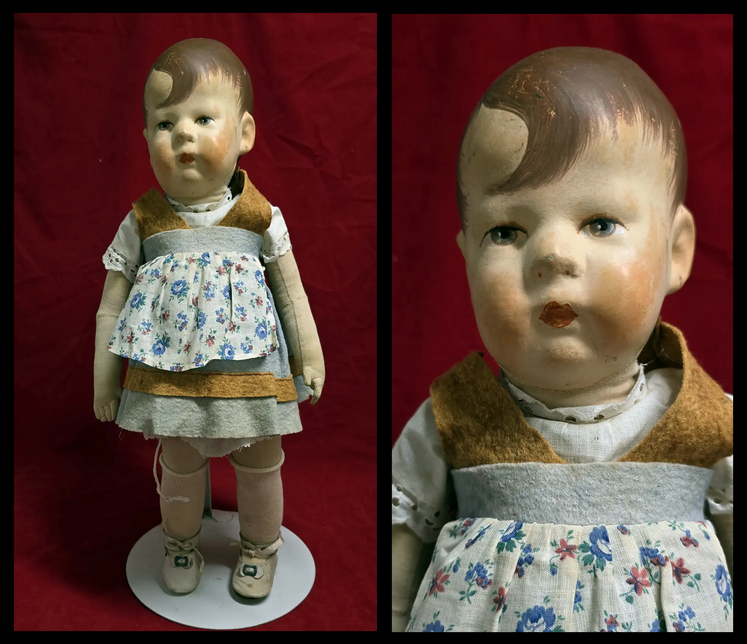
In the early 1900s a German, Max Kruse, criticized commercially made baby dolls as being “hideous” and refused to buy them for his kids, so his wife Käthe began making her own, modeling them after their own children. It became a hobby. She started taking orders for the handmade dolls, made of muslin stuffed with reindeer hair, and heads of painted papier maché.
The dolls were popular in Germany, and a 1910 exhibition in New York City brought her dolls international attention. In 1916 she received two orders (750 dolls) from a large New York toy retailer and she opened a successful manufacturing business.
After the deaths of two sons and her husband during WWII, Käthe Kruse began painting sorrowful faces on her dolls. Chancellor Hitler noticed and personally ordered her factory shut down in 1944 – the dolls didn’t look cheerful and optimistic enough for wartime (and she had refused to dismiss her Jewish employees).
In the 1950s her custom doll manufacturing business resumed, but with difficulty. It eventually recovered and her name brand is still going. Käthe Kruse passed away in 1968, just shy of her 85th birthday.
Antique Käthe Kruse “Little Hempel” dolls are collectors items (beware of counterfeits) and can fetch up to $1,200 0n Ebay.
[Images at top found here.]


[Found here.]
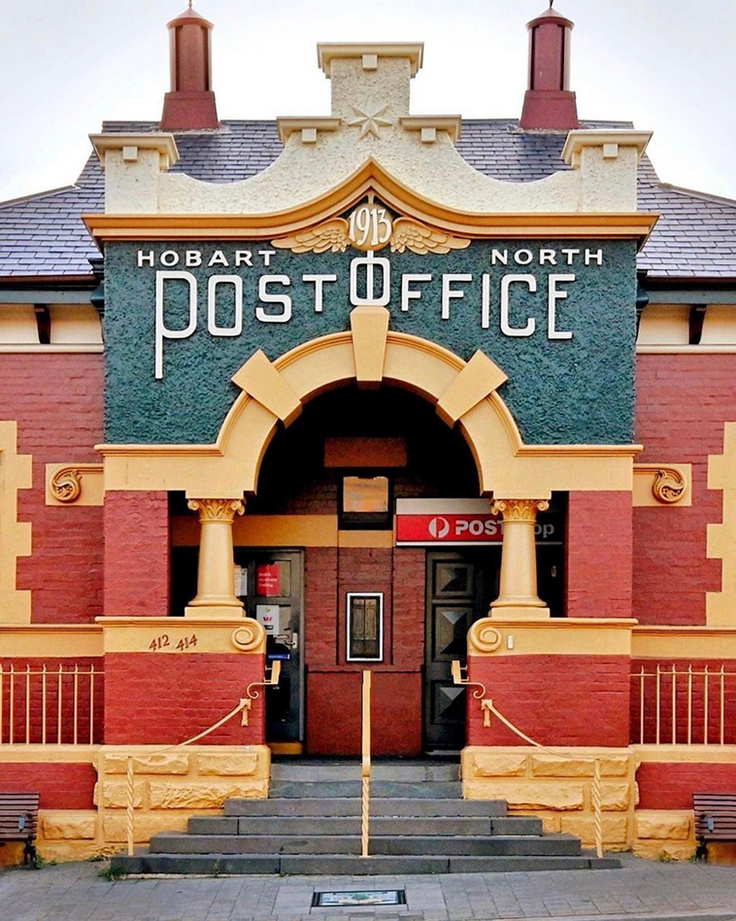
North Hobart Post Office was built on part of a seven-acre (nearly 3 hectares) allotment originally granted to John Swan who was considered by many of colonial Hobart’s social elite to be a man with a shady past – he had been acquitted of ‘receiving’ at the Old Bailey in London. By the late 1820s, Swan had a successful haberdashery business and his family acquired several properties in North Hobart including this allotment. By the 1840s a cottage and extensive garden had been built, but by the 1890s, the allotment was subdivided and Swan Street created. In 1903, the Commonwealth acquired the site for the new post office (refer to http://www.hobartcity.com.au).
Surveyed in 1912 and built in 1913, the North Hobart Post Office was constructed to a design by the Commonwealth Department of Works and Railways under the aegis of architect, J S Murdoch although Warmington cites the Department of Works’ Office (Warmington, 1987). The scope of this citation has precluded further research to clarify architectural attribution. An early (undated) postcard of the building depicts it as freestanding on a large corner site, flanked either side by picturesque picket fencing and landscaped areas.
A Hand Fulla Gimme, Dizzy Gillespie Sextet feat. Alice Roberts (1946)Alto Saxophone – Sonny Stitt
Bass – Ray Brown
Drums – Kenny Clark
Piano – Al Haig
Vibraphone – Milt Jackson
Trumpet & Writer- Dizzy Gillespie
A brief search of the internet provided no info on vocalist Alice Roberts.
Saved by karma [via Thompson, blog].
The Bouali System [via Memo Of The Air].
Greek Revival subway vent [via Everlasting Blört].
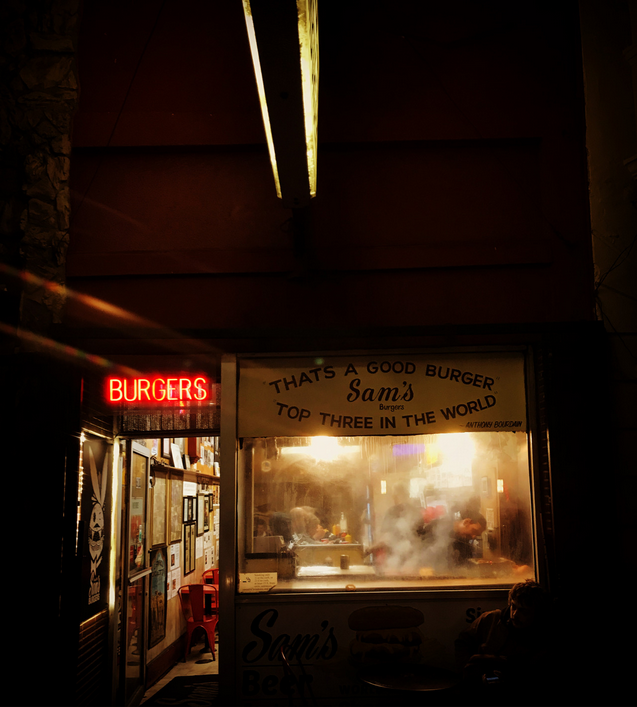
[Top image: Sam’s Pizza via Dancing Wombat.]
From the Archives: 1 year ago. 5 years ago. 10 years ago. 15 years ago.
[Found here.]

[Found here. Photo by Neal Sanche, Butler Farm, Red Deer, Alberta, Canada, 2008.]