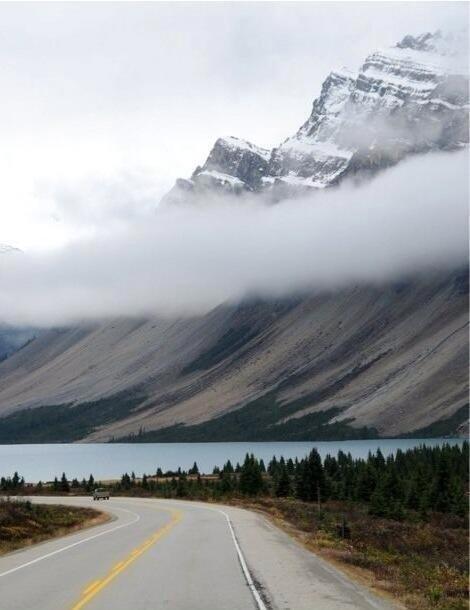
That’s not a spliced photo.
[Found here, no source given.]
Update: Waterfowl Lake, Banff National Park, Alberta, Canada.
Source – Getty Images.
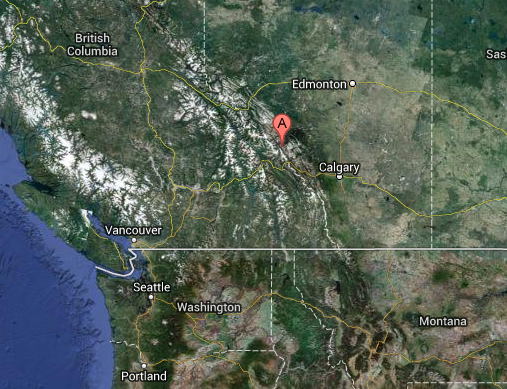

That’s not a spliced photo.
[Found here, no source given.]
Update: Waterfowl Lake, Banff National Park, Alberta, Canada.
Source – Getty Images.
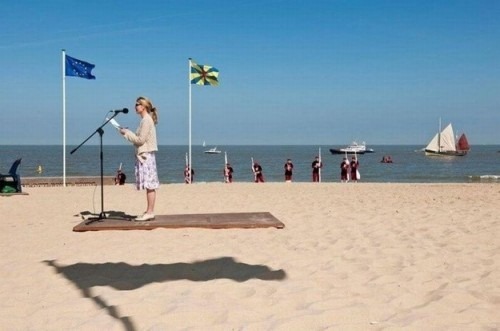
[Found in here.]

[Found here.]
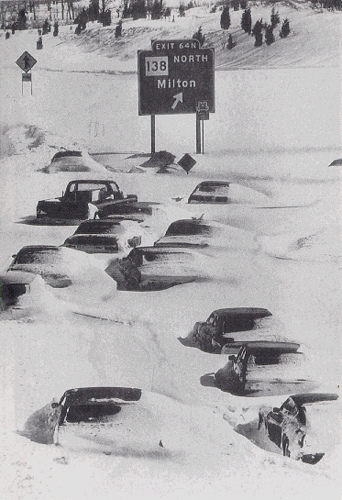
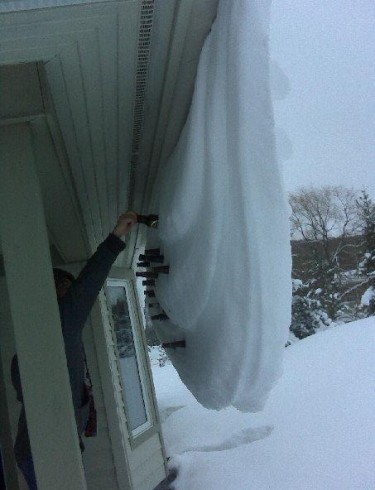
1978 blizzard, south of Boston, Massachusetts.
The February blizzard was the second one to hit that year, the first being The Great Blizzard of January. I remember that one – whiteout and windchill of -60F. Assuming your car could even start there was nowhere to drive, and my 5 minute walk to get bread and bologna was brutal.
[Found in here.]
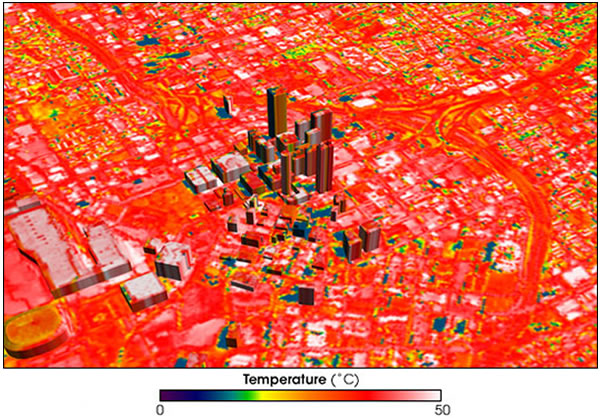
On May 11-12, 1997, NASA used a specially outfitted Lear Jet to collect thermal data on metropolitan Atlanta, Georgia. Nicknamed “Hot-Lanta” by some of its residents, the city saw daytime air temperatures of only about 26.7 degrees Celsius (80 degrees Fahrenheit) on those days, but some of its surface temperatures soared to 47.8 degrees Celsius (118 degrees Fahrenheit). In this image, blue shows cool temperatures and red shows warm temperatures. Pockets of especially hot temperatures appear in white.
50 degrees Celsius = 120 degrees Fahrenheit = flat roof temperature. The red zone looks to be about 30C = 86F, but these are surface temperatures. The 1997 survey recorded air temperatures of 80 F – exactly the average high temp for May for Atlanta. Cool.
In other words, it’s a peachy image of normal surface temperatures for the city.
[Found here.]
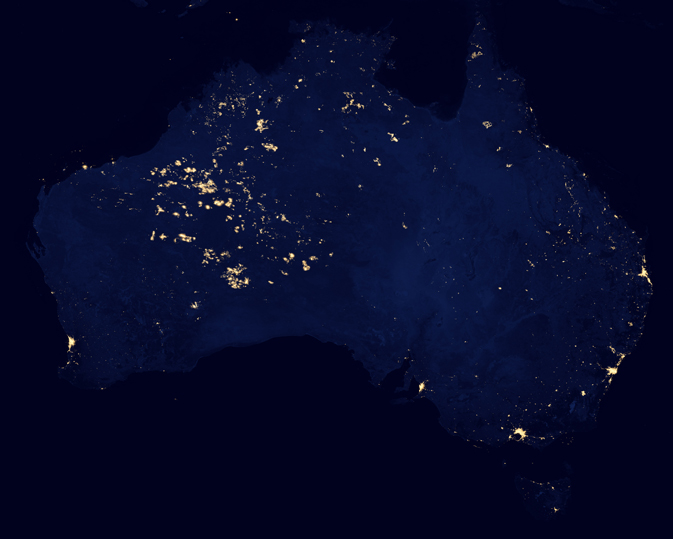
(West Poondongwalla, Australia) – Strutts News Services
Only the wealthiest of the wealthy were able to keep their lights on when the entire power grid of Australia failed just days ago, and no one knows why the continent now glows blue. Some locals blame global warming, while others point accusatory fingers at The Mayans for their probably prophetic Calendar of Doom that caused the utility companies of Oz to hit Ctrl-Alt-Delete simultaneously and just for the hell of it.
In any case, the well-to-do panicked wisely and moved inland to avoid the rising seas that subsequently swamped the coastal regions.
[There’s more info here that can’t possibly be true. Related post here.]

[Found here.]
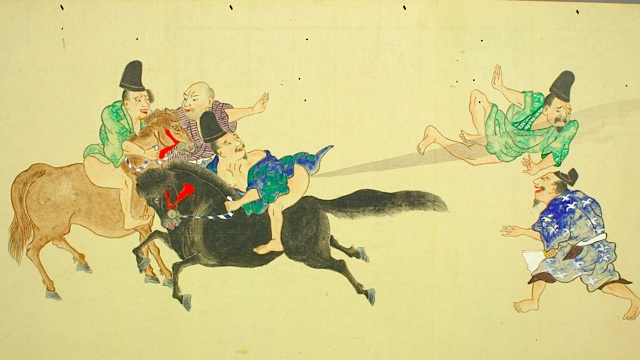
Approximately 200-400 years ago during Japan’s Edo period, an unknown artist created what is easily the most profound demonstration of human aesthetics ever committed to parchment. I am referring to He-Gassen a.k.a. 屁合戦 a.k.a. “the fart war.” In this centuries-old scroll, women and men blow each other off the page with typhoon-like flatulence. Toss this in the face of any philistine who claims that art history is boring.
Ancient Japanese art is a gas – but my hoax-alert antennae are twitching with the reference to “He-Gassen” even though I found another source here.
[Found here, h/t Princess Natasha.]

[Found here.]
 Tacky Raccoons