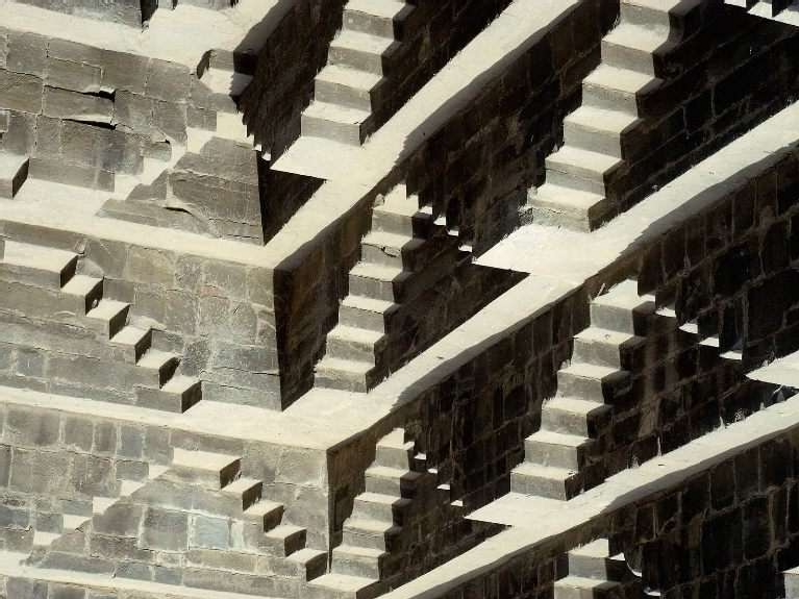
Chand Baouri

Nope. That’s not a charcoal study by MC Escher. That’s a photograph. Eyeball it for a bit – story and more photos below the break.

Continue reading “Chand Baouri”

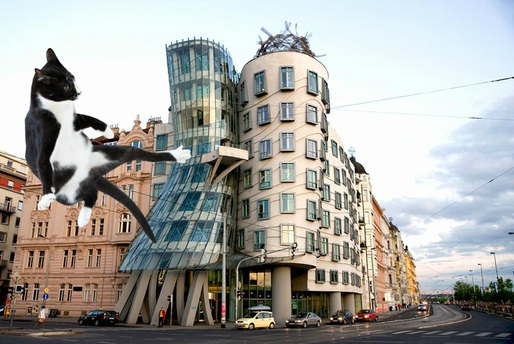
ArCATecture

[More here.]

The Squeezit Building

All it’s missing is a giant turquoise squirt of toothpaste.

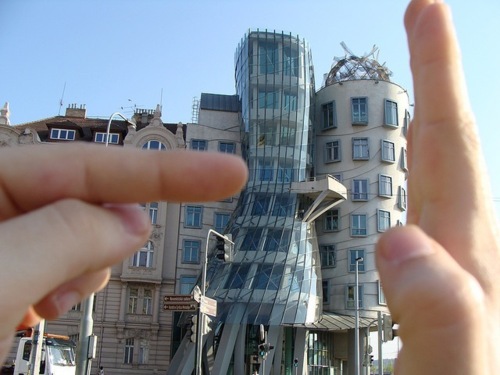
The Rasin Building, also known as the Dancing House or the Fred and Ginger Building, designed by Frank Gehry in Prague, Czech Republic.

Frank Gehry is an award winning Architect whose firm specializes in designs that resemble wadded up pieces of paper. Not too long ago, such buildings would have been almost impossible to engineer, let alone to construct. With the advent of computer-aided design that can be linked electronically to fabrication software, expensive wadded-up pieces of paper can be made on a large scale.

[Image found here, building description from here.]

Casa de Coprolite

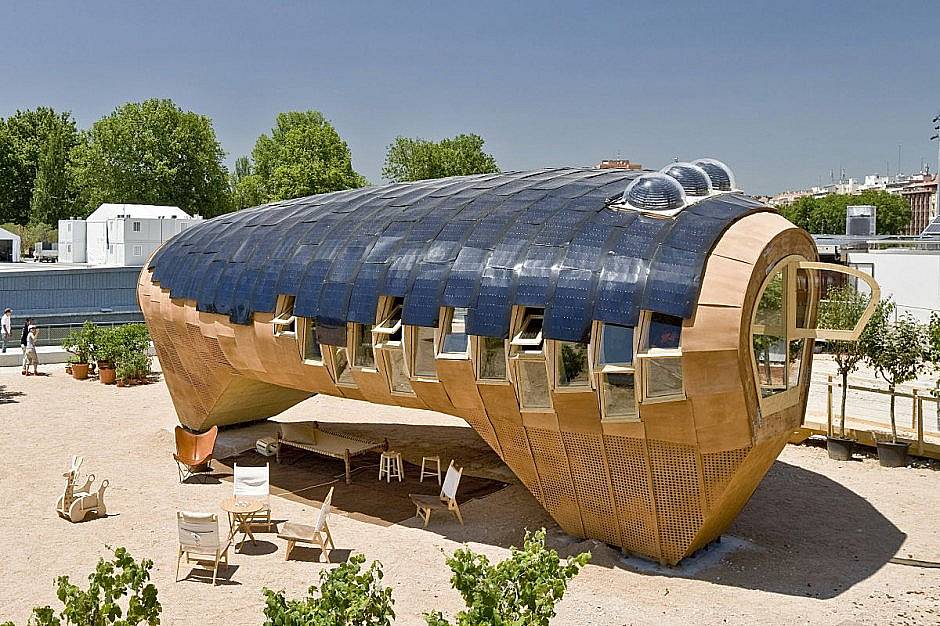
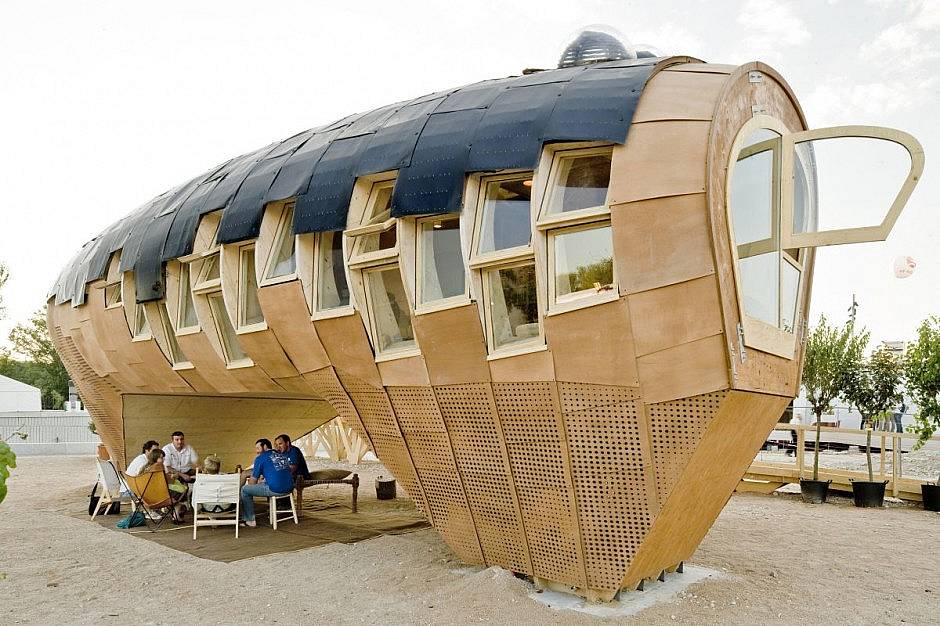
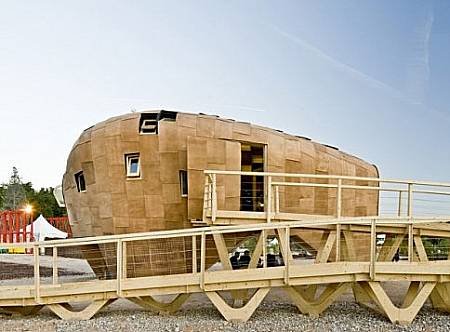
It’s a house. It’s a very ugly house. It’s a very ugly house created for a competition by people who have no concept of aesthetics, let alone standard construction practices. Here’s a partial description justifying the brilliance of the design:

DISTRIBUTED INTELLIGENCE
Faced with the typical house model of a “box construction” made up of standard industrialized components, we chose to build a clever house with systemic logic components, rising into what we call a distributed intelligence. This means that each component of the prototype contains the same level of technology, energy, structural, etc… With this we say that the logic of all is found in each of the parts, and not vice versa.

That is, distributed intelligence can be understood as the development in fusion research systems and materials, implying a change of procedures, multi functionality in the construction field. Opening the possiblities of digital parametric design from the traditional assembly of standardized industrial components of the home-computer.

In other words, they’ve not only designed one of the ugliest dwellings ever imagined, they’ve invented a brand new lexicon to justify it. Archibabble at its worst. Phew.

To be fair, the design is clever in one respect, that the shape was generated based upon solar tracking, that is, a computer model engineered a shape that maximizes the amount of surface area that receives direct sunlight throughout the day and throughout the year, thus determining the configuration of the solar panels. Win.

Unfortunately, the maximum efficiency is compromised by site orientation, its global latitude, and, um, unpredictable cloud cover. And it’s ugly. Fail.

[More info and images here via here.]

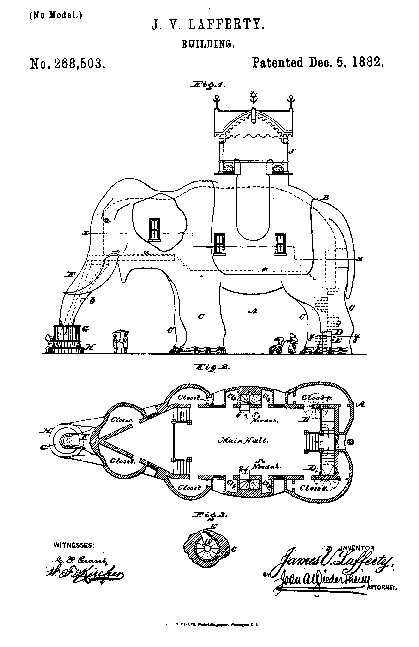
J. V. Lafferty’s Contribution to the World

lucy-the-elephant-building2_amazing-building.jpg

If you lived here, you wouldn’t need to keep your old trunk in the attic. From Wikipedia:

James Vincent de Paul Lafferty, Jr. (1856-1898) was an Irish-American inventor, most famous for his construction of Lucy the Elephant. Born to Irish parents in Philadelphia, Pennsylvania, he received Patent Number 268503, on December 5, 1882 to protect his original invention, as well as any animal-shaped building. Broke by 1887, he was forced to sell her and in 1898, he died, and is buried in the cemetery of St. Augustine’s Catholic Church in Philadelphia.

This architectural gem was built, still stands, and is protected as an historical something or other. [You can see Lucy in all her glory in this previous post.]