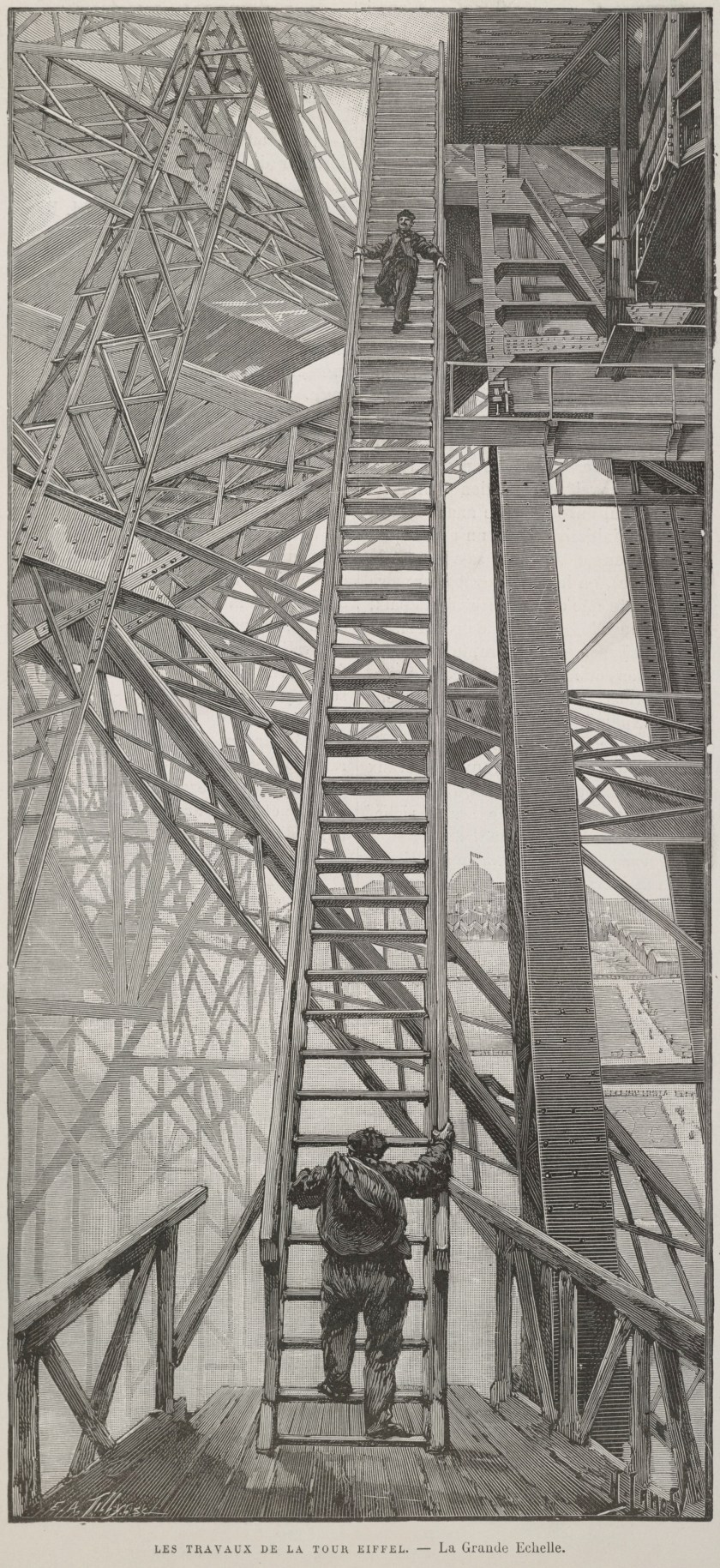
Henri Lanos (1859-1929) was a French illustrator and painter whose work appeared in French magazines like La Caricature, L’Illustration and Je Sais Tout. He was member of the Société des Artistes Français (French Artists Society).
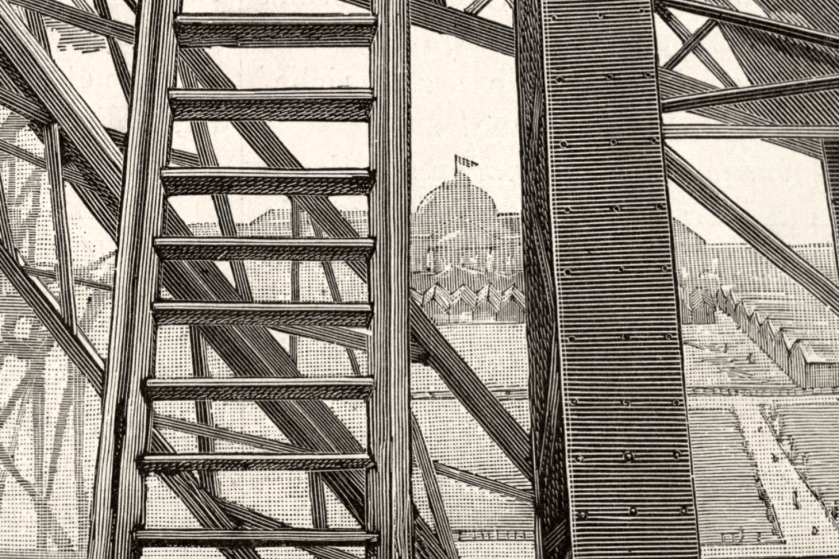
3-point perspective (1 point + zenith + right) is awesome. He even detailed rivets, and showed Paris’ 1855 Palais de l’Industrie in the distance.
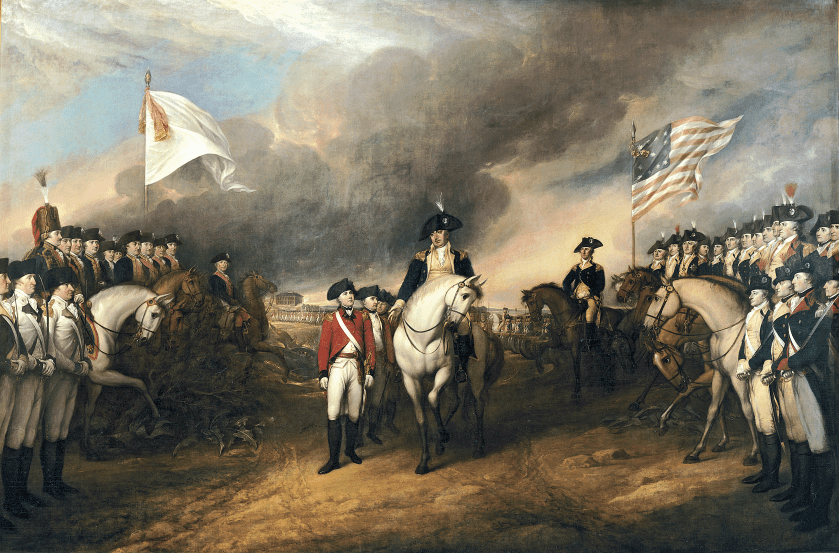
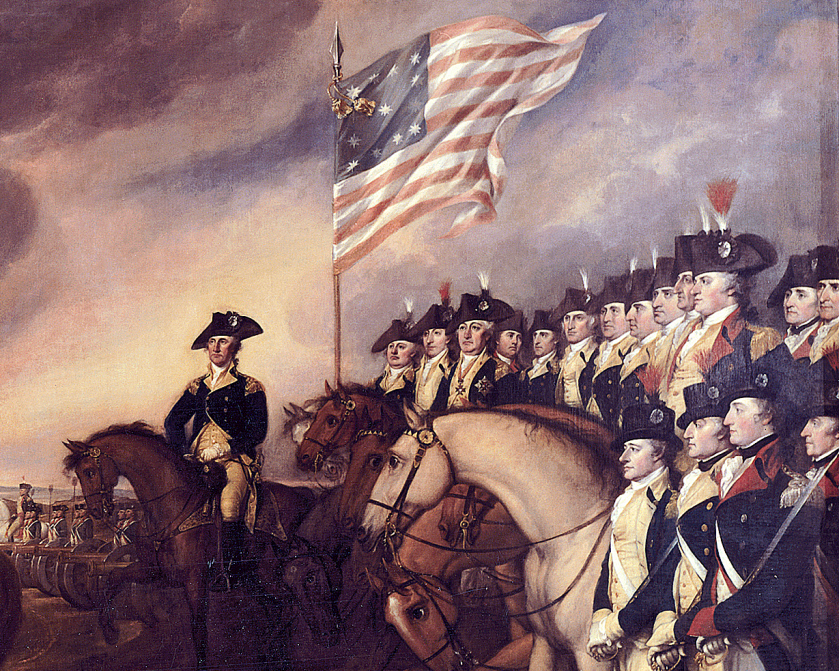
On 9 November 1781, British General Cornwallis formally surrendered 8,000 British soldiers and seamen to a French and American force at Yorktown, Virginia, bringing the American Revolution to a close.
The United States Constitution was ratified eight years later in 1789, and a New Nation was born, conceived in Liberty. The US Constitution is the world’s oldest written constitution still in effect.
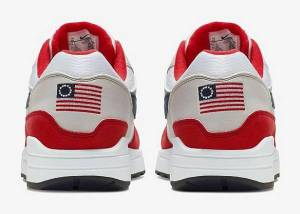
The flag in the painting is the 1st adopted flag of the United States of America as approved by the Continental Congress of 1777. It postdates the ones sewn by Betsy Ross and others, and predates the defeat of the British.
The irony that’s not taught in schools is that the Founding Fathers were British and The American Revolution was fought by the British against the British. TRUE.
That’s the first known recording of John Philip Sousa‘s “The Stars And Stripes Forever March.” It was recorded by Kendle’s First Regiment Band on 29 December 1901 and published by Victor Records [source]. Sousa wrote in his autobiography that he composed the march on Christmas Day, 1896, while crossing the Atlantic, after he learned of the death of his band’s manager.
In 1987, an Act of Congress declared the song to be the Official National March of the United States of America.
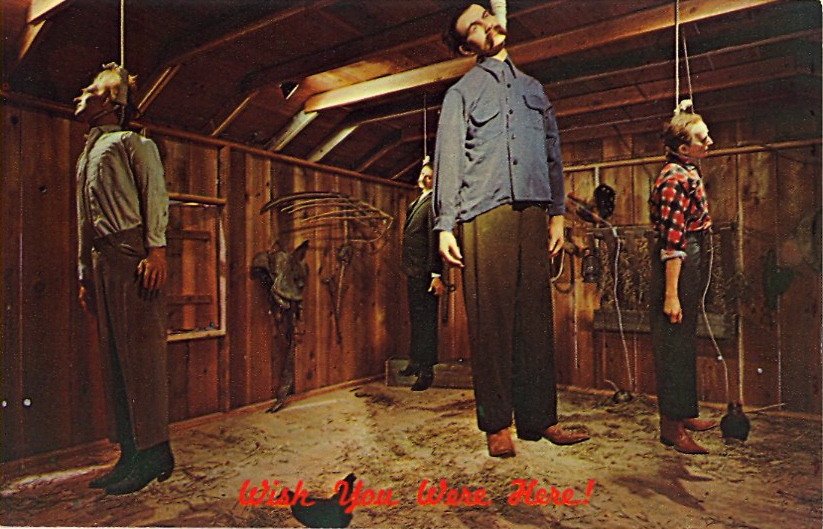
The CHAMBER OF HORRORS at the Southwestern Historical Wax Museum in State Fair Park of Dallas, Texas, recreates an event that took place in Ada, Oklahoma, April 19, 1909, when a lynch mob took four suspected murderers from jail to a barn where they administered frontier type justice.
According to the Tuskegee Institute, 4,743 people were lynched between 1882 and 1968 in the United States, including 3,446 African Americans and 1,297 whites. More than 73 percent of lynchings in the post-Civil War period occurred in the [Democrat-controlled] Southern states. [Wiki]
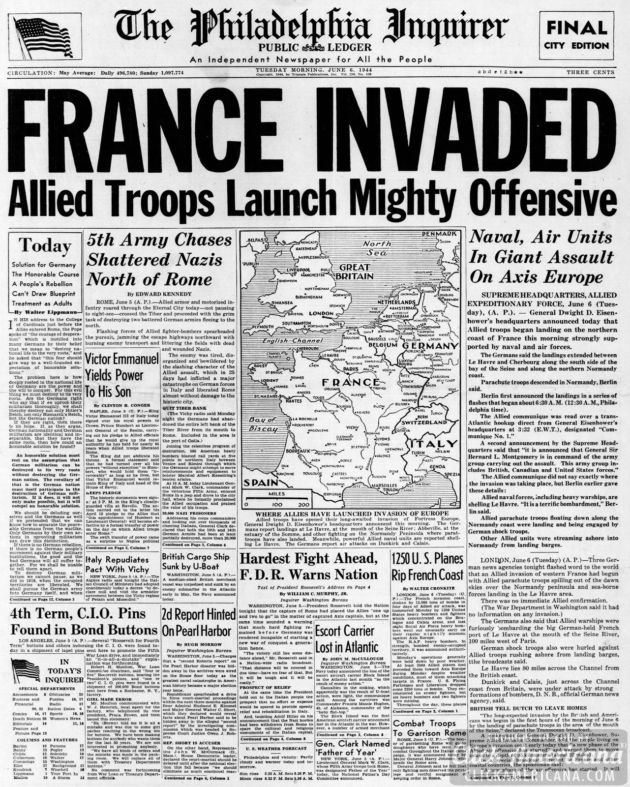
In 1944, and against the odds, General Dwight D. Eisenhower accepted the risk and subsequent bloodshed in order to prevent more of it. His leadership freed France from Nazi Germany occupation and was the beginning of the end of the war in Europe.
General Eisenhower was mocked by the left, portrayed as a dullard, stupid and ignorant. He wasn’t. Not by a long shot.
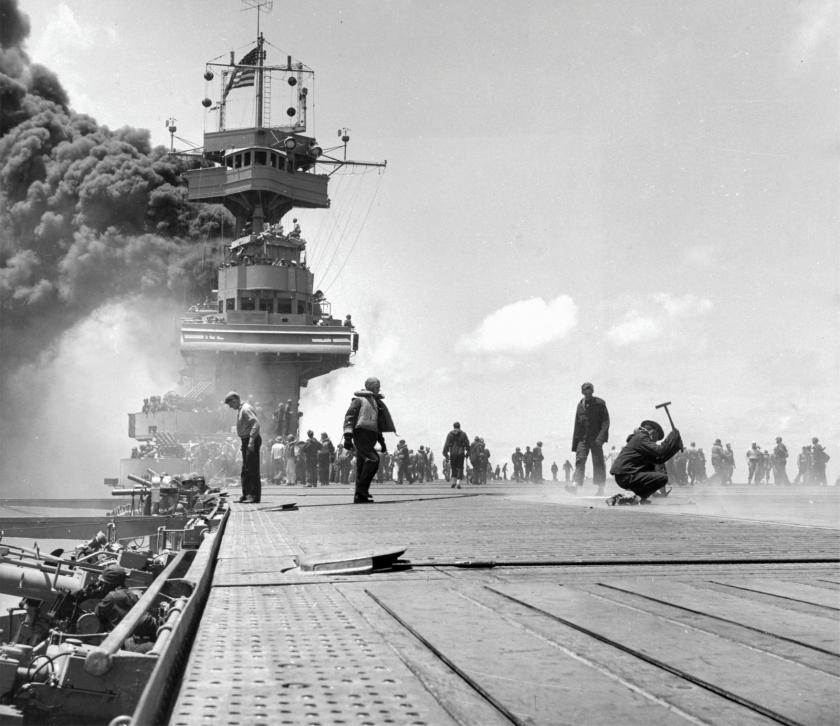
77 years ago, The Battle of Midway dramatically changed the outcome of WWII in the Pacific.
An out-gunned flotilla of US warships took advantage of information provided by Joe Rochefort‘s codebreakers and caught Imperial Japan’s massive attack force off guard. It was perhaps the most decisive battle in naval history.
By mid-1942, Rochefort’s codebreakers could read much of the Japanese Purple Code (Rochefort was fluent in the language) and they knew that an attack was imminent on “AF” but they didn’t know where AF was. They arranged that an un-encrypted message be sent from Midway Island claiming that the desalinization plant was down and the island was almost out of fresh water (it wasn’t).
Japanese intelligence intercepted the alert and sent coded messages that “AF” was out of water, and the codebreakers confirmed that “AF” was Midway. Rochefort’s team also predicted the direction that Admiral Admiral Yamamoto’s armada would attack from.
It wasn’t an easy fight. The U.S. Navy lost the USS Yorktown, the destroyer USS Hammann (DD-412), and nearly 150 aircraft. More than 300 Sailors were killed or injured. But when you stack it up against Japanese losses (four carriers, a heavy cruiser, more than 300 planes, and some 2,500 casualties) there’s little room for doubt as to who won.
Admiral Yamamoto’s armada was successfully ambushed while attempting to ambush the US Navy.
[Image and quote from here. More at the links above.]
P.S. If you think Hollywood’s version of Midway is accurate, it’s not.
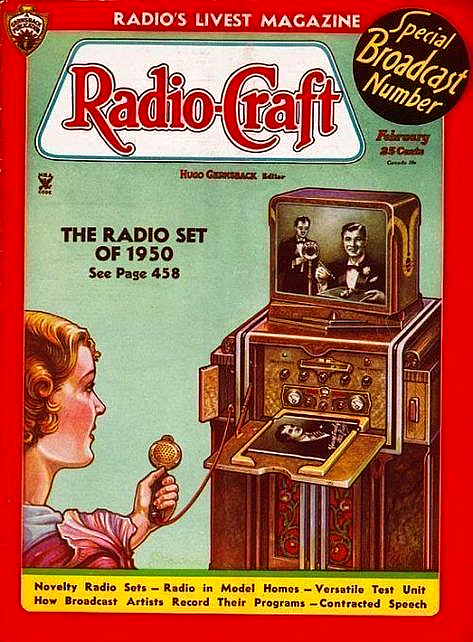
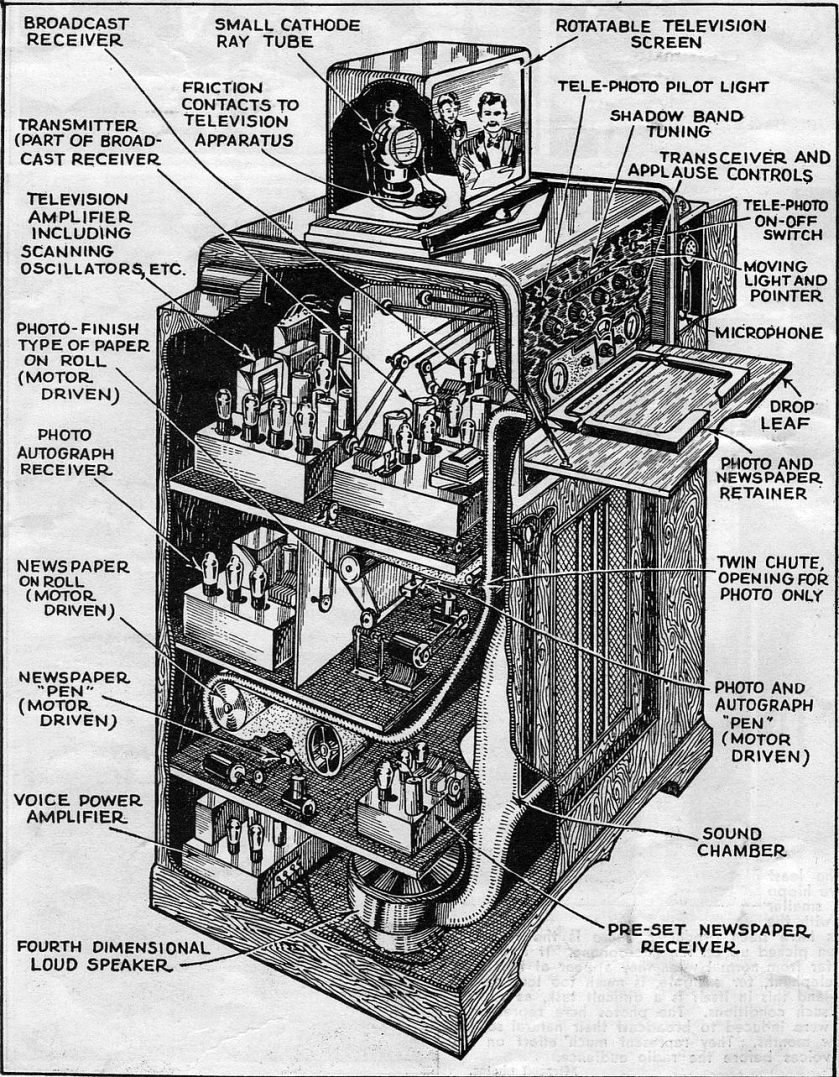
This telephone, radio, video, news link, photo transmitter/receiver, printer included a “Like” function to transmit audio applause. It was an all-in-one Victrola on steroids, a paleo Smart Phone that went up to 11.
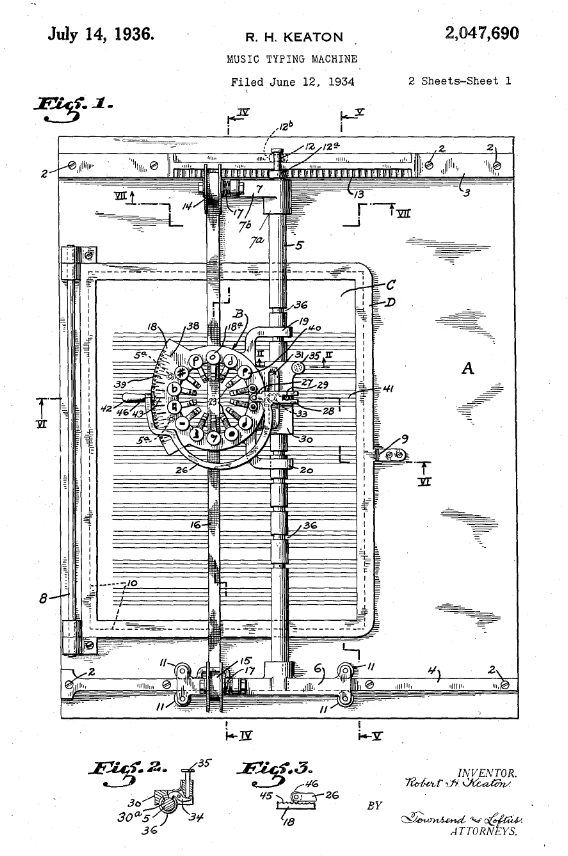
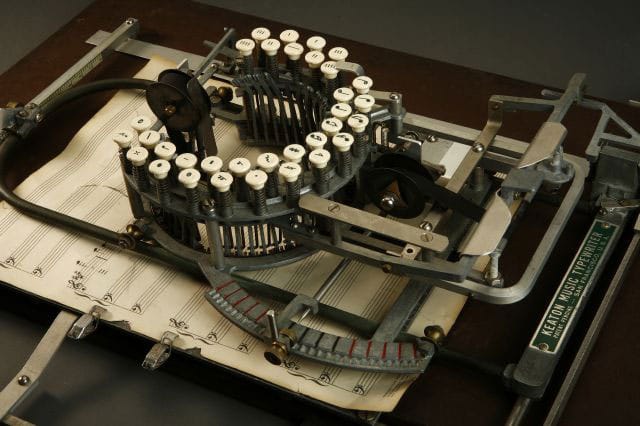
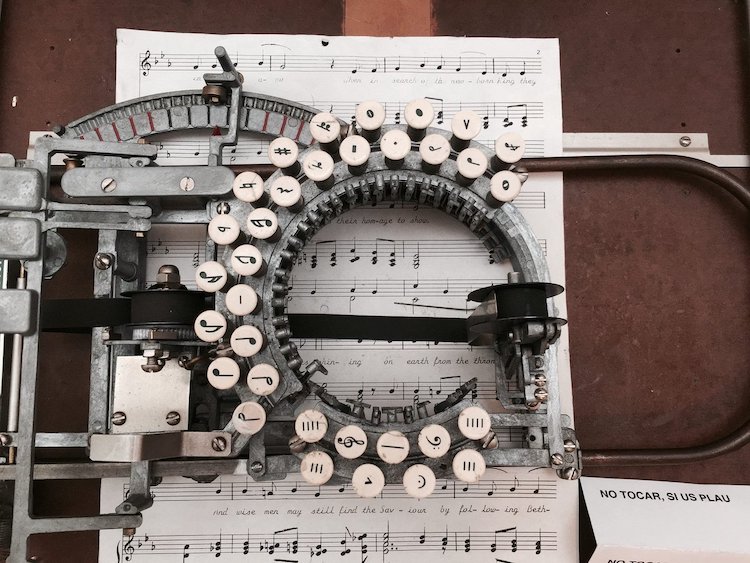
It’s an interesting arrangement that gives the Keaton Music Typewriter its distinctive look. In terms of engineering, thanks to a curved meter on the left that Keaton called the Scale Shift Handle and Scale Shift Indicator, it’s easy to control exactly where the notes and characters fall on the page. By moving the handle up or down a notch, the typewriter adjusts to print 1/24 inch in either direction. Moving one notch up or down will cause the character to fall one musical step either way.
It appears that the typed sheet music in the museum display (the 2nd image) is turned 90 degrees from the way the machine types, or perhaps it’s a different model.
[Images and text found here; Original Patent here; Video here.]

 Tacky Raccoons