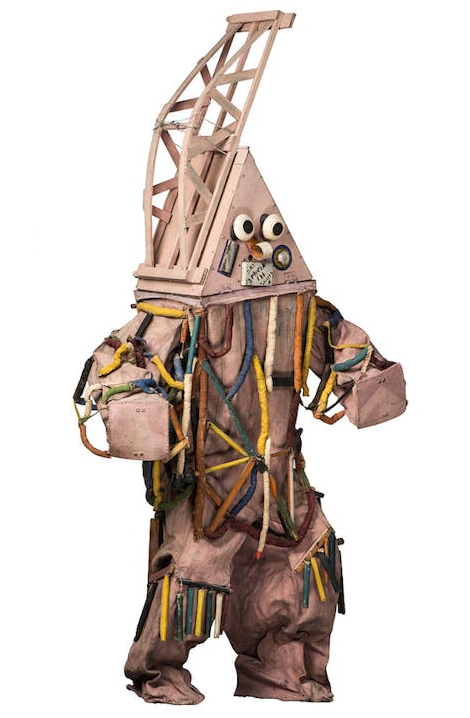

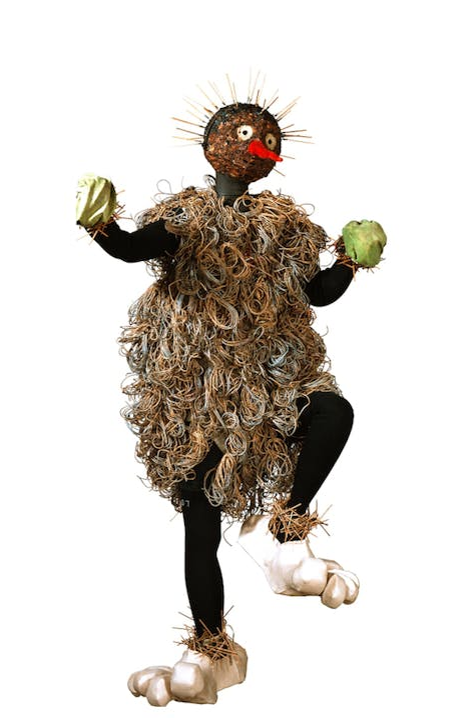
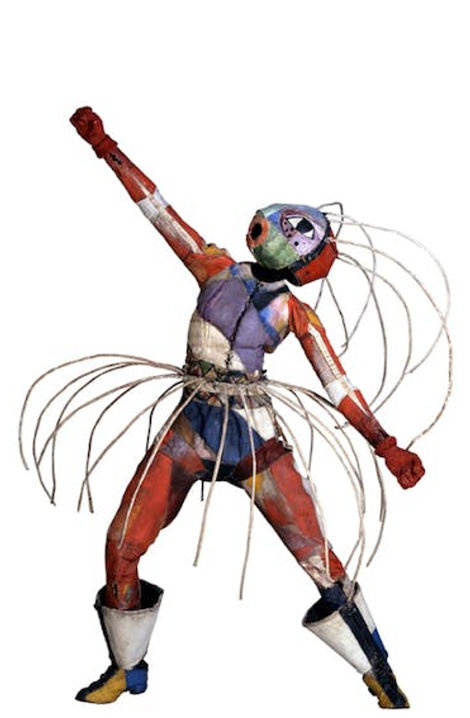
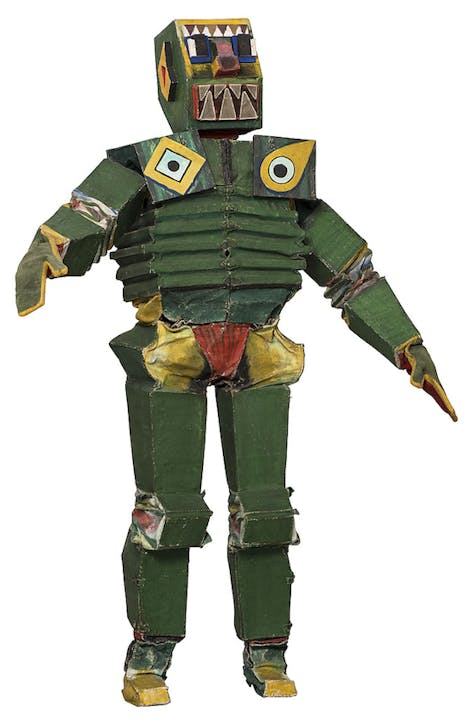
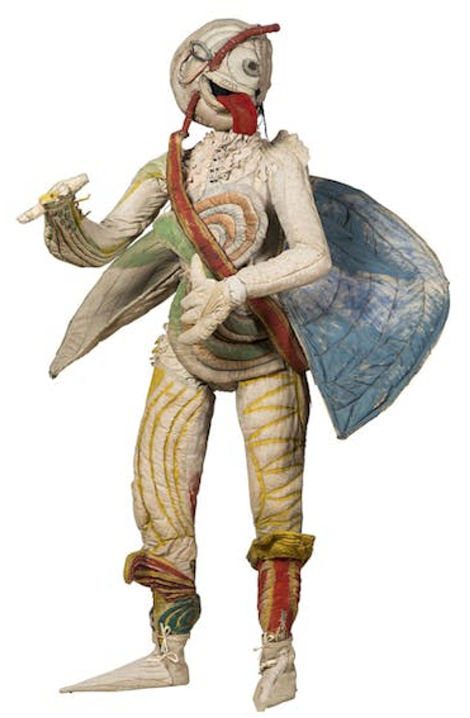
The Tanzmasken of Lavinia Schulz and Walter Holdt (ca. 1924)

Schulz and Holdt made these costumes for dancing; they performed under the name Die Maskentänzer (The Mask Dancers). The outfits are more sculpture than clothing, and they entirely swallow up the wearer. Some suggest a mongrel collision of characters — a buggy-eyed insect meets a jester meets a bearded tomato — and others allude to zippy motion, with eyeballs cartoonishly pulling off the face. Wires poke out and wooden blocks dangle, a bridge seesaws from shoulder to shoulder. Many of the geometric silhouettes defy anatomy; hands, feet, and heads are all boxed in, with no apparent exit.

The story doesn’t stop there. Schulz and Holdt were insane.
https://publicdomainreview.org/collection/tanzmasken/

Bonus: Interactive 3D images of Maskentänzer
Toboggan Mann
Toboggan Frau

A Hindu God

I saw her standing by the side of the road four weeks ago as I rode past. I thought I was imagining it. But even for me, that would have been imagining things on a super-overdrive. She did actually have a framed picture of David Lynch. Usually I have seen women carrying a small statue or framed picture of one of the numerous gods to ask money for.

I roamed around and asked for her whereabouts. After four weeks, we finally met. She, and a few other women from the same village, does this for work. When they need a framed picture of a god, they go to a local framing shop and ask if there is one that the customer never came back to collect. For some reason, she chose this one of a white god this time, she said.

“Which god is he?” she asks me at the end of our meeting and chat as I walked her back to her bus stop.

“The one that has made some of the most beautiful things in the recent years, unlike the others,” I said.

[Photo and caption by Tanmay Saxena, found here via here. The photo was taken three weeks prior to Lynch’s death.]

So Cal Fires – January 2025

The Palisades Fire burns a Christmas tree inside a residence in the Pacific Palisades neighborhood on Jan. 7. Ethan Swope—AP

[More photos here.]

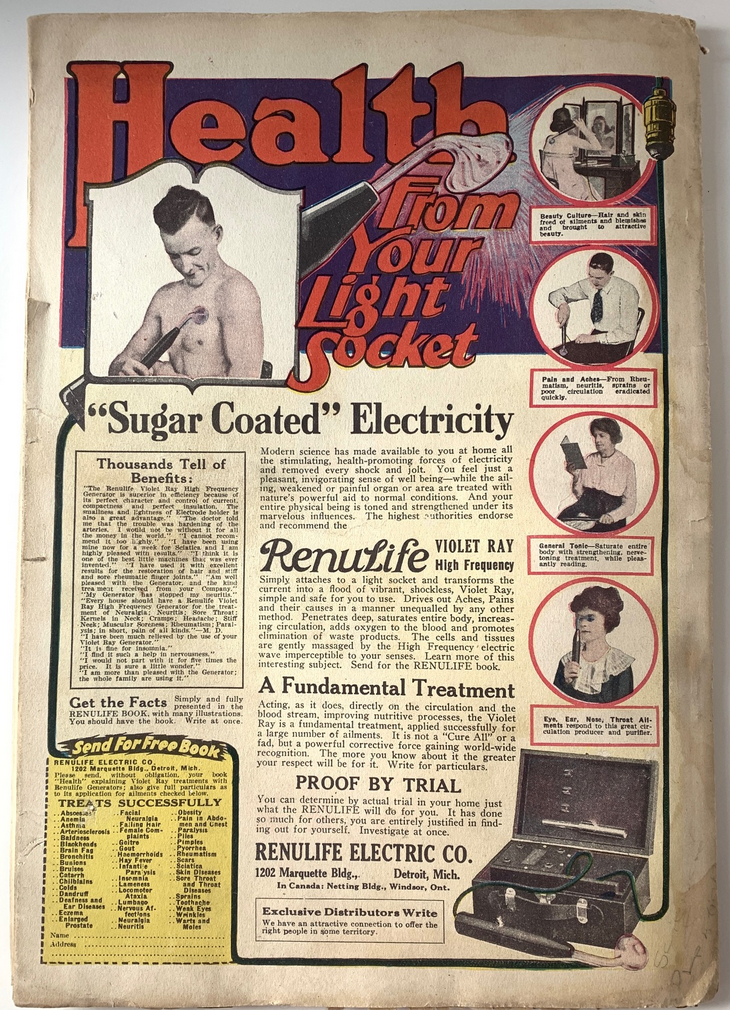
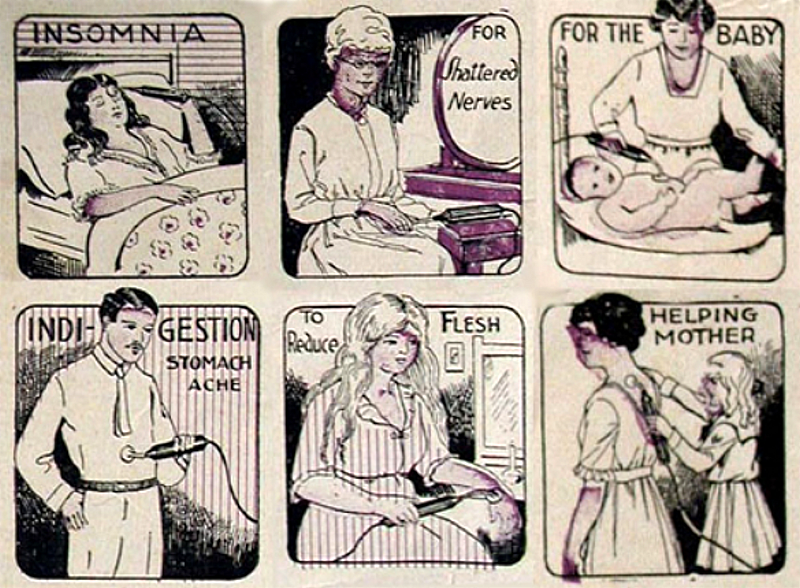
The RenuLife Violet Ray ca.1917

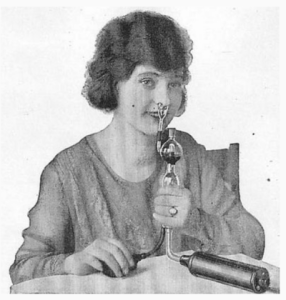
James Henry Eastman, a Detroit inventor who held several patents for violet ray machines, established the RenuLife Electric Co., in Detroit, in 1917. The device was a hand-held Tesla coil with glass tubes to (theoretically) protect the user:

“Treatment with a violet ray machine involved attaching one of a various set of evacuated glass tubes to a handle, holding it to whatever part of your body was troublesome, and then switching it on. This caused a high voltage, high frequency, low electrical current to run through the body. Similar technology is actually still used today in TENS machines that zap low currents into a targeted area of the body to relieve pain through nerve stimulation, though modern machines are safer and their use is monitored by trained professionals who use them only for specific types of pain. A violet ray machine, on the other hand, was capable of creating a powerful electric arc that could cause serious skin burns.”

[History and images found here.]

Fungal in the Jungle

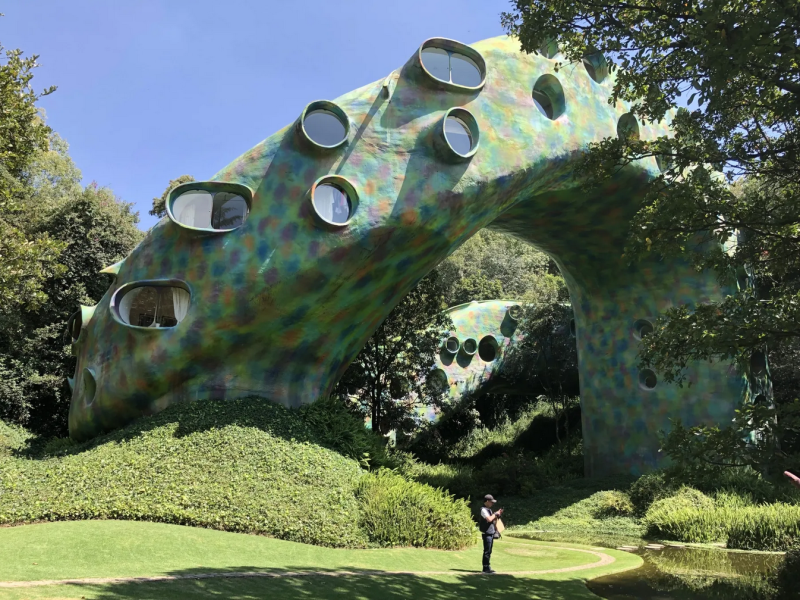
The Nido de Quetzalcóatl, Naucalpan, Mexico. Javier Senosiain, Architect.
The main body of the Quetzalcoatl’s Nest offers ten apartment units in a structure that coils around a manicured park. Javier Senosiain, Architect.

[Found here, story here.]

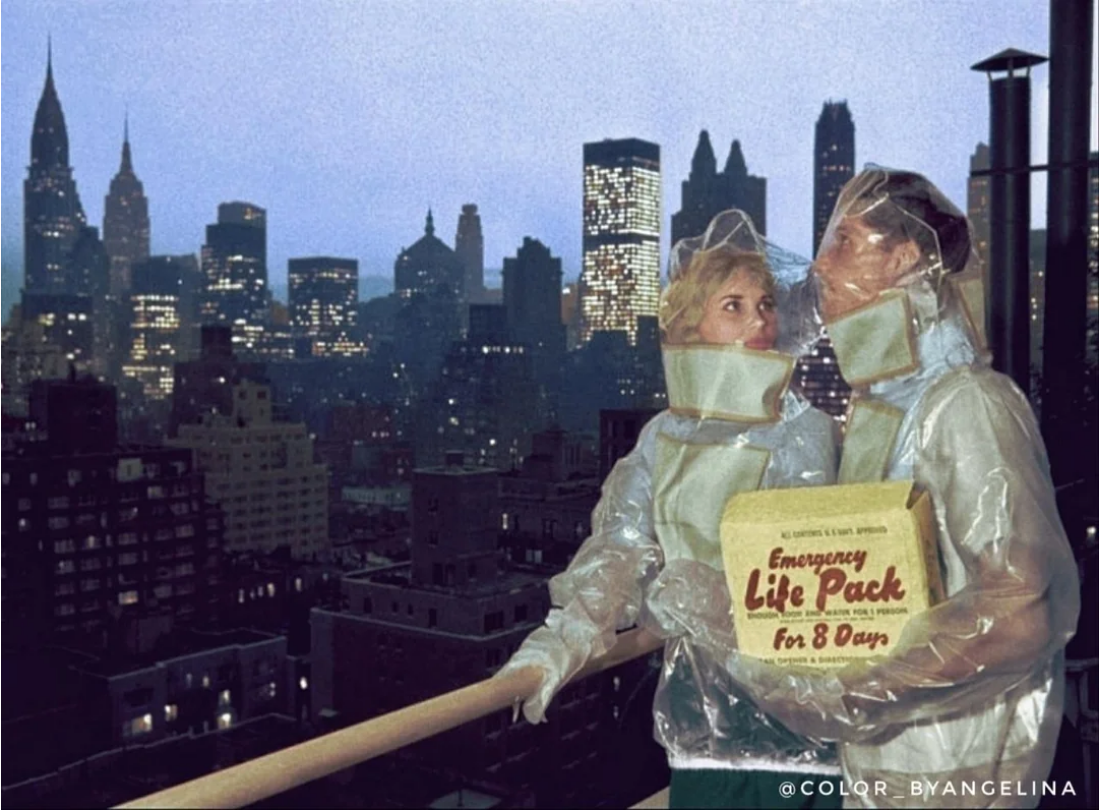
Emergency Gear

Protective suits and Emergency Life Pack for an evening in New York City, 1961

When nuclear fallout protection was all the rage.
Not sure what’s in the Emergency Life Pack, perhaps an 8 day supply of cigarettes and iodine pills. Note that the Cuban Missile Crisis went down in October of 1962, so the photo date may be in error.

[Photo by Max Scheler, colorized, found here.]

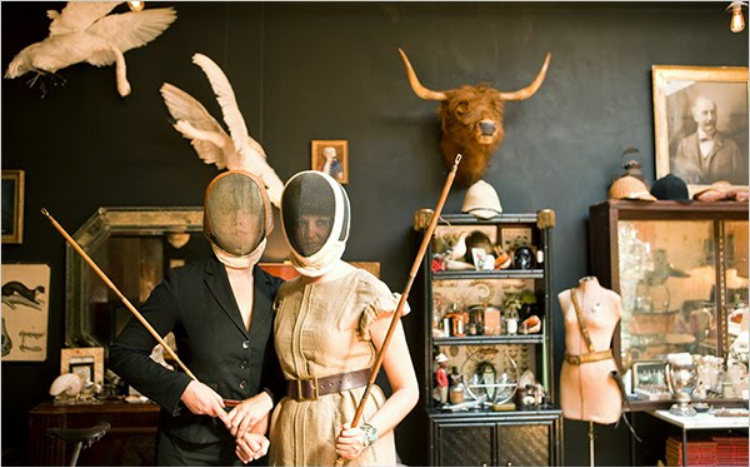
Antiquarians

Collectors like Hollister, left, and Porter Hovey, sisters with an appetite for late 19th-century relics like apothecary cabinets and dressmakers’ dummies, are turning their homes into pastiches of the past.”
New York Times 29 July 2009

[Found here.]

1922 Color Television by Radio

An early prediction, sans peanuts, Cracker Jack and beer.

[Image with story here.]

The Roof Ninja

“It’s not for everybody, it’s not even for me.” – The Roof Ninja

I sometimes watch police bodycam videos for amusement – someone gets pulled over for a minor infraction, then escalates the encounter into multiple felonies and jail time.

This one intrigued me.

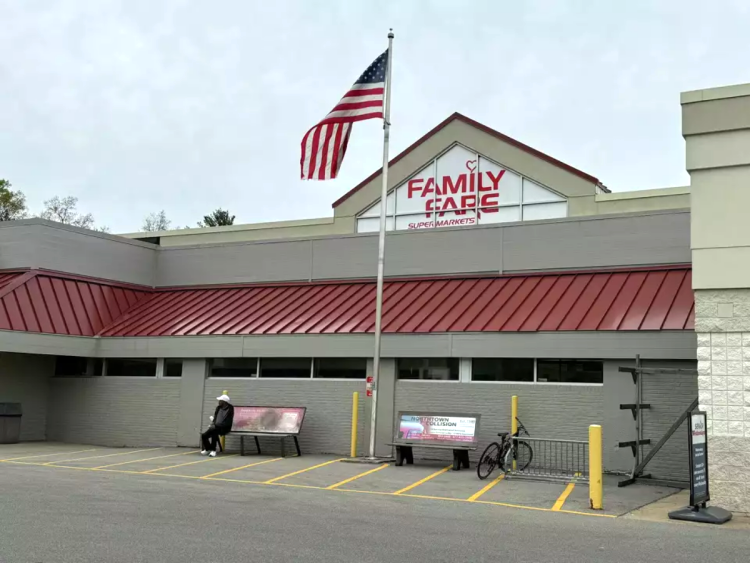
Midland Michigan Police were called to evict a woman who had been living on a grocery store rooftop in a sign access space for about a year. From the YouTube description:

On April 23, 2024, police were dispatched to the Family Fare grocery store in Midland, MI, to investigate a suspicious incident. The store manager reported that a contractor working on the roof had stumbled upon a 34-year-old woman, known as the ‘roof ninja,’ residing inside the store’s rooftop sign. The sign had been transformed into a mini-apartment, containing items such as a printer, pantry, desk, and coffee maker. It was subsequently discovered that she had been residing there for quite a while.

The policewoman was impressed, noting that the attic was clean, and she could smell a whiff of garlic. The Roof Ninja offered the officers some non-alcoholic ginger root beer before leaving most of her possessions behind in the attic. The police presumably issued a trespass (that if she returned to the property she’d be arrested) and her possessions were ultimately returned.

Full video:
https://youtu.be/osTeKSTvtC8?si=91JjrkvAB3FHb7Zh
Short version:
https://youtu.be/R28ZSY2Sc2A?si=NUE1UjX37TDwZ6fK

Hasil Adkin’s Contribution To The World

“We salute one of the great outsiders in R&R: Hasil Adkins was born in Boone County, West Virginia on April 29, 1937, where he spent his entire life. He was the youngest of ten children of Wid Adkins, a coal miner, and Alice Adkins, raised in a tarpaper shack on property rented from a local coal company. Born at the time of the Great Depression, Adkins’ early life was stricken by poverty. His parents were unable to provide him shoes until he was four or five years old. Some reports say he attended school for a very brief time, as few as two days of first grade.

His genres include rock & roll, country, blues and more commonly rockabilly, and because of his unusual playing and singing style, he is often cited as an example of outsider music. He generally performed as a one-man band, playing guitar and drums.

Adkins was born during the Great Depression and grew up in poverty. His spirited, unusual lifestyle is reflected in his music. His songs, which he began recording and distributing locally in the mid-1950s, explored an affinity for chicken, sexual intercourse, and decapitation, and were obscure outside of West Virginia until the 1980s. The newfound popularity secured him a cult following, spawned the Norton Records label, and helped usher in the genre well known as psychobilly.”

[Found here via here, and there’s a documentary trailer here.]