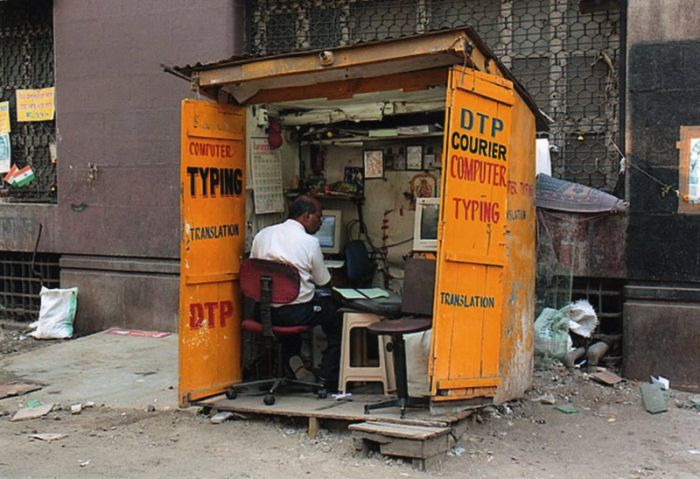
[Street office in Mumbai, India, ca. 2010 found here; same office in 2012 here.]

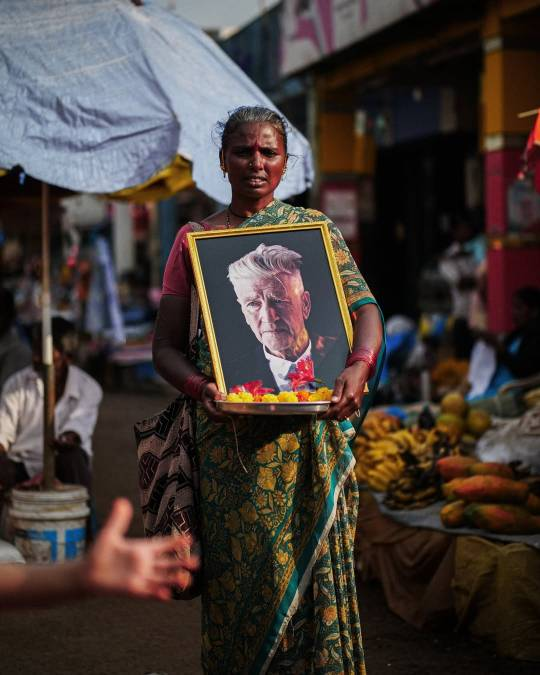
I saw her standing by the side of the road four weeks ago as I rode past. I thought I was imagining it. But even for me, that would have been imagining things on a super-overdrive. She did actually have a framed picture of David Lynch. Usually I have seen women carrying a small statue or framed picture of one of the numerous gods to ask money for.
I roamed around and asked for her whereabouts. After four weeks, we finally met. She, and a few other women from the same village, does this for work. When they need a framed picture of a god, they go to a local framing shop and ask if there is one that the customer never came back to collect. For some reason, she chose this one of a white god this time, she said.
“Which god is he?” she asks me at the end of our meeting and chat as I walked her back to her bus stop.
“The one that has made some of the most beautiful things in the recent years, unlike the others,” I said.
[Photo and caption by Tanmay Saxena, found here via here. The photo was taken three weeks prior to Lynch’s death.]


Inspired by the American ”Wall of Death” motordromes, Maut Ka Kuan is the Indian version, considered more dangerous because of the lack of safety precautions, the walls are near vertical, and they drive cars in addition to motorcycles. It’s still a popular attraction at many events like Vijayasadhami and Magh Mela, culturally significant festivals celebrated in India and Nepal.
[Story w/ video found here.]
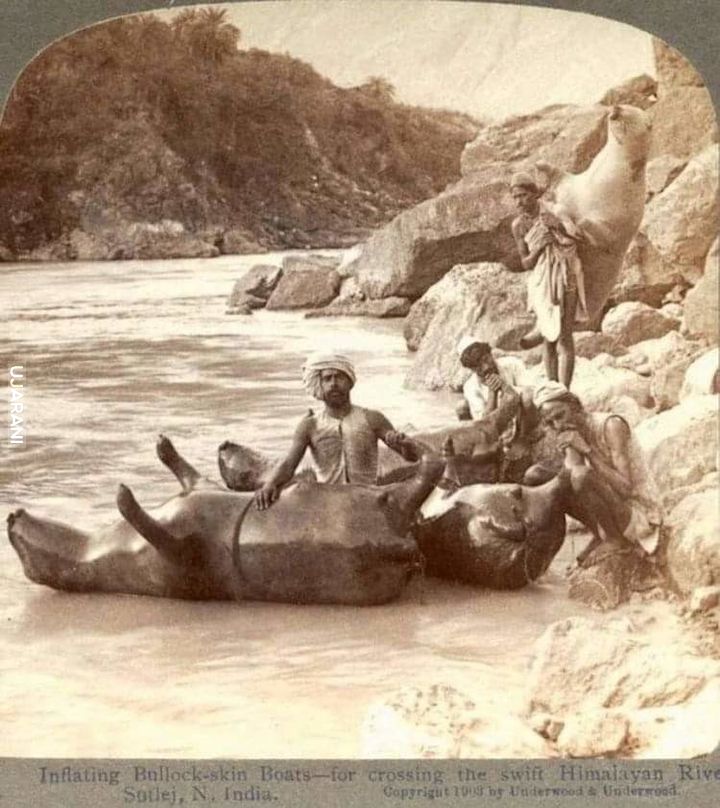
This is some twenty miles from Maldera, up in the hill country of the Punjab. The mountain river here is deep and swift; you can see ahead how high, steep banks wall it in and you can judge how pouring rains, draining from such slopes, would turn this stream into a fiercely raging torrent.
These men are natives in their customary clothes, and the rather ghastly looking objects with which they are busy are the hides of cattle, sewed up tightly and inflated with air till they can be used like enormous life-preservers. Two of the men you notice, are still at work blowing their “boats” full of air; they have cords there all ready to tie up the end of the skin when it is sufficiently distended.
Another has done the blowing-up at home and is bringing his skin down over the rocky bank; it is bulky but naturally very light and comparatively easy to handle.
When they are ready to start each man will throw himself across one of the inflated skins, using his foot on one side and a short paddle on the other side to propel the queer craft. If his balance is no perfect of course the craft rolls over and he gats a ducking, but practice makes skilful, and, as a matter of fact, small loads of freight and even passengers are ferried across in safety. If several passengers are to be taken over, it is customary for two “boats” to start out side by side, the passengers on the different floats taking hold of each thr to help balance the queer craft.
From Notes of Travel, No. 7, copyright, 1904, by Underwood & Underwood.
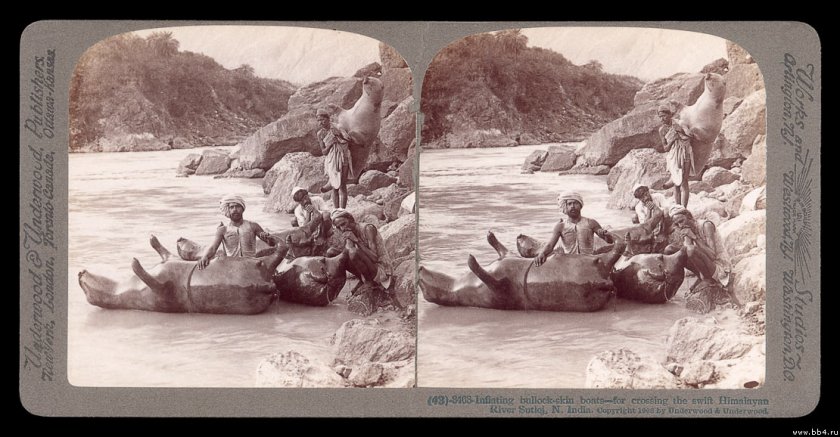
Inflating Bullok-Skin “Boats” for Crossing a Swift Himalayan River; India.
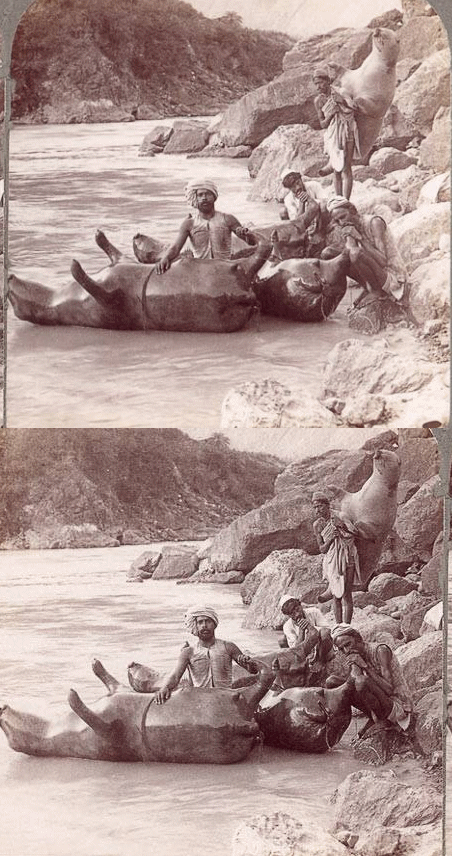
Source image unknown; Underwood & Underwood were publishers, not explorers. At one time, Underwood & Underwood was the largest publisher of stereoviews in the world, producing 10 million views a year.
[Found here. Original stereoscope photo found here via Tineye.]
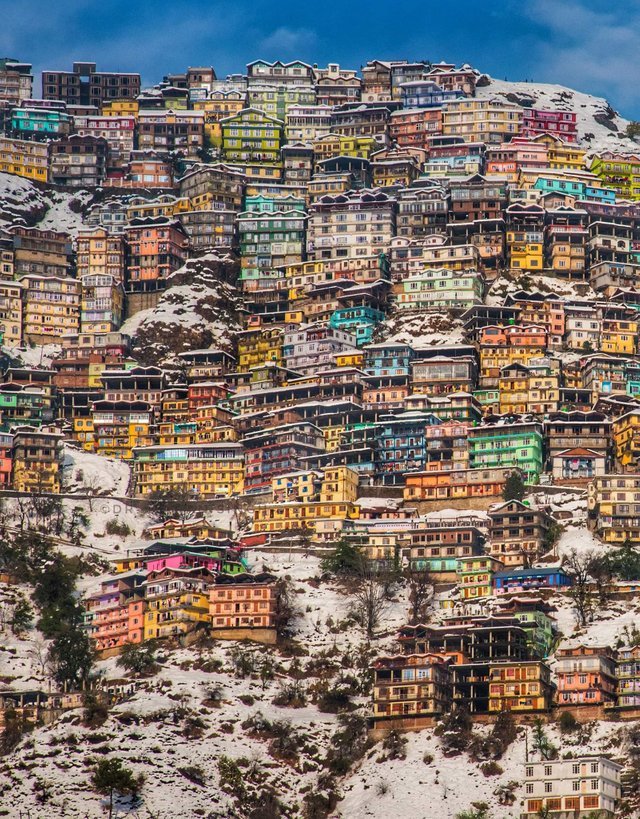
[Found here.]
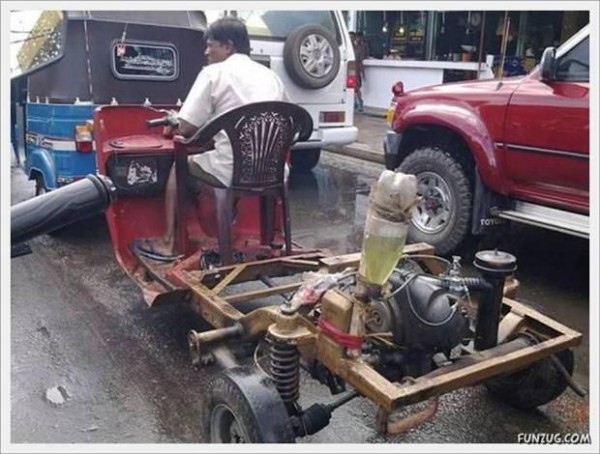
That guy kicks more ass than anyone you know. Then there are these guys:
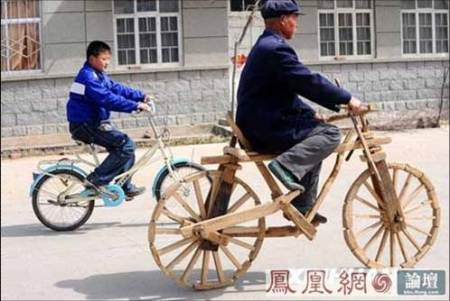
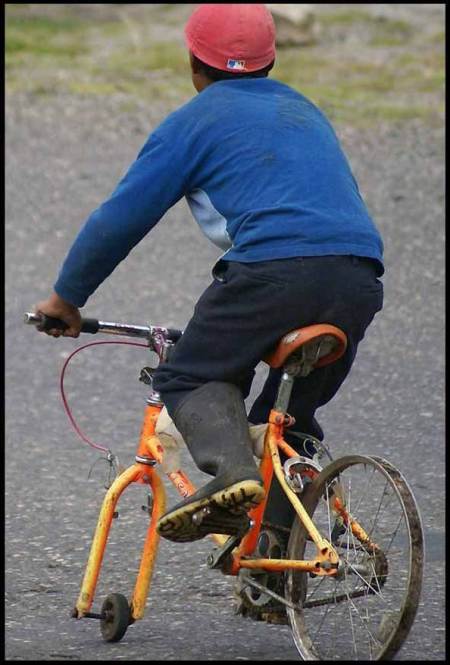
Necessity = Invention. I don’t know about you, but I want the Third World to have the same technology we have. Taking down the successful folks (cropping poppies) won’t do it despite what “Progressives” say.
As a subtle aside, READ THIS.
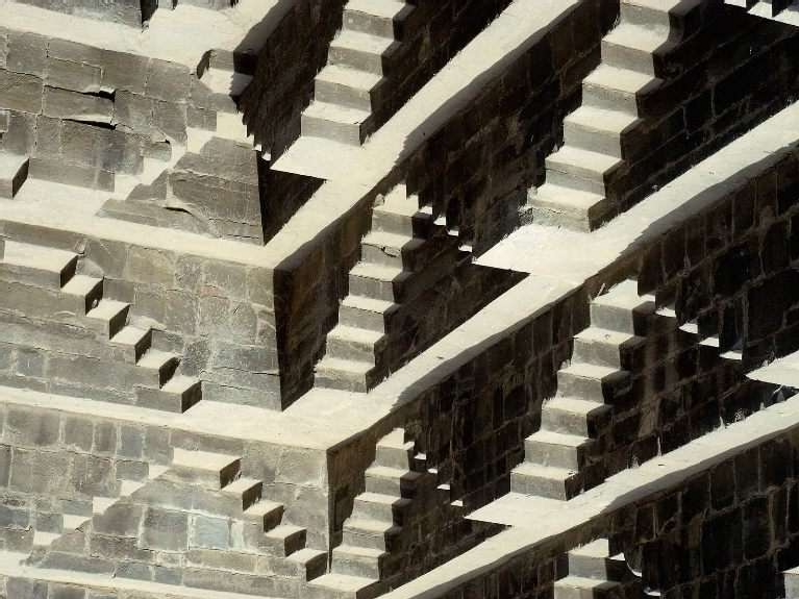
Nope. That’s not a charcoal study by MC Escher. That’s a photograph. Eyeball it for a bit – story and more photos below the break.
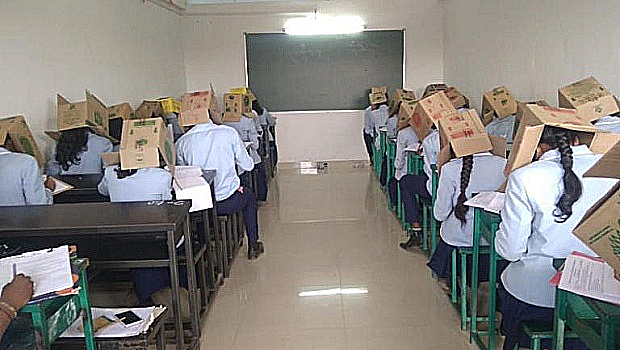


 Tacky Raccoons