The Museum of Lost Toys

On a dark and freezing morning during the winter of 2015, a plastic baby doll head left behind by the outgoing tide caught my eye. I pried it loose from the frozen sand and took it home. This began my slide down the flotsam rabbit hole. 

First, I only collected toys, but the collector in me inevitably took over and my toy collection grew to include shotgun shells, shoe heels, combs, old pipes, toothbrushes, balls of fishing line, and on and on and on. Soon, my yard was a plastic graveyard.

I’ve discovered that like things float together. Some days I might find 6 or 7 tennis balls, other days the wrack line is a trail of colorful bottle caps. Once, two Monopoly houses washed up on the same day about a half a mile apart. 

All these items individually don’t say much, but together, they tell the story of all of us; what we value, consume, discard, hold nostalgic. – Corinn Flaherty

Plum Island Museum of Lost Toys and Curiosities

[via Mme. jujujive.]
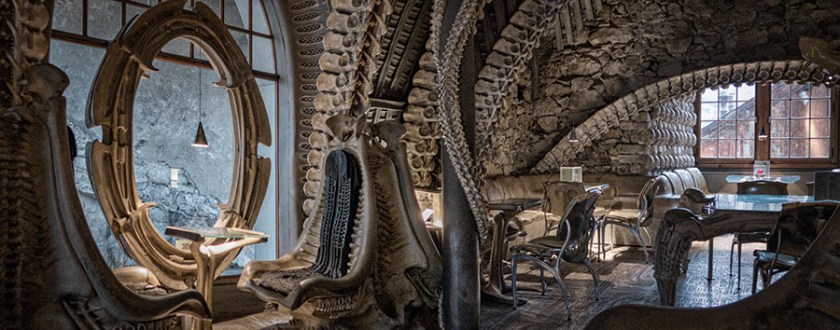
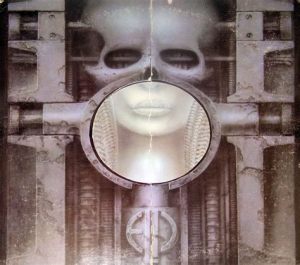
The H.R. Giger Bar

H.R. Giger Bar …and Museum.
Château St Germain, Switzerland

Brain Salad Surgery, Emerson Lake & Palmer (1973) Cover art by H.R. Giger

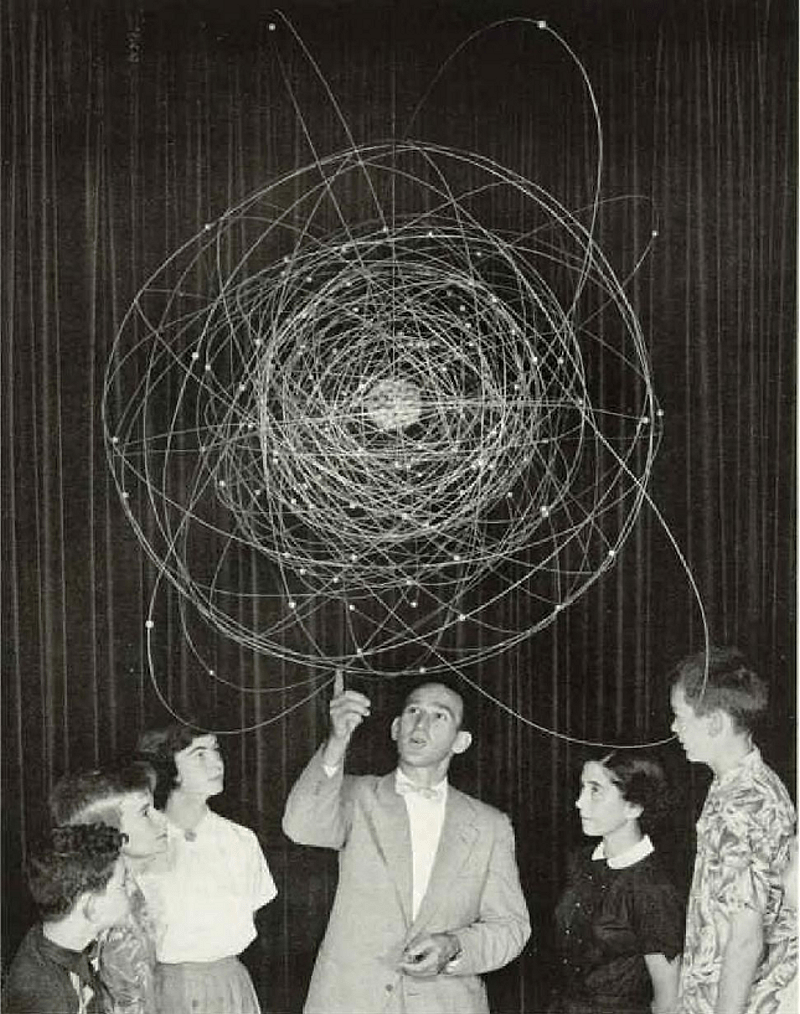
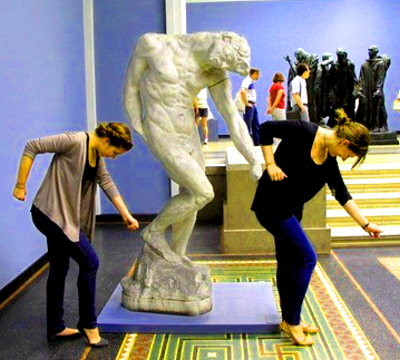
You Are Here. Or Not.

Uranium Atom’s Tightly Clustered Core Is the Main Source of Atomic Energy
Shown in Boston’s Museum of Science, this model depicts radioactive uranium 235, whose nucleus contains 92 protons and 143 neutrons. Nonfissionable uranium 238 carries three additional neutrons. Both are isotopes, or variants, of Nature’s heaviest element. Balls bunched in the center represent the protons and neutrons, which are mysteriously bound together by atomic energy’s terrific force. Splitting of the nucleus releases energy far greater than that of any chemical reaction. Wire-strung balls swinging like planets around a sun represent uranium’s 92 electrons. Hydrogen, in contrast, has one. True scale would place the outermost electrons 3,000 from the center.

[Image ca. 1954, with caption, found here via here.]

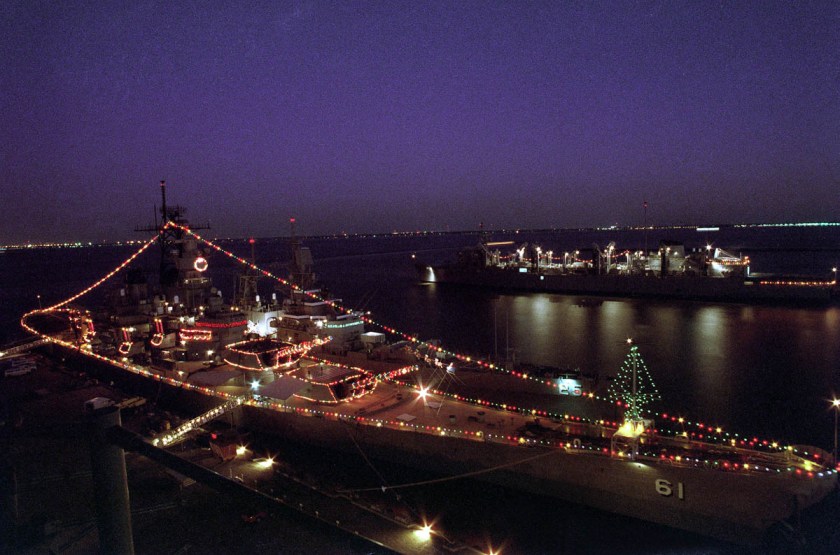
USS IOWA BB-61

The battleship USS IOWA (BB-61) circa Christmas 1983.

“It usually took us (Electricians Mates with assistance from the ICmen, Gunners Mates, Bos’n Mates, Quartermasters) three days to rig & test this light display… 10,856 light bulbs total.

This is the award winning display that won us the “Best Large Surface Combatant” award for four out of our six year commissioning during the eighties. (MED Cruise in 87, lost to USS America in 84)

I served aboard from Dec.1983 to June 1989, was involved with each and every one of those displays.”

Martin A. (Marty) Palmiere EMC(SW) USN(ret.)
USS Iowa BB-61 ’83-’89

[Image and comment found here.]

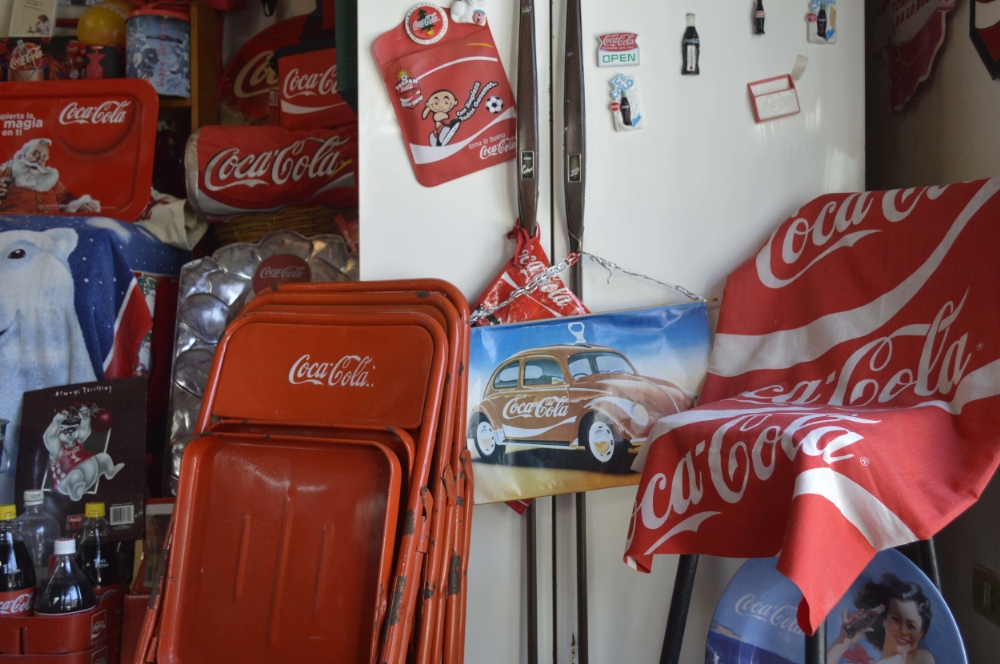
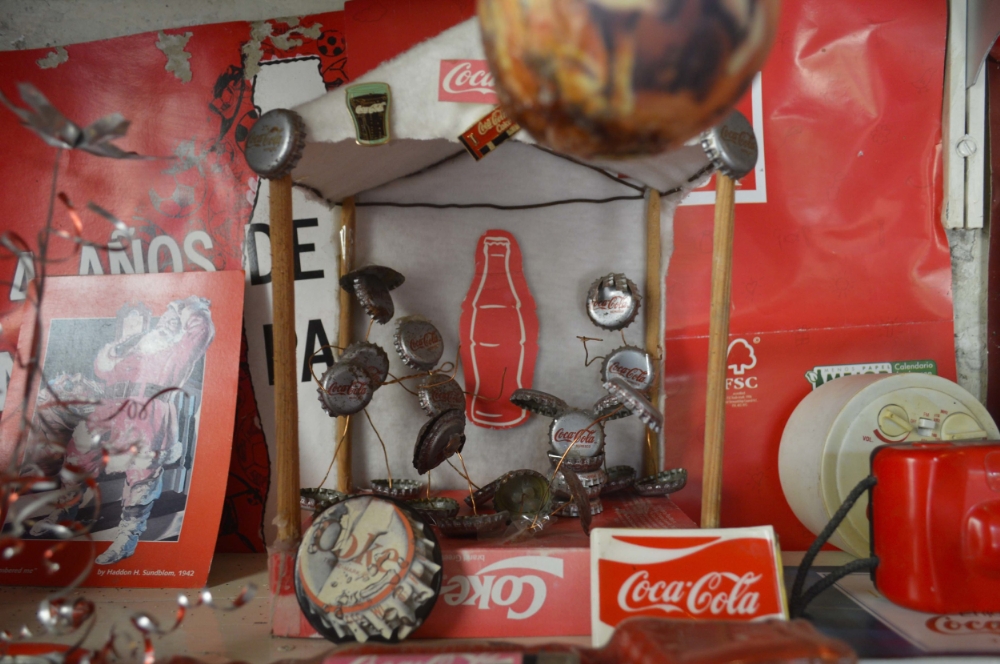
Pat Reidy’s Contribution to the World: Coca-Cola Museum, Xalapa, Mexico

Coke 3

Coke 2

Coke 5

Coke 6

Coke 1

Hi, Pat. I see that your love for Coca-Cola is still alive and well. Why do you love it so much?

Pat Reidy: Well, firstly, I really like the flavor, but I also think that it represents one of the best publicity campaigns that there’s ever been in the world. It’s international, it’s intelligent, and uses everything to promote its brand. People see a T-shirt, a toy, a poster or whatever, and want to drink a Coke. Coca-Cola invented Santa Claus, and that says everything.

[…]

Yes, please. Tell me about the steps I need to follow in order to be a professional Coca-Cola drinker.
You should always drink it really cold; always from a glass bottle, or maybe from a can, but never, ever from a plastic bottle. The best Coke is the one that comes from the tiny glass bottle. I always buy the 355-milliliter glass bottle, though.

How many Cokes do you drink a day?
I don’t drink it much nowadays. I drink one 355-milliliter bottle a day and I really enjoy it—you have no idea. Unless there’s a party or a special occasion; then I drink more. But that’s what I do now, because for years, when I had to teach 12 hours a day, drinking Coke was my salvation. I used to drink 15 355-milliliter bottles a day.

Was it ever bad for your health?
Never. Back then there was no water. There was no purified water and they didn’t sell water gallons to keep at home. So between drinking boiled water or Coke, well, there is no contest, really. I also cook with Coca-Cola.

What do you cook with Coke?
You can cook many things with Coca-Cola. I even have recipe books. My specialty is a hamburger that I make with my secret recipe. I fry it on my grandmother’s pan—which is huge—with Coca-Cola instead of oil, a bit of English sauce, pepper, garlic salt, and onions. It’s wonderful. I call it Pat’s hamburger. I also use it in soups. I love it.

[Images and commetary found here, via here.]

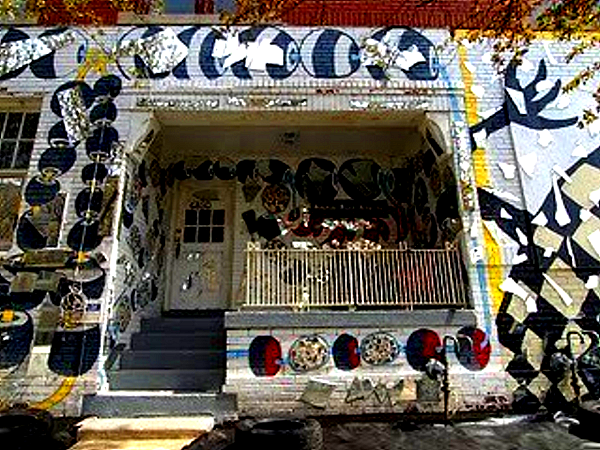
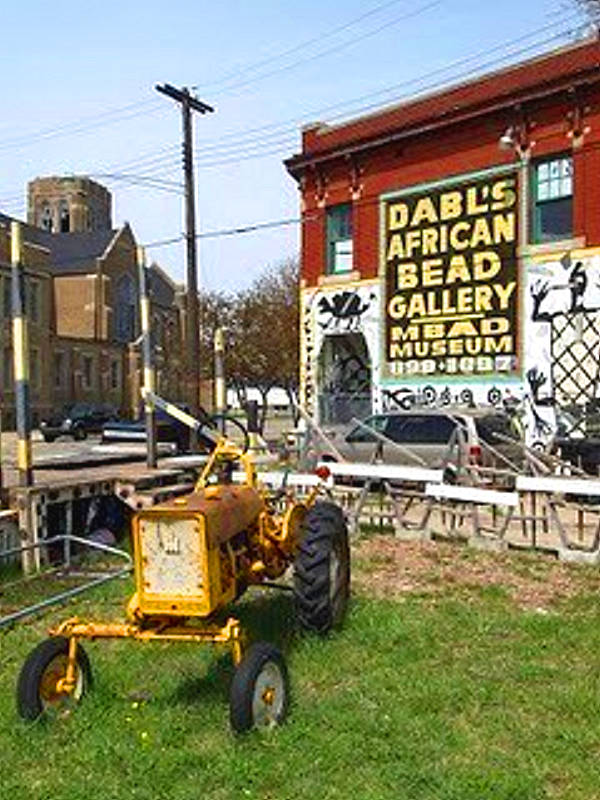
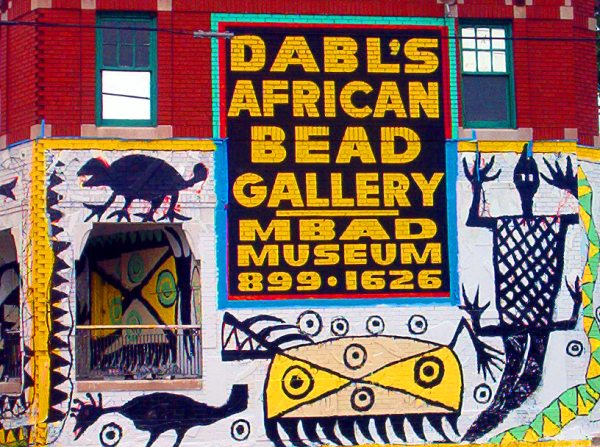
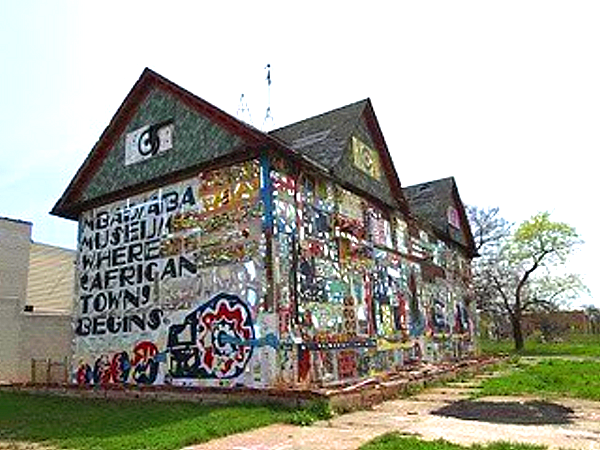
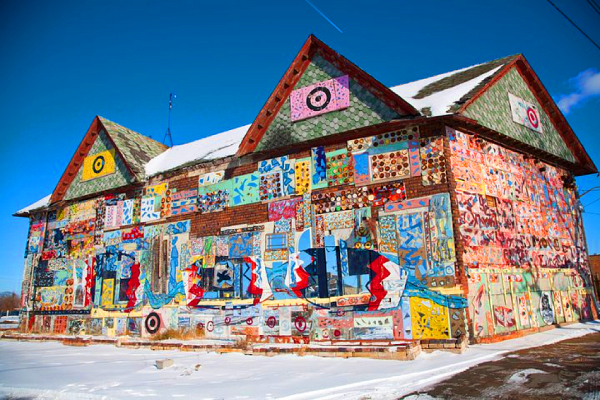
Olayami Dabls’ African Bead Gallery & Museum

DABL'S 1

Thought this was an odd image until I found out that it’s a cool strange oddity. Dabl’s African Bead Gallery exists. In Detroit.

“Olayami Dabls–esteemed fine-artist, museum curator, and historian, has lectured extensively on African Material Culture to international audiences for over 30 years. As a curator, Dabls is a founding member of the African American Sports Hall of Fame, housed in the Wayne county building. He was also Artist-in-Residence at the Museum of African American History (1973-1982) as well as at the Detroit Psychiatric Institute (1985-1989). Dabls has served as Executive Director for the Rosa Parks Arts Center (1982-1984) as well as produced and hosted a radio program on WNEC4 (1978-1981).
In 1983 Dabls and his wife opened Dabls Perette’s Gallery, to great acclaim and the gallery has thus become known all over the African world. He has received numerous awards and has been featured in articles in every Detroit newspaper outlet.”

DABL'S 2

DABL'S 3

DABL'S 6

DABL'S 4

DABLS 5

[Found here. Other images found at Dabl’s website.]

Rock On or Walk On.

Rock On

Rock on the wild side.

[Found in here. Click the image for a bonus.]