Saturday Matinee – Who Was Sloopy?


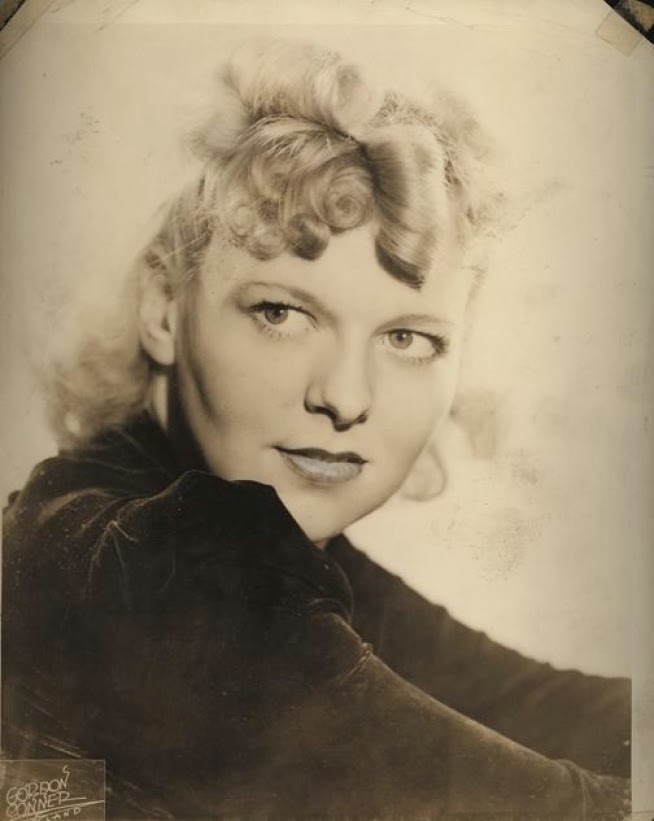
Dorothy Sloop
Dorothy “Dottie” Sloop (1913 – 1998)

There’s a bizarre history to that familiar song credited to The McCoys, and it traces to Dorothy Sloop of Steubenville Ohio who became a New Orleans singer and piano player with the stage name “Sloopy.” The song was originally recorded by The Vibrations in 1963, predating the McCoys’ version:

So how did a 60s soul group from LA decide to sing about a girl who moved to New Orleans?

“Sloopy” was Dorothy Sloop, a Bourbon Street piano player. Born Sept. 26, 1913, in Steubenville, she performed at a New Orleans nightspot under the stage name Sloopy.

‘Hang on Sloopy’ was written by Bert Russell Berns and Wes Farrell, two New York City songwriters. Berns also wrote The Isley Brothers and Beatles hit Twist and Shout. Farrell went on to become the musical brains behind the Partridge Family.

The song was originally recorded as My Girl Sloopy by the Los Angeles R&B vocal group the Vibrations. It debuted in April 1964 in the Top 40 of the Billboard pop chart, where it spent five weeks and reached No. 26.

A rock version, ‘Hang on Sloopy,’ was recorded by the McCoys, a Dayton garage band led by Celina native Rick Zehringer. Locally, the band was known as Rick and the Raiders, but it changed its name to avoid confusion with chart-toppers Paul Revere and the Raiders. Hang On Sloopy debuted in September 1965 in the Top 40 of the Billboard pop chart, where it spent 11 weeks and reached No. 1.

Rick Zehringer later changed his name to Rick Derringer and became one of the top rock guitarists and producers of the 1970s. He recorded with the Edgar Winter Group and scored a 1974 solo hit with Rock and Roll, Hootchie Koo. [More at this source]
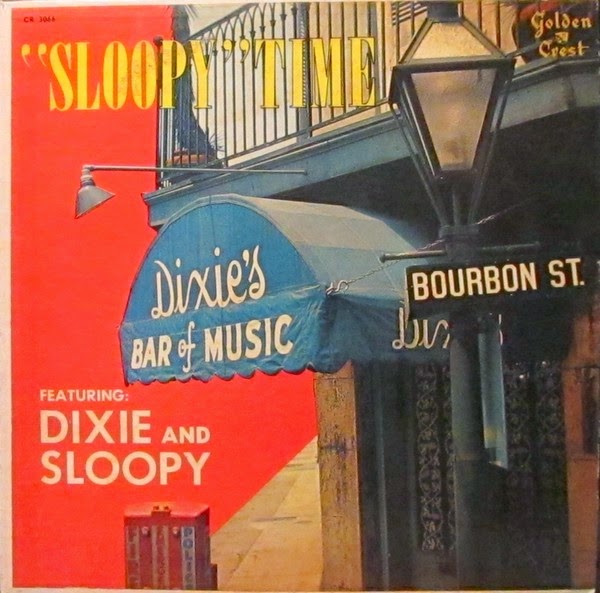
“Dottie” Sloop recorded an album, “Sloopy Time” Featuring Dixie and Sloopy, in 1957 with Yvonne “Dixie” Fasnacht, a jazz vocalist and clarinetist.

“Dixie” Fasnacht operated a bar called Dixie’s Bar of Music on Bourbon Street in New Orleans. It was there that Dorothy’s acquaintance and co-writer of “Hang On Sloopy” Bert Berns-Russell found the inspiration for the song. During problems with the sound equipment and a crowd getting rowdy, he heard a regular call out to her “Hang on, Sloopy!” [Source]

I couldn’t find a recording of either Dottie Sloop or Yvonne “Dixie” Fasnacht, but there has to be a copy of the album in someone’s basement somewhere. One more piece of trivia: Ohio is the only State to have an Official State Rock Song.

The Best Damn Band In The Land adopted “Hang On Sloopy” as a signature song for the times when OSU was down a few points, and their a capella version is classic.

Have a great holiday weekend, folks.
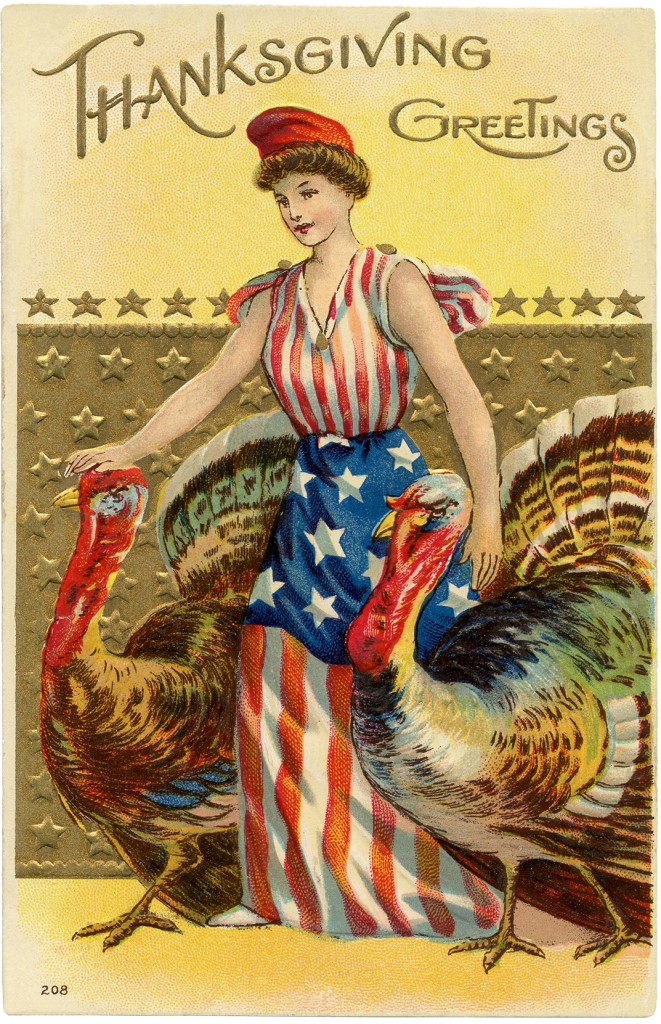
Thanksgiving 2014 (with a bit of oral history)

Retro Thanksgiving 2

Although it’s not exactly a Thanksgiving story, it’s still appropriate in a way. It’s a vocal recording of my father’s half-brother as transcribed by his daughter. (All typos are mine).

Old Jimmy Stephens was born about 1765 or 1766, sometime along in there. Whether he was the only child or not I don’t know, but he and his family were living in South Carolina at the time of the Revolutionary War. South Carolina, Georgia and North Carolina were pretty strongly Tory during the Revolutionary War and the Stephens family was pretty strongly Whig, which is anti-King [of England].

One day, a band of Tories stopped by the Stephens house and demanded the mother cook dinner. I suppose there must have been about twelve in this detail, all mounted, of course, and the mother started in and cooked a big dinner for these Tories. After they had eaten and satisfied themselves, they decided to leave, one of them said, “Let’s take this boy with us,” and that was my great, great, grandfather Jimmy Stephens, he was about twelve years old.

Well, they grabbed him to take him along.

His mother then grabbed him [Jimmy] and begged them not to take the boy away. One of the men picked up a rolling pin and knocked her down with it. Then, to intimidate the boy, they punched him in the breast with a horse pistol. The barrel of an old horse pistol like that was pretty thin around the muzzle due to the wear of the ramrod. Anyway, these Tories cut his breast up and he carried these scars to his grave.

The Tories took him with them and he, being a pretty smart boy, decided to get into the good graces of these Tories and watch for his chance to get away. To that end, he picked out the best and the fastest horse in the whole group. They made him feed, curry, water the horses, carry wood, etc., and finally they took him for granted. They never paid much attention to him, and one evening, after the men had a hard march and were just a little bit drunk, he left the watering of the horses until the last thing. When the time came, he mounted the fastest horse, drove all the rest of them away, and left this Tory band afoot. He made his way back to his home and they weren’t bothered anymore by the Tories.

I have often wondered if his father or any other men folks, his older brothers, were away at the Battle of Kings Mountain at this time; it would be interesting to find out.

[…]

When the Stephens family was still living in South Carolina, it’s unclear whether the person was Jimmy Stephens or not, but they were working at the edge of a clearing and heard their mother scream. The man looked around and saw an Indian up at the house. All he had was his axe, he let out and ran for the house. When he got up there, the Indian never moved, just looked at him and held out a bucket and pointed to the cow, so they gave him some milk and he [the Indian] left.

The sites of several old Cherokee towns can still be seen down around Ellijay, Georgia, on the creek bottom, and there is one old Cherokee townhouse there, though the timbers have fallen in. My friend, Lawrence Stanley, told me that the Indians would build a town and they would live in it until it got so dirty they couldn’t stand it, and then they would move on.

My grandfather told me that they started fires with flint and steel, he showed me one time how to do this. He took his pocket knife and with an arrowhead I had given him, struck fire with it. He told me when he was a boy, he used a flintlock rifle and about going barefoot in the winter time, and about not having any kind of a Christmas. Now all this was during the civil war when people almost starved to death in that part of the country.

[…]

Also, I want to insert something else: my grandfather used to tell about having to go out in the woods, chop down trees, cut up the wood, and chop the knots out of the planks. They had a box that they set by the fireplace, and when they wanted more light from the fireplace, they would throw a pine knot in. I suppose the same thing was done at my grandfather Stephens house, and all the other people, in that day and time.

[Family lore, transcribed by Barbara D. from audio tapes made by her father.]

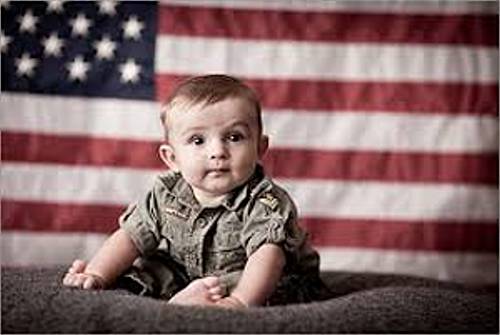
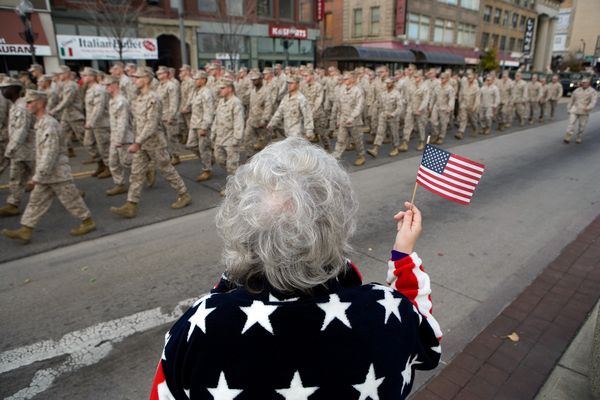
To All Veterans Who Start Out Like This To Protect That.

Veterans Day

Always Remember The Armistice

The 11th Hour of the 11th Day of the 11th Month of 1918.
And remember that the Treaty of Versailles was merely Détente.
GOD BLESS ALL VETERANS

Respect

Tension and Compression

Tension & Compression

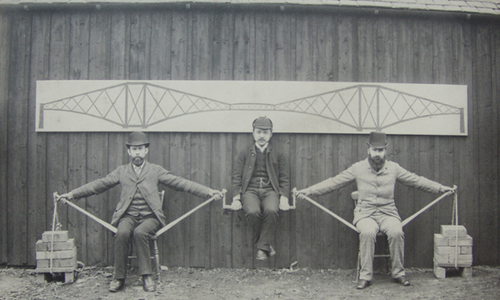
A demonstration of the mathematical principles of the original Forth Bridge in Scotland performed at Imperial College in 1887. The central ‘weight’ is Kaichi Watanabe, one of the first Japanese engineers to study in the UK, while Sir John Fowler and Benjamin Baker provide the supports.

Long-span structural engineering illustrated. Note that weight is not the problem with this truss, but uplift is, hence the weights at the extreme ends of the truss. Tension is transferred from the exterior weights through the arms of the two men near the ends of the span, while compression struts keep this structure from collapsing under the dead weight of Mr. Watanabe.  Note also that without the weight provided by Mr. Watanabe, this structure collapses (unless Messrs. Fowler and Baker scooch over and hold hands).

[Found here.]

Heinrich Hoffman’s Contribution To The World

Harriet & The Matches

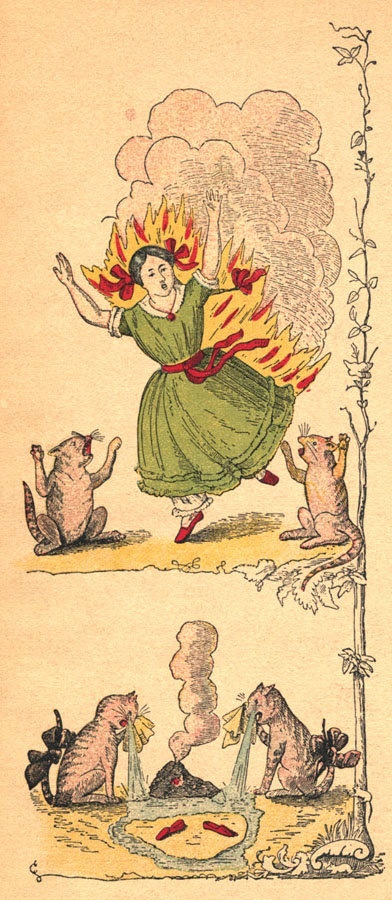
 “The Dreadful Story about Harriet and the Matches”
from Der Struwwelpeter (1845) a popular German children’s book by Heinrich Hoffmann.

Hoffmann was the German precursor to Charles Addams, writing and illustrating short stories/poems for children that can only be described as violent and bizarre. Judging by his popularity, both children and adults loved them (and still do) and he was translated into many languages. Mark Twain’s English translation was published posthumously, and he took some liberties to make the stories rhyme.

Check out Hoffman’s “Die Geschichte vom Daumenlutscher” or “The Story of Little Suck-a-Thumb.”

Hoffman, besides being a writer of satire for both children and adults, despised authoritarianism (he even did a lampoon of Adolf Hitler), worked as a psychiatrist in an insane asylum treating paupers. His Wiki bio is interesting.

[Image and caption found here; Our non-comprehensive Archive of “Contributions To The World” here.]

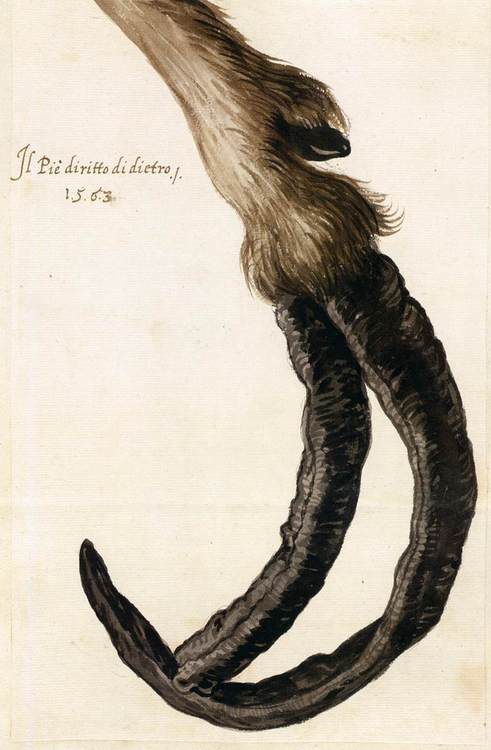
Giuseppe Arcimboldo’s Contribution To The World: A Painting Of A Deformed Goat Hoof

Arcimboldo's Goat Hoof 1563

Giuseppe Arcimboldo, Study of a goat’s deformed hoof, 1563

The artist who painted a deformed goat’s hoof was the same guy who painted all those famous portraits consisting of fruits and vegetables. True.

[Found here.]

Stephen Gray’s Contribution To The World

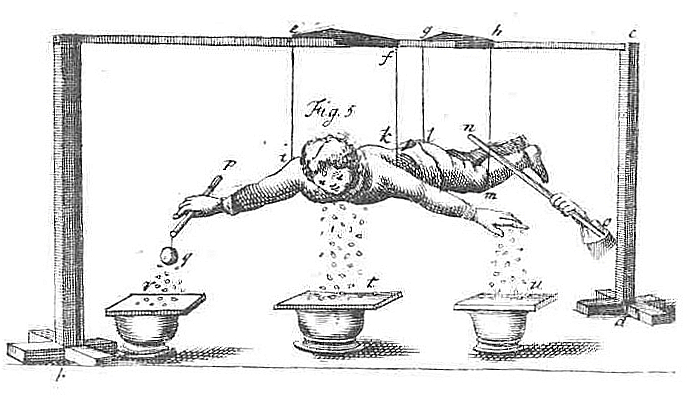
Magnetic Boy

Stephen Gray was pursuing a long series of experiments with electricity. In producing charge on a long glass tube, he discovered in 1729 that he could communicate the electrical effect to other objects by direct connection. Using string, he could charge an object over 50 feet from the rubbed tube, but oddly enough some other substances, such as silk thread, would not carry charge. Brass wire would transmit charge even better. These experiments with charged strings and glass tubes revealed the properties of conduction, insulation, and transmission.

The depiction above shows one of Gray’s most famous experiments, in which he showed that a boy suspended by (insulating) silk cords could be charged (with the glass tube) and then as a (conducting) body could (electrostatically) attract small objects. Dramatic experiments such as these became quite well-known. Finally, after Newton’s death in 1732, Gray was admitted as a member of the Royal Society in recognition of his efforts, but he died destitute a few years later in 1736. [via]

[Image found here.]

RIP Robin Williams (1951-2014)

Robin Williams RIP

Here’s a classic Williams routine: “How The Scotts Invented Golf.” [Language warning – NSFK].

Heaven’s now got Robin Williams, Jonathan Winters, Sid Caesar and others, and you can bet that God is laughing his ass off right now… about golf.

Nanu Nanu, Mork.

Full Moon Heros

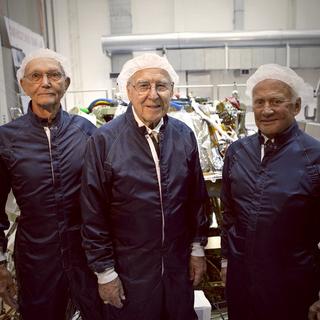
APOLLO Astronauts Collins Lovell & Aldrin

Mike Collins, Jim Lovell & I [Buzz Aldrin] got a behind the scenes look at the Orion capsule being built at Kennedy Space Center. Like our bunny suits?

I shouldn’t have to tell you who these guys are or what they did, but all three have titanium cojones.

Lovell’s book “Lost Moon” is a can’t-put-down white-knuckle read, and was the basis for the excellent movie “Apollo 13.”

[Image and Aldrin’s caption found here.]

P.S. Tonight’s full moon is a “supermoon.”

Saturday Matinee – Johnny Winter (1944–2014)

Johnny Winter 1944-2014

Johnny Winter, legendary guitarist and one of the most recognizable icons of Texas blues and rock passed away at the age of 70 earlier this week after a long career.

In a documentary released this year entitled “Johnny Winter Down and Dirty,” he laughed, “Made my first record when I was 15, started playing clubs when I was 15. Started drinking and smoking when I was 15. Sex when I was 15. Fifteen was a big year for me.”

According to Wiki, at age 10 he and his 8 year old brother Edgar played on local TV in his hometown of Beaumont Texas.  Johnny Winter performed for an astounding 60 years, and he died while on still on tour.


RIP, Johnny. You made our roadtrips a hellalotta fun.