
[Found here.]

[Found here.]

[Found here.]

[Artwork by Carlo Stanga found here.]
Wingsuit fail vid from Corcovado, Rio De Janeiro, Brazil.
[SFK. Yeah, as horrible and disturbing as it is, it’s SFK.]
Bees in China [via].
Karen Marie‘s take on Little Willie John‘s “Fever” (done in 12 styles with Postmodern Jukebox). It kept my attention, even though the video erroneously credits Peggy Lee for the song. LWJ recorded it in 1956; two years later Peggy Lee covered it.
Here’s the great Buddy Guy and his take on the song. And with that we’re out. Have a great weekend, folks. See you soon.
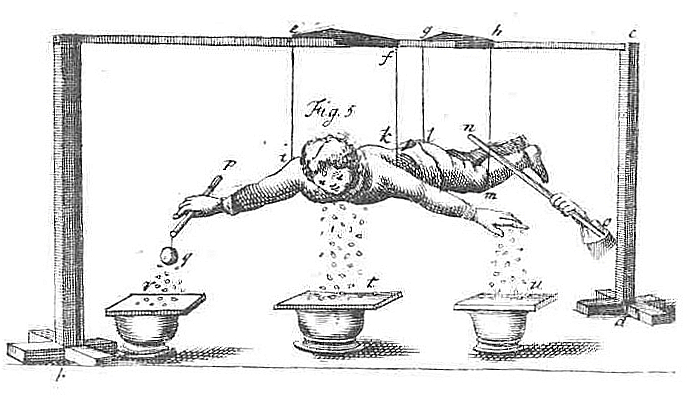
Stephen Gray was pursuing a long series of experiments with electricity. In producing charge on a long glass tube, he discovered in 1729 that he could communicate the electrical effect to other objects by direct connection. Using string, he could charge an object over 50 feet from the rubbed tube, but oddly enough some other substances, such as silk thread, would not carry charge. Brass wire would transmit charge even better. These experiments with charged strings and glass tubes revealed the properties of conduction, insulation, and transmission.
The depiction above shows one of Gray’s most famous experiments, in which he showed that a boy suspended by (insulating) silk cords could be charged (with the glass tube) and then as a (conducting) body could (electrostatically) attract small objects. Dramatic experiments such as these became quite well-known. Finally, after Newton’s death in 1732, Gray was admitted as a member of the Royal Society in recognition of his efforts, but he died destitute a few years later in 1736. [via]
[Image found here.]
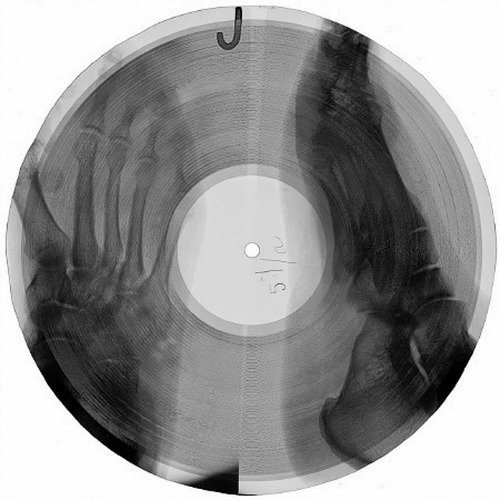
“Before the availability of the tape recorder and during the 1950s, when vinyl was scarce, people in the Soviet Union began making records of banned Western music on discarded x-rays.”
[Image and caption found here.]
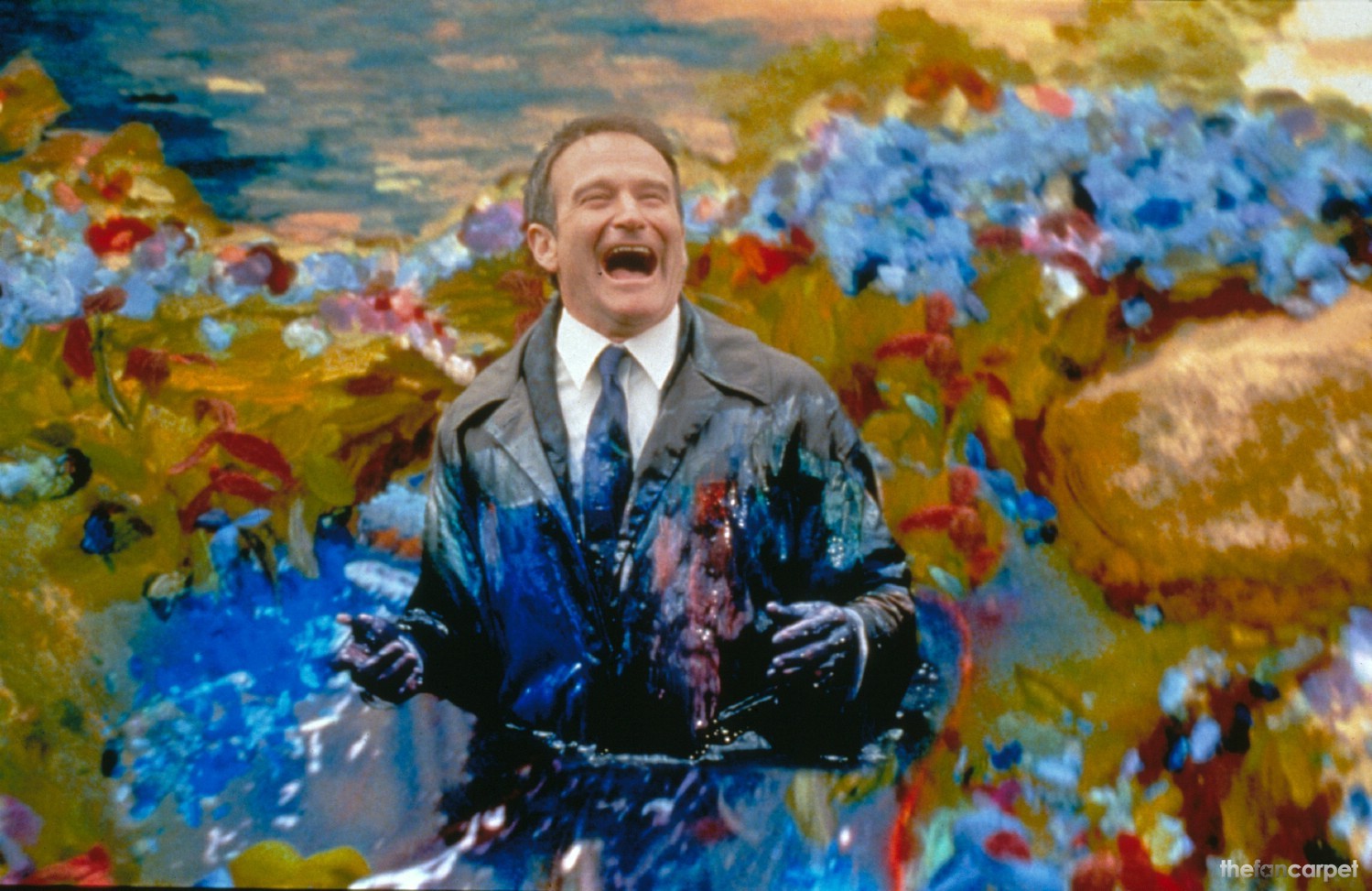
Here’s a classic Williams routine: “How The Scotts Invented Golf.” [Language warning – NSFK].
Heaven’s now got Robin Williams, Jonathan Winters, Sid Caesar and others, and you can bet that God is laughing his ass off right now… about golf.
Nanu Nanu, Mork.




 Tacky Raccoons