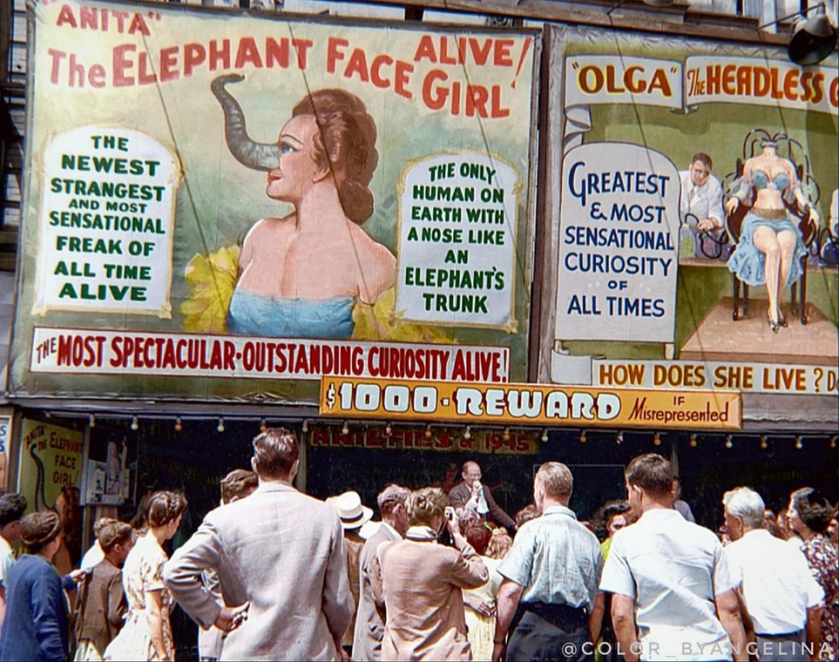
Coney Island freak show circa 1945 (colorized).“Anita” the Elephant Girl (real name & date unknown).
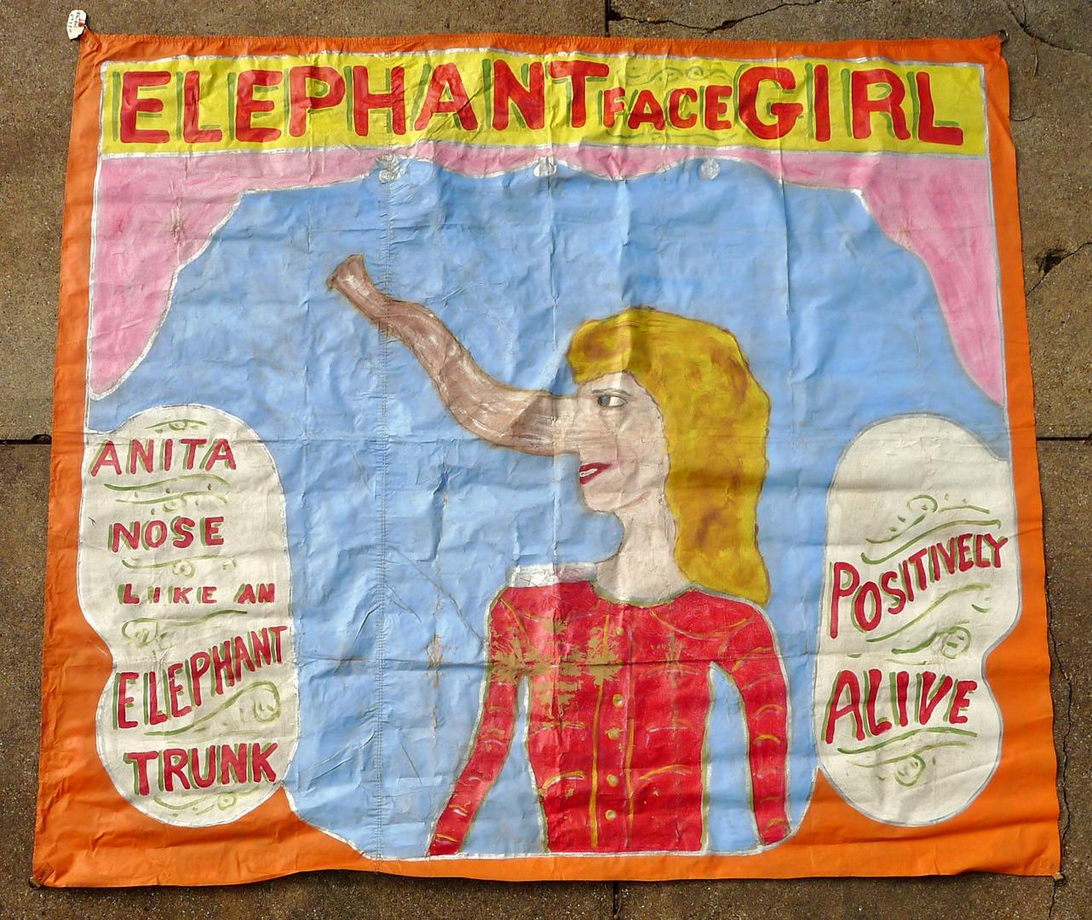
Very little can be found about Anita the Elephant Girl on the internet. A defunct website may have had a biography of sorts but I couldn’t find an archive of the article: “Anita The Elephant-Faced Girl: Embracing Uniqueness and Overcoming Challenges.”
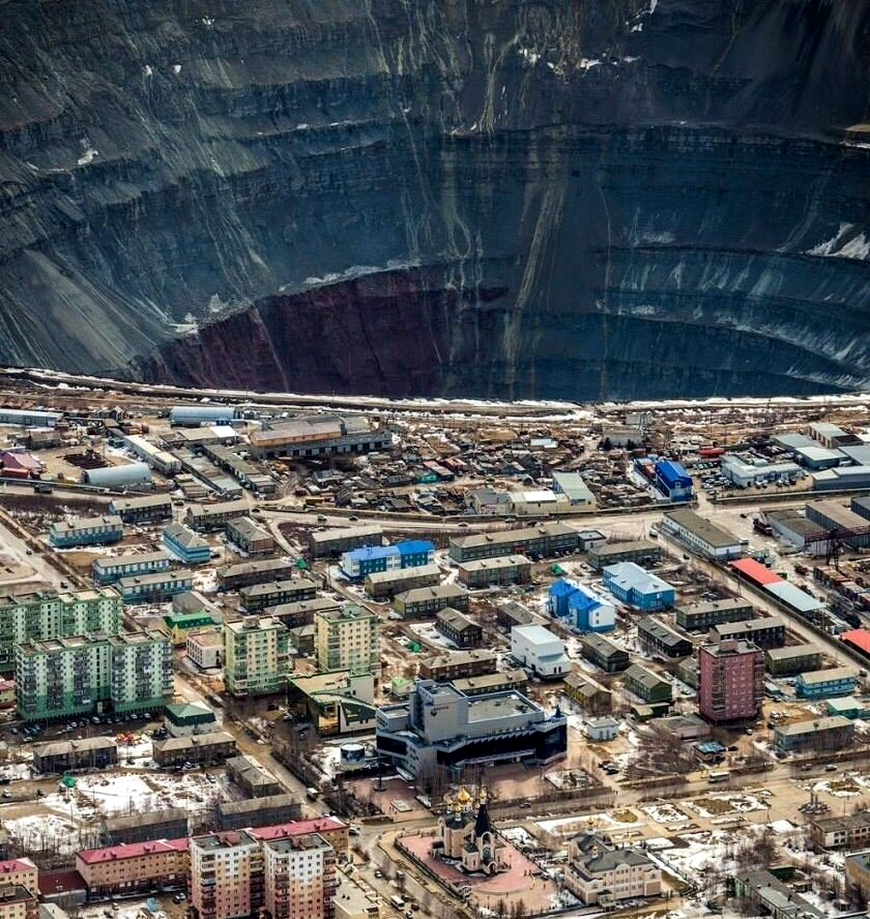
Mir Diamond Mine, Mirny, Yakutia, Russia.
At 3,900 feet in diameter and 1,722 feet deep , it’s one of the largest excavated holes in the world. It reportedly has its own weather system vortex due to temperature variations, and aircraft are forbidden to fly over it.
In the midst of the Siberian wilderness, there is a town known as Mirny, the only sign of humanity in a heavily forested landscape for miles around. Only a few full-time residents call the town home, all of whom live in a small community built on stilts to prevent the melted permafrost from flooding their homes in the spring.
Truthfully, the town of Mirny would be entirely unremarkable, save for one thing. There’s a giant hole in the middle of the town over 1,000 feet deep and over half a mile wide that churns out an unnatural and mysterious amount of diamonds. Oh, and it also sucks in anything that flies overhead.
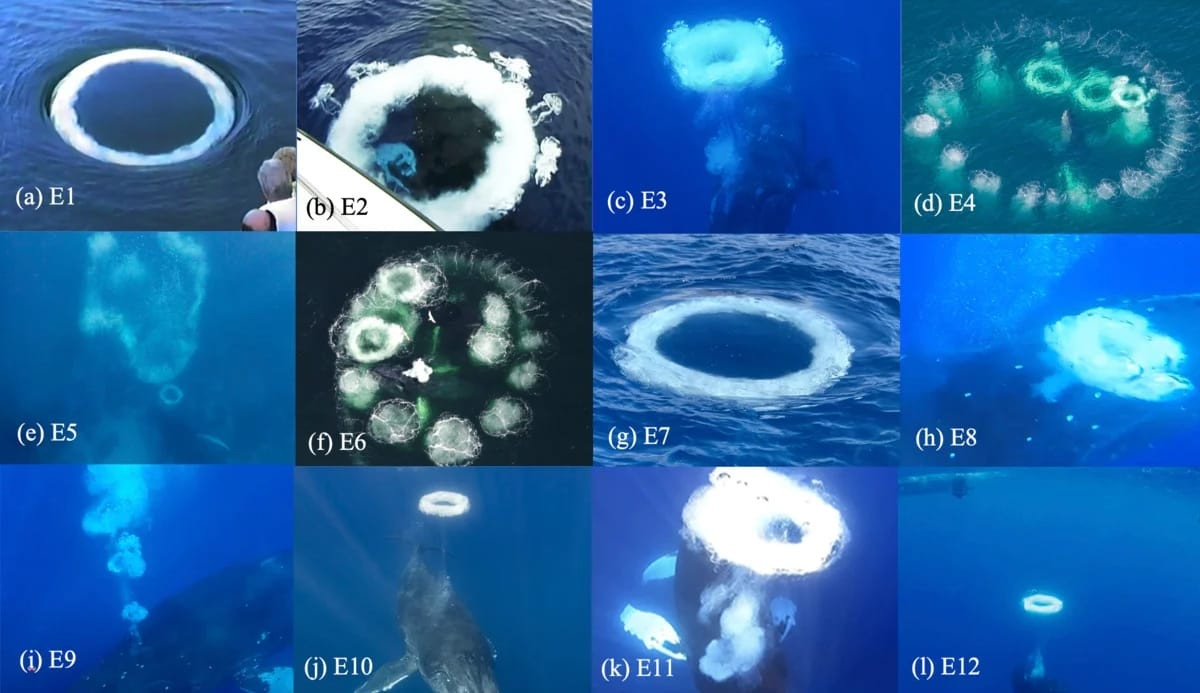
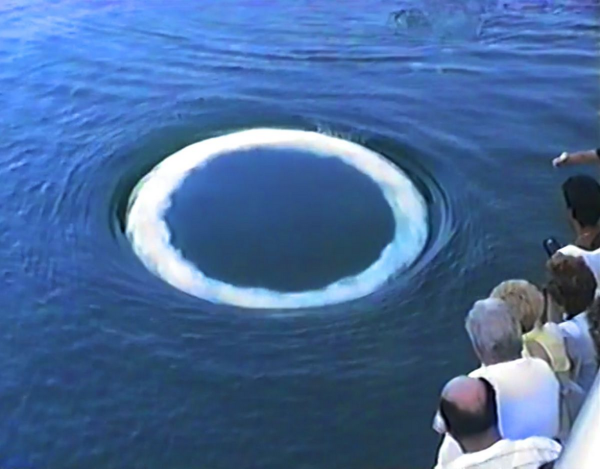
“A study released this month by the SETI Institute and the University of California at Davis dives into a newly documented phenomenon of humpback whales blowing bubble rings while interacting with humans.” [Video and more here.]
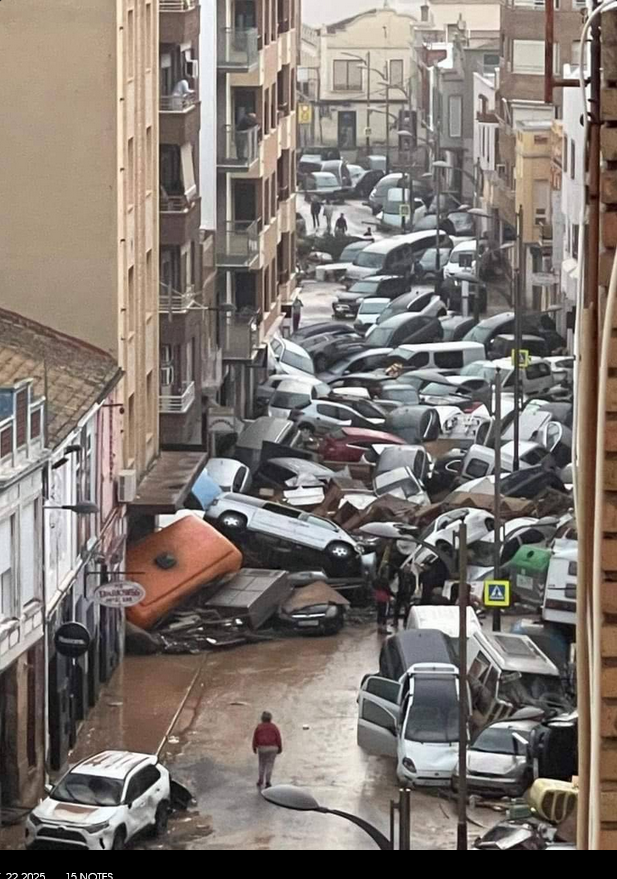
Damage from torrential rain and subsequent flooding, Valencia, Spain, November 2024. [Image found here, story here. Google Maps street view of Avinguda Gómez Ferrer, Alfafar, Valènciahere.]
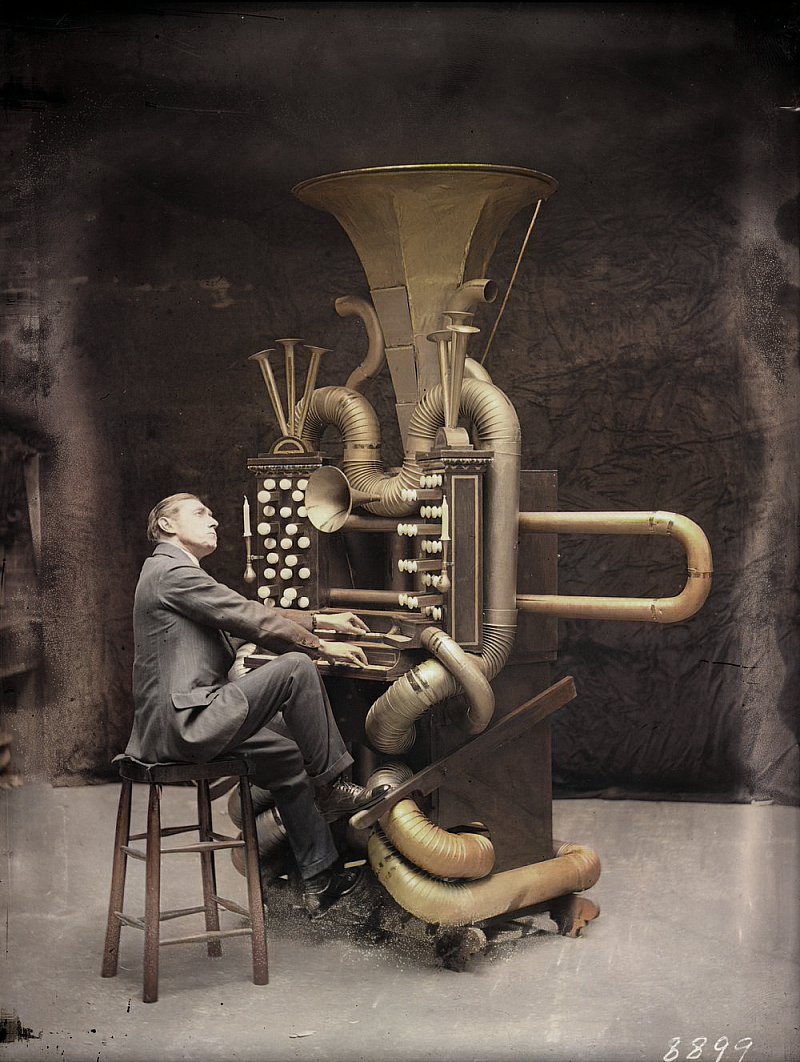
Mr. Lewis Sydney playing his Follyphone, September 1912.
The Follyphone appeared on stage in London during the fall of 1912 during orchestral concerts conducted by H.G. Pelissier. And all of the newspaper accounts from the time make it sound like an interesting prop to deliver a message about anticipation, elaborate planning, and ultimately disappointment.
On 5 February 2020 I was diagnosed with Stage 4 colon cancer. I made the mistake of looking up survival rates on the internet. Scared the crap out of me.
The following month I had surgery, but they couldn’t get at a couple of malignant lymph nodes, and on 16 March I began chemotherapy infusions every two weeks. My oncologist said that something would happen by my third year of treatment, but he didn’t know what.
In 2023 I passed the three year mark. Nothing happened in my fourth year either, and the onkydoc said I was an unusual case, an outlier within the top fifth percentile of patients. He reduced my chemo dosage for a second time in October 2024.
On Monday, 12 May 2025, the oncologist informed me that Infusion No. 129 would be my last, and that I’m officially in remission.
I still get to visit the pretty nurses in the clinic every three months for a blood draw and Signatera test, and have a CT scan every four.
I’ve been fortunate that my side effects have been tolerable. The most bothersome was chemobrain – the mental fog that never quite dissipates. I’m hoping that as the toxins flush out things will improve, but then I won’t have chemo to blame for when I get a case of the stoopidz.
Thanks to all for the good wishes and prayers. Seems they worked.
An apartment is left exposed where a corner of the residential building collapsed in the Bronx borough of New York, on Dec. 11, 2023. Yuki Iwamura/Associated Press.
Built in 1927, an inspection in 2020 found cracked brick and loose, damaged mortar on the seven story building’s facade; repairs were underway prior to the collapse. All residents survived.
[Image with story found here. The photo also appears in a Russian website photo collection titled “Everyday Life In The USA“. Right-click the top image and open in a new tab to view full size.]
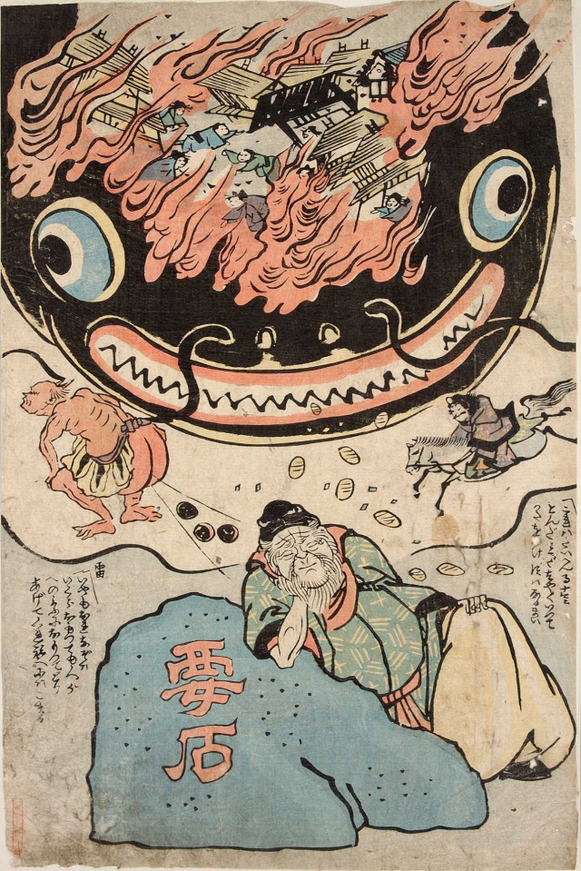
In November 1855, the Great Ansei Earthquake struck the city of Edo (now Tokyo), claiming 7,000 lives and inflicting widespread damage. Within days, a new type of color woodblock print known as namazu-e (lit. “catfish pictures”) became popular among the residents of the shaken city. These prints featured depictions of mythical giant catfish (namazu) who, according to popular legend, caused earthquakes by thrashing about in their underground lairs. In addition to providing humor and social commentary, many prints claimed to offer protection from future earthquakes.
Namazu are normally kept under control by the god Kashima using a large rock known as kaname-ishi. The Great Ansei Earthquake of 1855 is said to have occurred when Kashima went out of town and left Ebisu (god of fishing and commerce) in charge. In this print, the giant subterranean catfish unleashes destruction on the city while Ebisu sleeps on the job. Kashima rushes home on horseback while the city burns, and Raijin the thunder god defecates drums. Large gold coins fall from the sky, symbolizing the redistribution of wealth during the rebuilding phase.
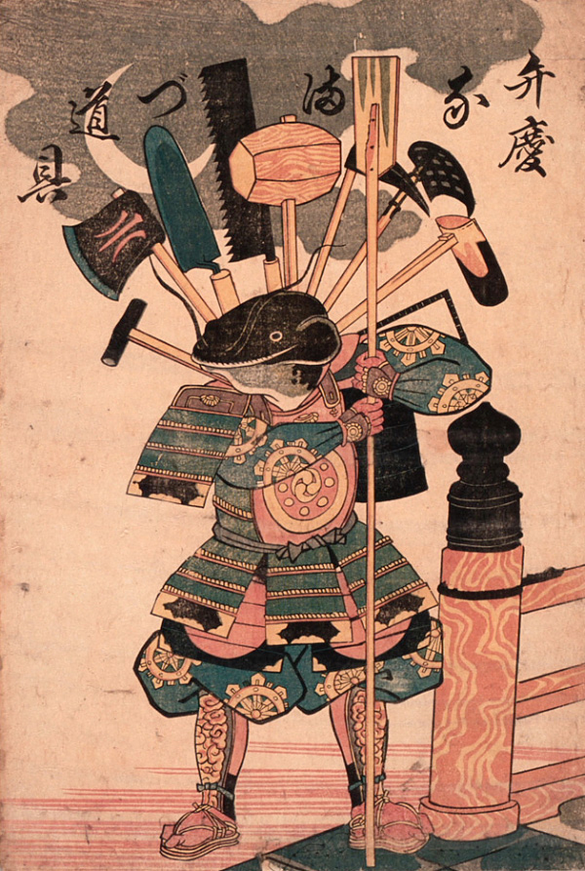
Namazu with construction tools, portrayed as the legendary warrior Benkei.





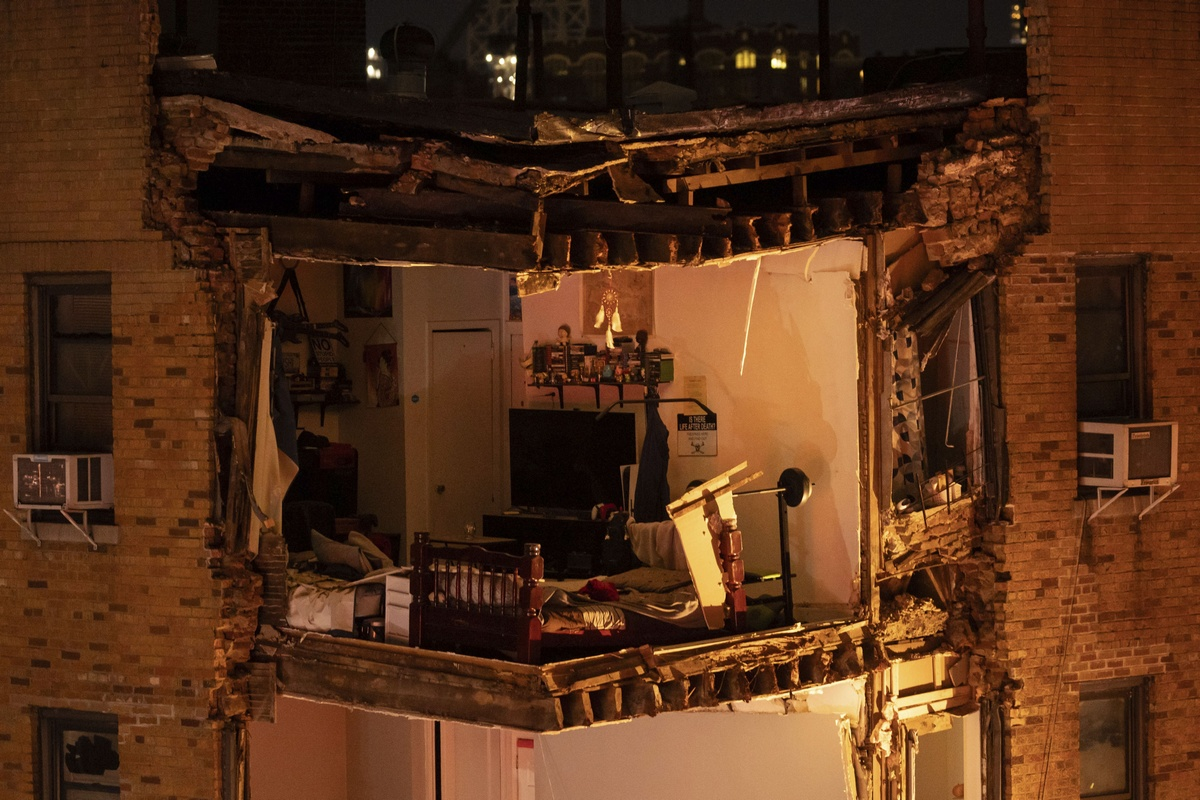 An apartment is left exposed where a corner of the residential building collapsed in the Bronx borough of New York, on Dec. 11, 2023. Yuki Iwamura/Associated Press.
 Tacky Raccoons