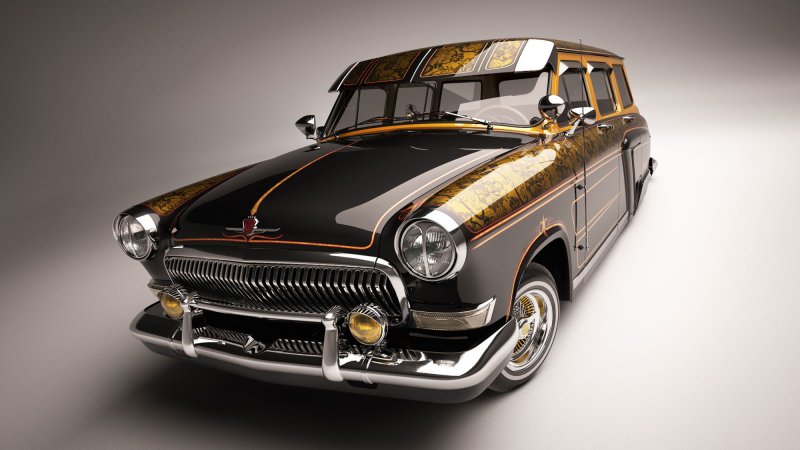
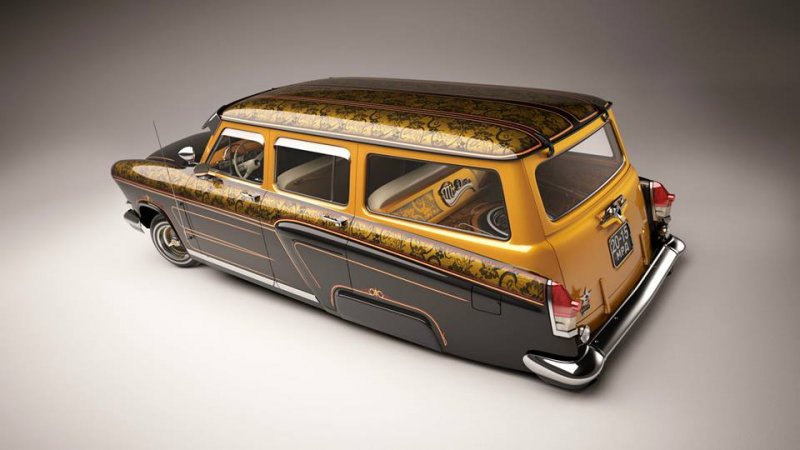
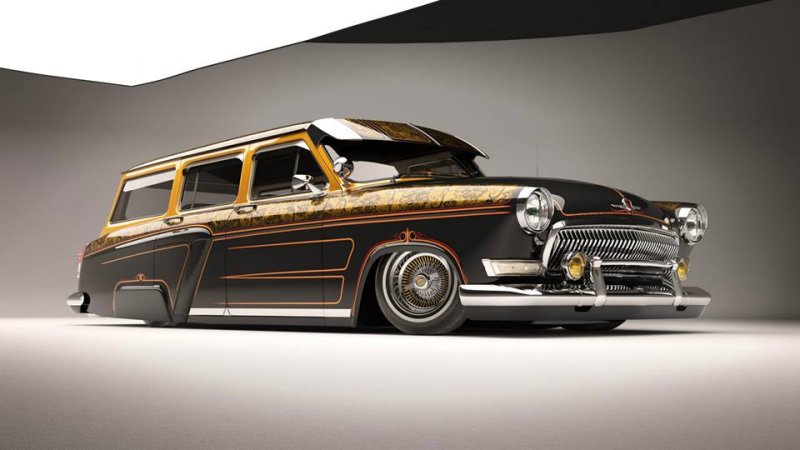
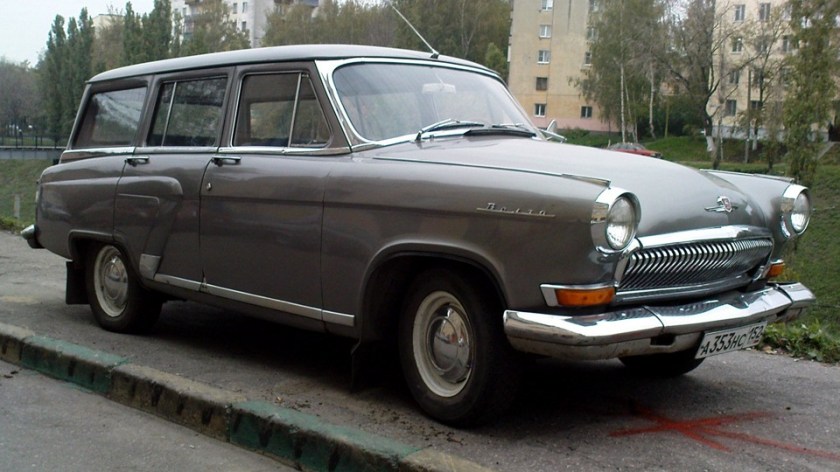
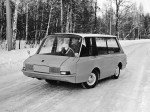
“Only those shipped abroad for export were sold to private customers. All domestic station wagons/estates, with rare exceptions, were never available for private ownership. The Soviet rationale was that allowing such a car to citizens would also make it too available and popular with dealers in the grey market economy [which] was allowed but limited by the state.”
Greek-American inventor Elie Aghnides amassed a fortune coming up with clever inventions.
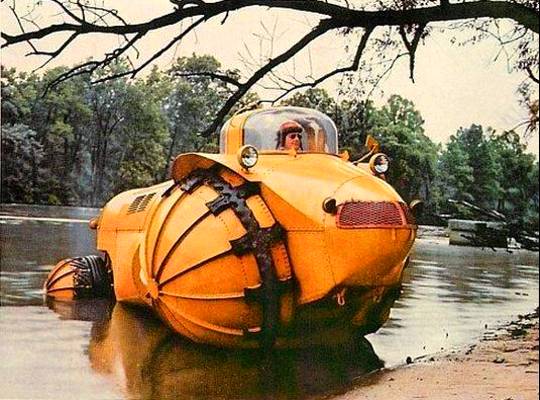
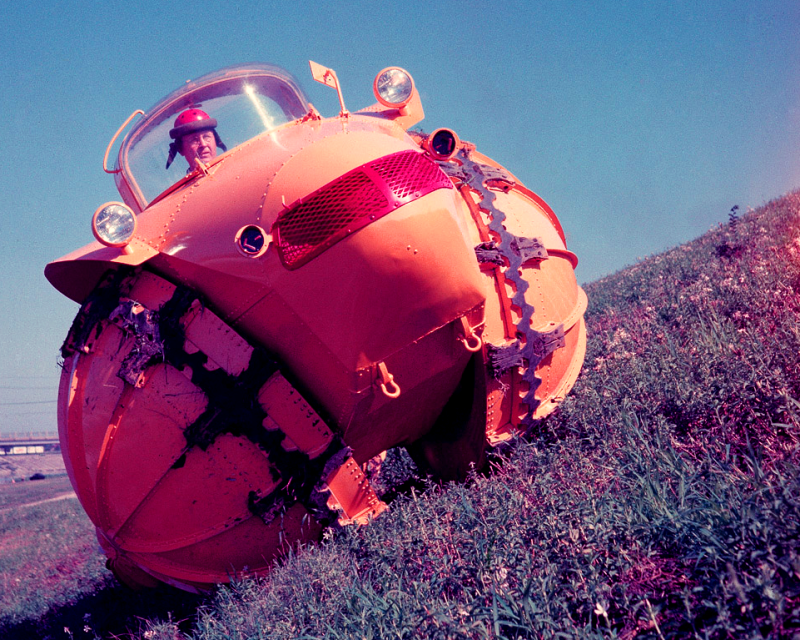
One of his more unusual creations was the “Rhino,” an amphibious four-wheeled vehicle designed to patrol and defend the vast roadless wastes of Alaska and Canada.
Weighing in at five tons, the four-wheel-drive machine could hit speeds of 45 miles per hour on the highway.
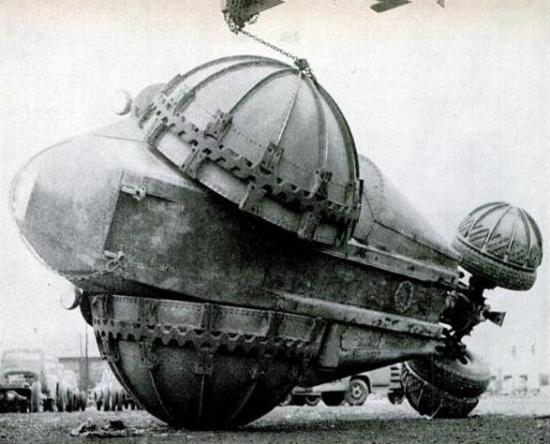
Defining features were its massive front wheels, which had six-foot diameters and weighed 1,500 pounds each. Their hollow, hemispherical shape gave the Rhino its unique all-terrain capability. As the vehicle sank into mud, sand, or other soft surfaces, the bearing surface of the ribbed wheels increased, giving it greater traction.
The Rhino’s massive wheels and low center of gravity also meant it could tip 75 degrees to either side without toppling over.
In the water, the hollow wheels provided flotation, while a rear water jet provided propulsion at speeds of about four miles per hour.
The Marmon-Herrington Company of Indianapolis built one prototype of the Rhino for demonstration. The United States military declined to purchase any, reportedly out of concern that the wheels could be punctured by gunfire, sinking the vehicle [via].
Not only could it float, it had such a low center of gravity that it was nearly impossible to overturn. Here it is in action:
This one’s been sitting in our What-To-Do-With-This-File for several years now. It’s way past time we set it free.
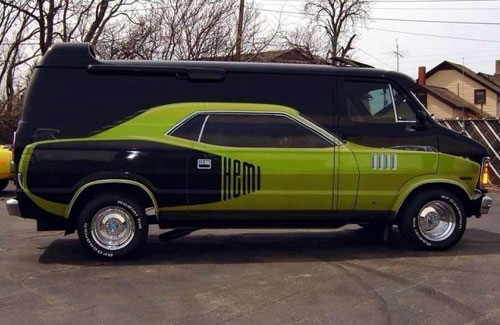
All we can guess is that the owner of this black pervo-van knew exactly what he was doing after he re-upholstered the interior and dash with tufted blue and white carpet, installed a wet bar, string lights and a sound system with an 8-track player that plays nothing but Barry White’s Greatest Hits. But even that didn’t get the babes, so he took the obvious next step: GO STEALTH.
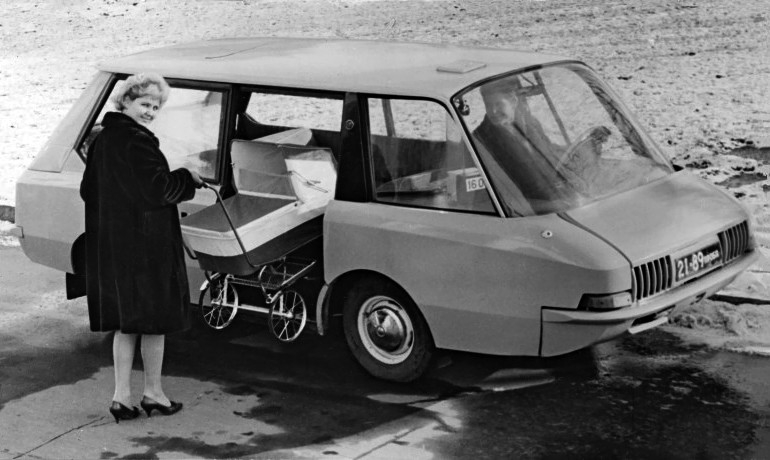
Even a babushka with a baby carriage full of pea soup fits in, without a drop spilled. The car never made it to production, but the concept is interesting, given the state of automotive manufacturing in the USSR at the time.
[Click the images below for full size.]
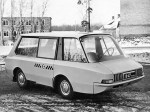
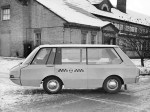
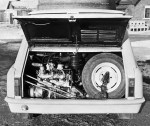
This unique test car was designed in 1964 based on components of “Moskvich-408”. It successfully passed performance tests in Moscow and was recommended for serial production In Yerevan, but due to different reasons it didn’t go this far…






 Tacky Raccoons