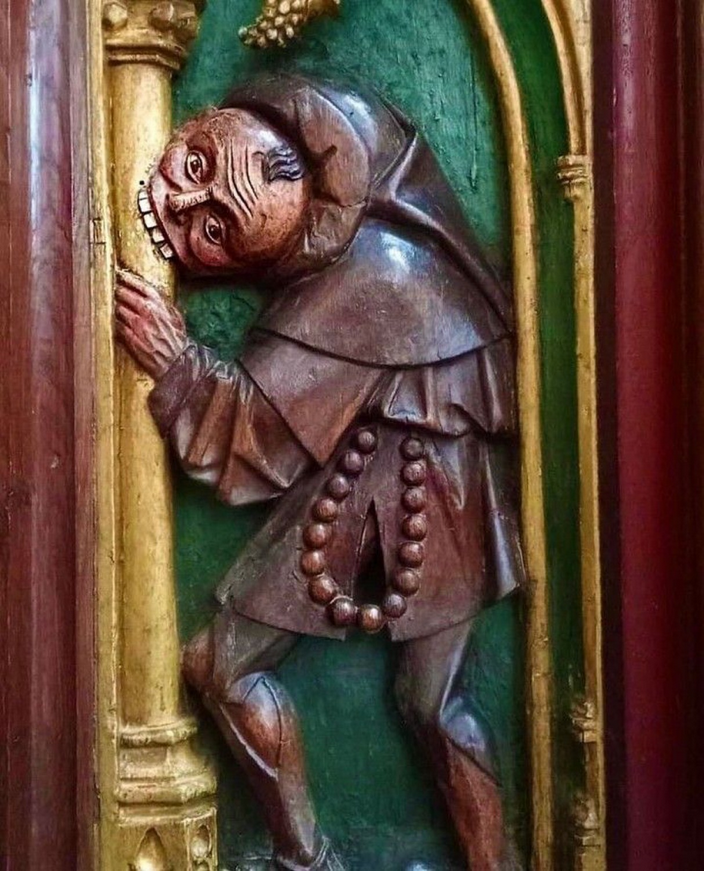
The Pillar-Biter (1509-1517), seen on the lower part of the choir screen of St. Bavo Church, Haarlem, the Netherlands.
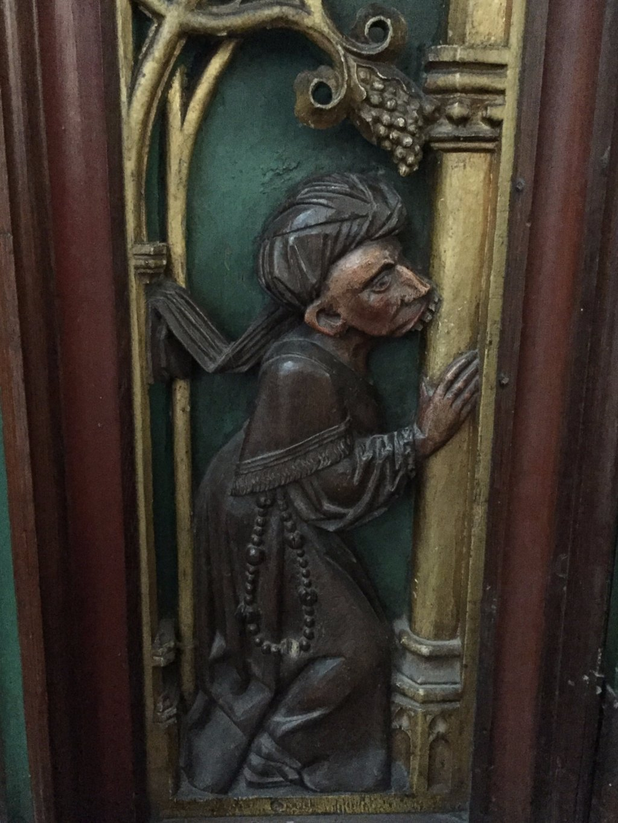
A common motif in late medieval and early modern Northern European art is the “pillar-biter.” Usually, the pillar-biter is depicted as a man who clings to a column while biting into it, but there are also representations of men and women who embrace or kiss columns. In the iconographic literature, the motif is usually linked to religious hypocrisy and the dissimulation of piety.
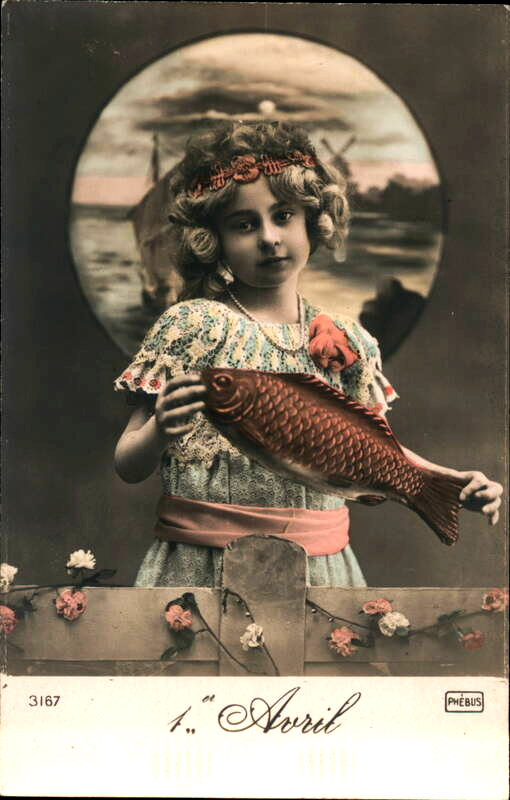
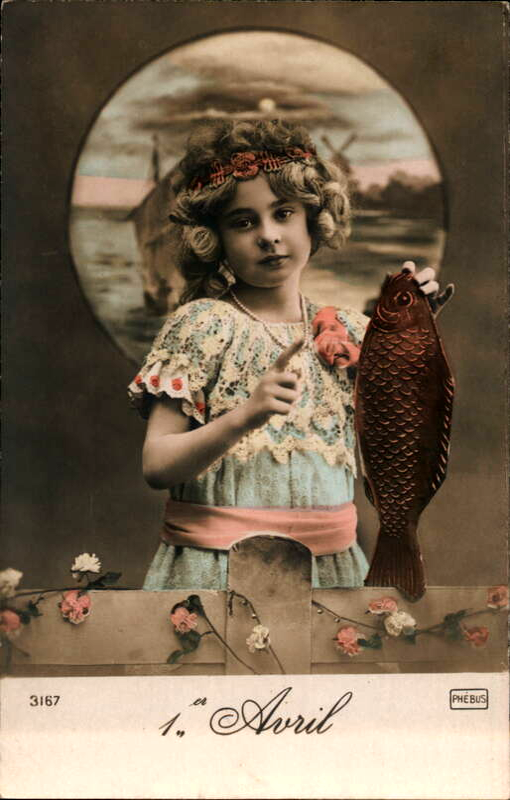
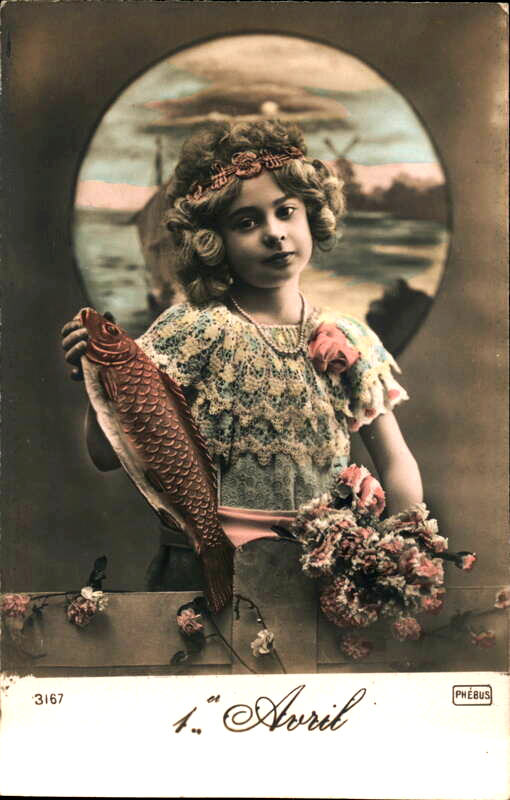
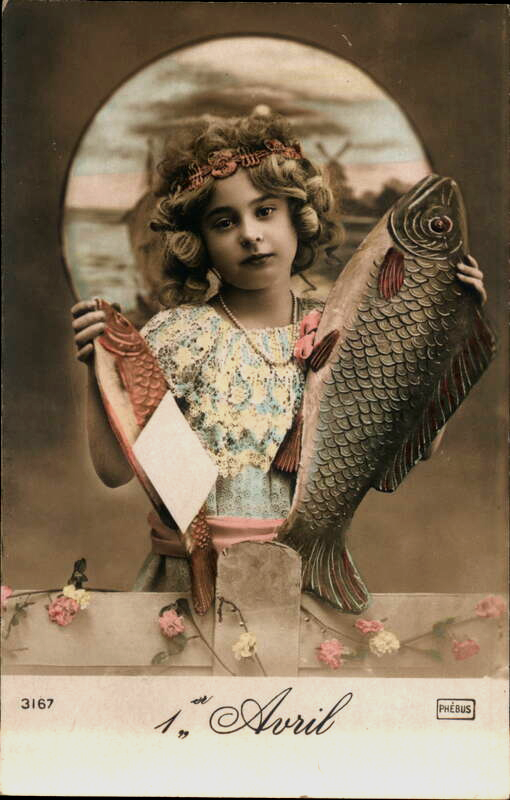
“Back in the old days in France (up until 1564), the new year was celebrated on April first, based on the Julian calendar. That was before King Charles IX came along and decided that everybody should be following the Gregorian calendar, which starts the new year on the first day of January.
“Not everyone welcomed this change, or so the story goes, and some people continued to celebrate April 1 as the first day of the year. Allegedly, those people were mocked and referred to as April fools. Whatever the case, it became a tradition to do things such as pasting a fish on unsuspecting people’s backs on April 1, and calling them a Poisson d’Avril or an April Fish. The symbol of the fish may also have been connected with Jesus Christ.”
[These undated postcards were found in this fine collection. There is a small envelope attached to one of the fish, meaning unknown. The caption, along with more vintage French April Fish postcards, found here.]
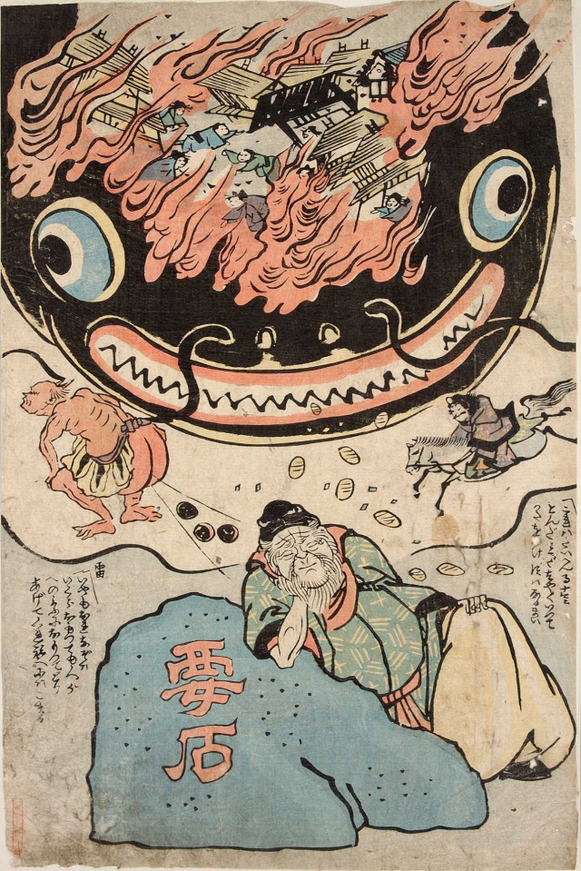
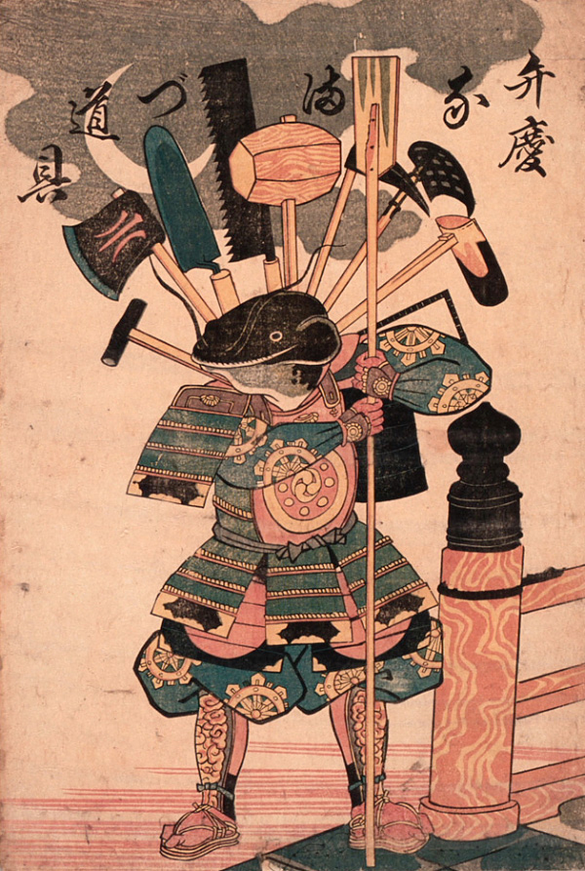
In November 1855, the Great Ansei Earthquake struck the city of Edo (now Tokyo), claiming 7,000 lives and inflicting widespread damage. Within days, a new type of color woodblock print known as namazu-e (lit. “catfish pictures”) became popular among the residents of the shaken city. These prints featured depictions of mythical giant catfish (namazu) who, according to popular legend, caused earthquakes by thrashing about in their underground lairs. In addition to providing humor and social commentary, many prints claimed to offer protection from future earthquakes.
Namazu are normally kept under control by the god Kashima using a large rock known as kaname-ishi. The Great Ansei Earthquake of 1855 is said to have occurred when Kashima went out of town and left Ebisu (god of fishing and commerce) in charge. In this print, the giant subterranean catfish unleashes destruction on the city while Ebisu sleeps on the job. Kashima rushes home on horseback while the city burns, and Raijin the thunder god defecates drums. Large gold coins fall from the sky, symbolizing the redistribution of wealth during the rebuilding phase.
Namazu with construction tools, portrayed as the legendary warrior Benkei.
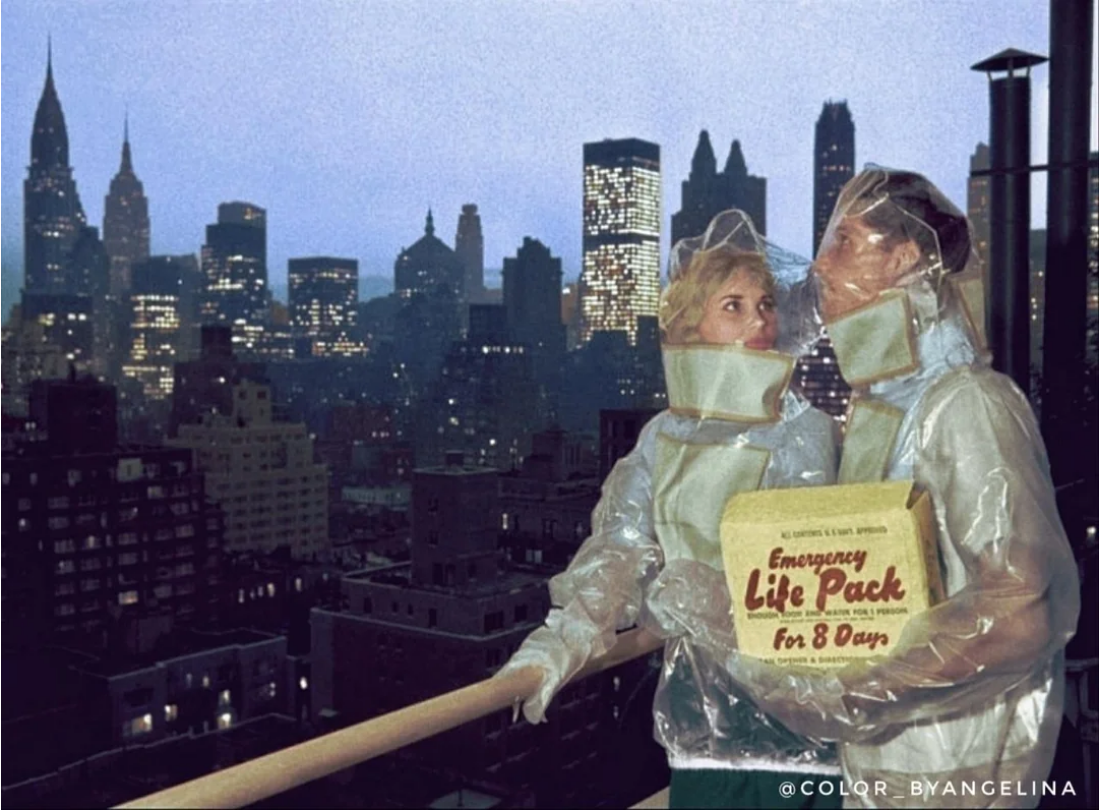
Protective suits and Emergency Life Pack for an evening in New York City, 1961
When nuclear fallout protection was all the rage.
Not sure what’s in the Emergency Life Pack, perhaps an 8 day supply of cigarettes and iodine pills. Note that the Cuban Missile Crisis went down in October of 1962, so the photo date may be in error.
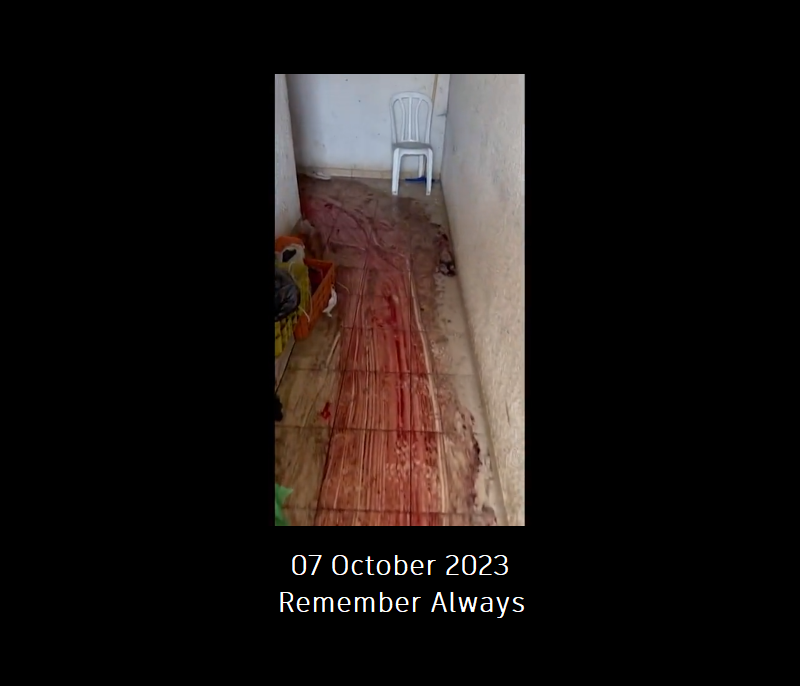
Thousands of Hamas-led terrorists launched a devastating assault on October 7, in which they rampaged through southern communities, killing over 1,200 people, mostly civilians butchered in their homes and at the music festival, and abducting some 240 people of all ages in total.
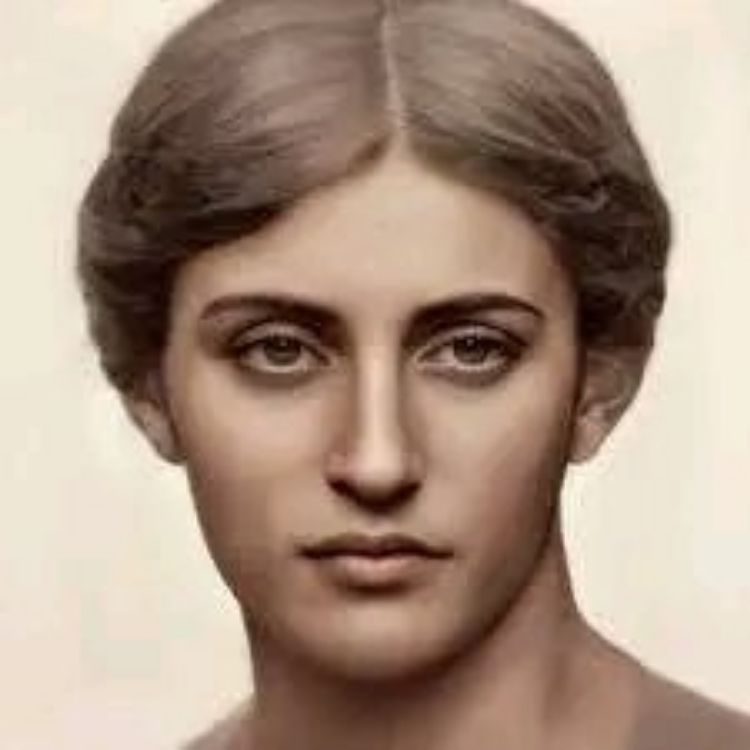
[Update: Image is NOT Isabella Eugénie Boyer; see below.]
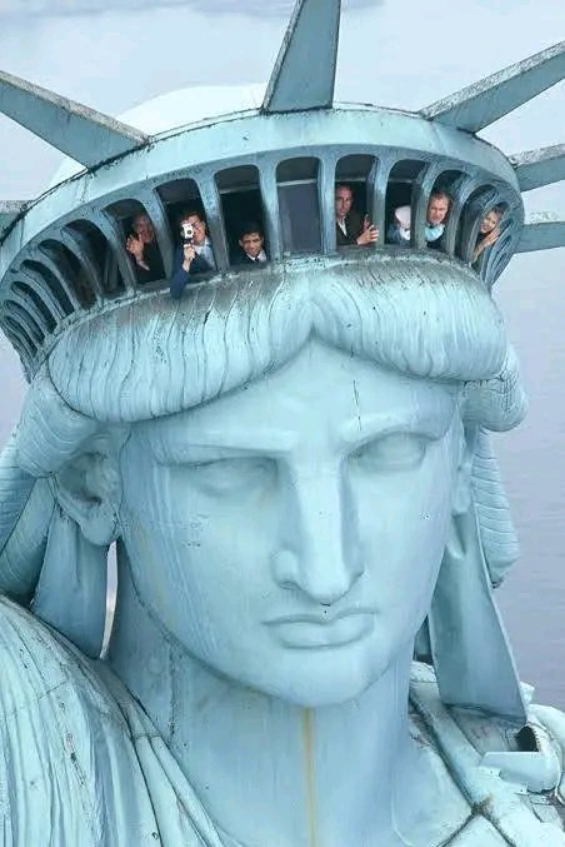
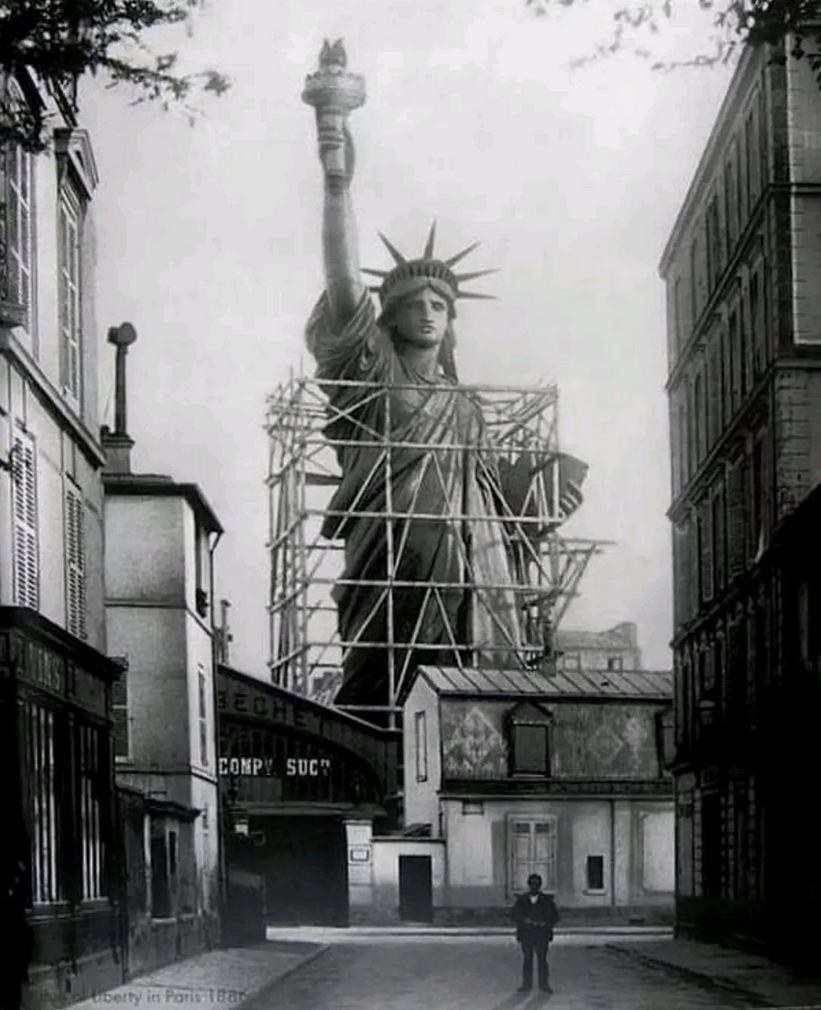
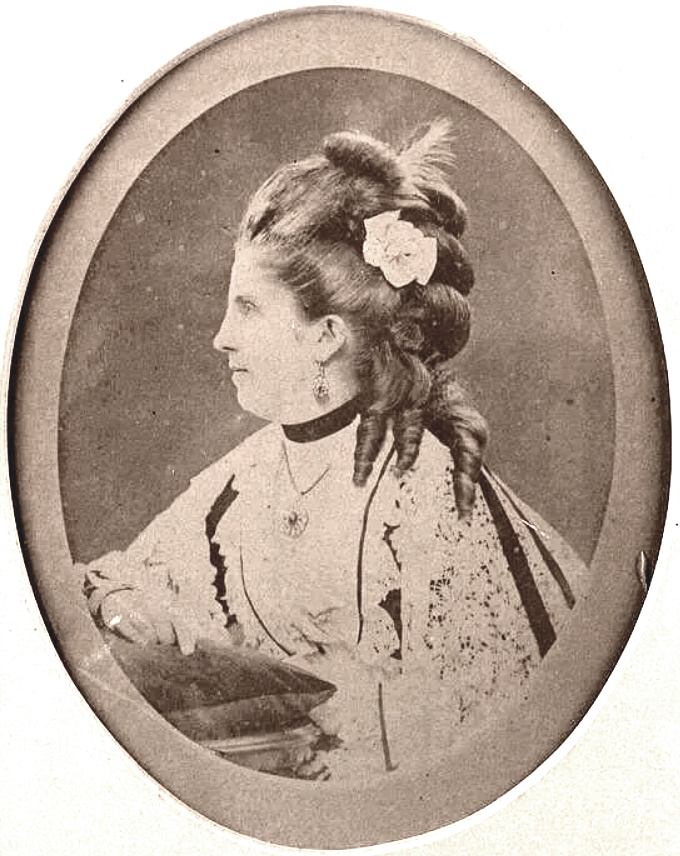
The face of the Statue of Liberty. Isabella Boyer’s life is like an exciting novel. She was born in Paris, the daughter of an African pastry chef and an English mother. Isabella had a special beauty and, at age 20, she married Isaac Singer, the sewing machine maker, who was 50 years old. After Singer’s death, Isabella became the richest woman in the country. It is not surprising that she was chosen as the model for the Statue of Liberty, as she embodied the American dream. Widowed, Isabella traveled the world and married the Dutch violinist Victor Robstett, becoming a countess. He became a prominent figure in America and Europe, and met the French sculptor Frédéric Bartholdi at a world event. Bartholdi, impressed by her beauty and history, used her face as a model for the Statue of Liberty. Isabella married a third time and died in Paris in 1904 at age 62, but her face lives on in the iconic statue in New York, symbolizing freedom and American pride.
UPDATE: The top image appears to be the work of Bas Uterwijk and is an A.I. generated image of Aphrodite, not Isabella Eugénie Boyer (who may or may not have been the model for the Statue of Liberty).
Isabella Eugénie Boyer (1841-1904)
More about the viral photo here, here and here.
[h/t Gabriel]




 Tacky Raccoons