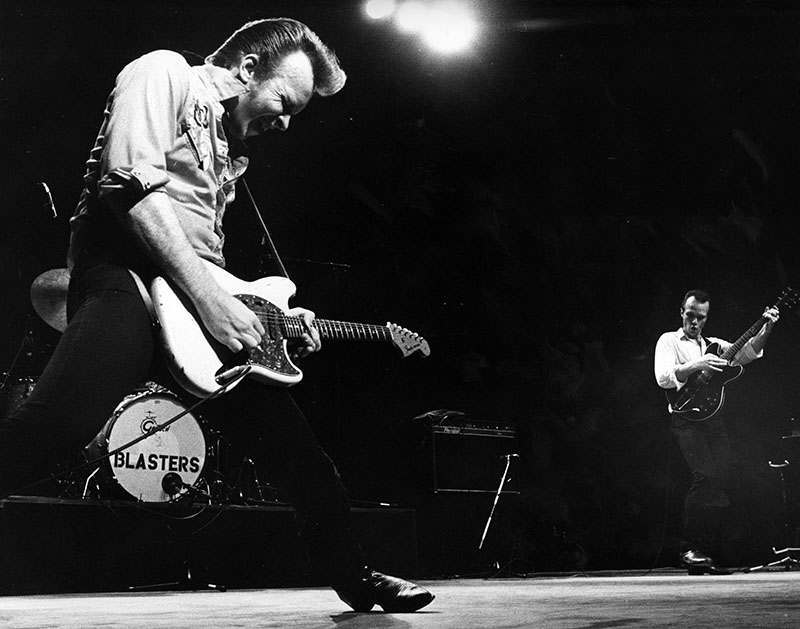
The Blasters. I saw them in the early 1980s at The Whiskey. They opened for The Fabulous Thunderbirds, who opened for some other band. Those two bands left little else to say, and I honestly can’t remember who the headliner was.
[Image found here.]

The Blasters. I saw them in the early 1980s at The Whiskey. They opened for The Fabulous Thunderbirds, who opened for some other band. Those two bands left little else to say, and I honestly can’t remember who the headliner was.
[Image found here.]
Kirsten Lepore‘s animated short “Bottle” won awards.
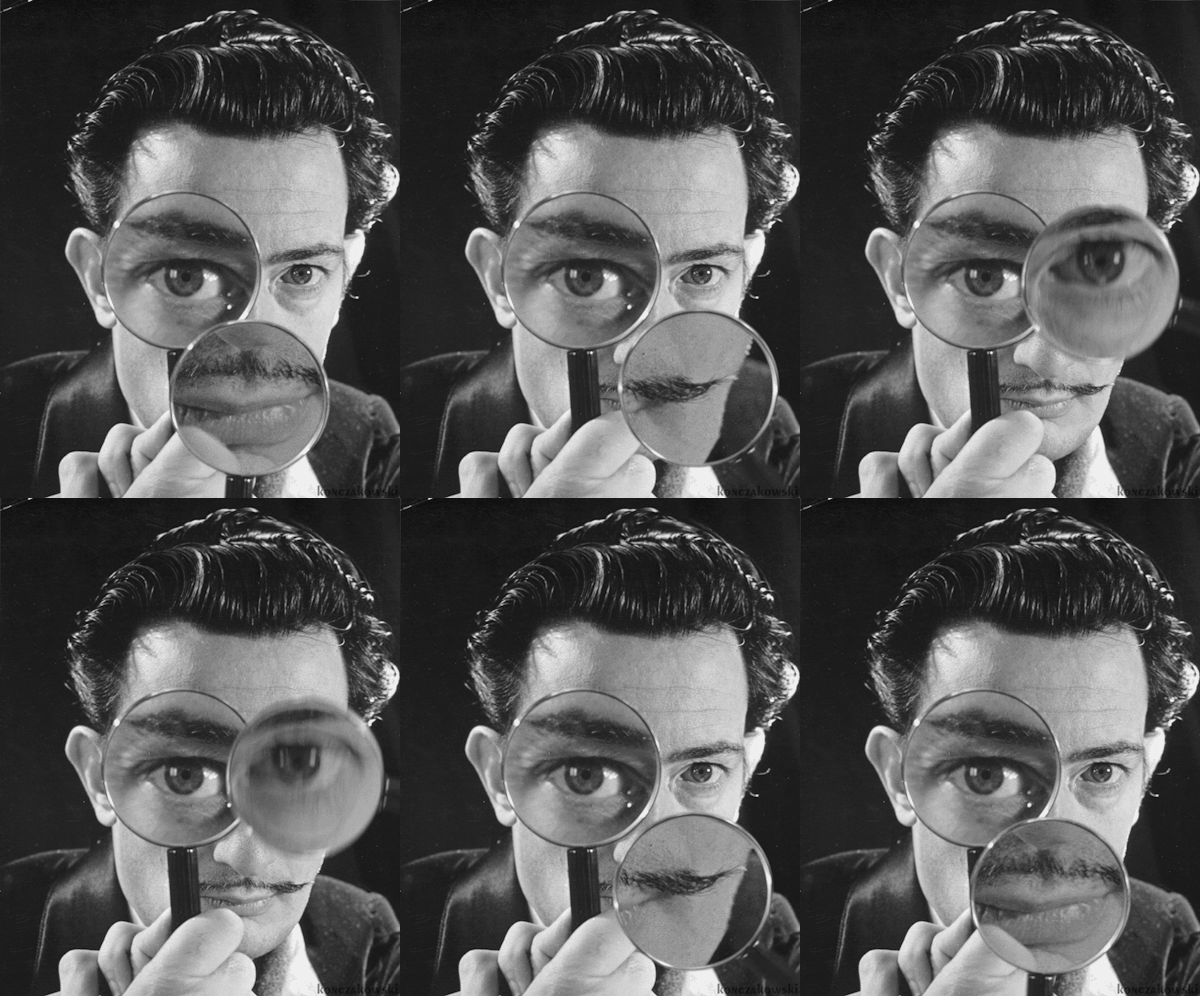
Sid Laverents played the classic song “Nola,” written in 1915 by pianist Felix Arndt (author of many player piano rolls). Laverents 1970 short film film Multiple SIDosis is one of the few amateur films to have been selected for inclusion in the National Film Registry [h/t wheels].
BTW, Newark Athelete (1891) is the oldest film in the NFR and runs about 10 seconds.
Workman on lunch break plays boogie woogie at the Public Piano in St Pancras Station, London. Some think he was just a plant in a public works suit, but so what. It’s all entertainment.
Commander Cody‘s vintage 1977 cover of Bradley & McKinley’s 1940 classic “Beat Me Daddy, Eight to the Bar.” Nicolette Larson was one of the backup singers.
Have a great weekend, folks. We’ll do you proud. Or not.
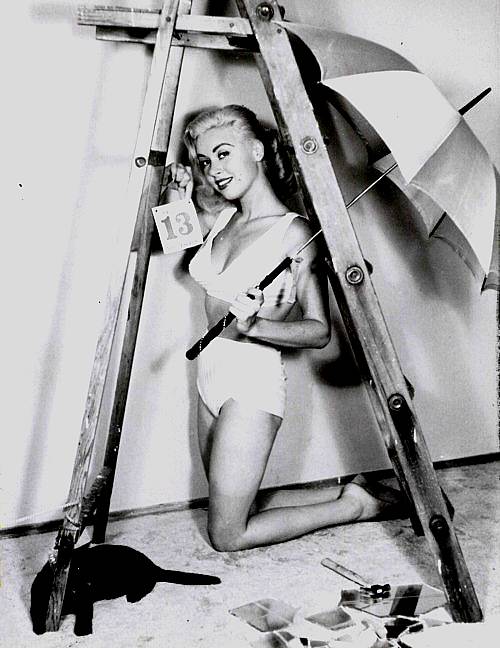
Apparently that’s Jeanne Carmen.
“As the plump sausages were beginning to brown, there was a knock on the door. Chicago Mob Boss Sam Giancana showed no fear as he turned back the double locks on the heavy steel door of his fortress like home that protected him from the outside world. Sam looked his old friend Johnny Roselli in the eye and invited him in. The men kissed on the cheek, exchanged pleasantries and shared a laugh. Then “Mooney”, as Johnny affectionately called Sam, heard the sausages sizzling in their pan and ran back to the stove to keep them from burning. While he was rolling them over, Johnny quietly crept up behind him and placed the muzzle of a .22 caliber handgun equipped with a silencer at the base of his skull and said “Sam, this is for Marilyn”. Sam hesitated a moment as he tended to the sausages. A split second passed. In that moment, an image of Marilyn Monroe, the quintessential Hollywood Goddess, platinum blond bombshell, orphaned child, cheesecake pin up girl, fantasy lover to thousands of men, supposed tragic suicide victim and lover of President John F. Kennedy and his brother Bobby, filled Sam’s head. Then Johnny pulled the trigger.”
[Found here.]
[Found here.]
Guy fitted his cat with a GoPro to find out what it does while he’s away, and no, it doesn’t sleep [via].
Ever hear of David “String Bean” Akeman? No? Here’s a documentary of the comic/iconic speed banjo player. Video starts at 06:00 for his rendition of the traditional folk song “Li’l Liza Jane. [Related post here.]
Akeman and his wife were murdered by burglars at their rural Tennessee home in 1973. The killers took only a chain saw and some firearms and were later apprehended and convicted.
The Blasters perform “Jubilee Train” at the 1985 Farm Aid concert in Champaign, Illinois. (Check out the impressive list of performers at the link.)
“Buckjump” by Trombone Shorty – a nice retro-funk groove to wrap things up.
Have a great weekend, folks.


Or not.
“Brazilian graphic designer and illustrator Butcher Billy got the idea of turning famous love hits into book covers of horror master Stephen King.”
Dame Shirley Bassey‘s classic “Theme to Goldfinger” as captured on film in 1965. I didn’t know she was Welsh until today.
Goldfinger‘s cover of Nena’s “99 Luftballons” is pretty good.
Nena‘s “Rette Mich” (Save Me) is from the same album as 99 Luftballons.
I’m embarrassed to admit that I once confused Nena (Gabriele Kerner of Hagen, West Germany) with Nina Hagen (Catherine Hagen of East Berlin, East Germany). Never again.
Have a great weekend, folks. More is yet to come.
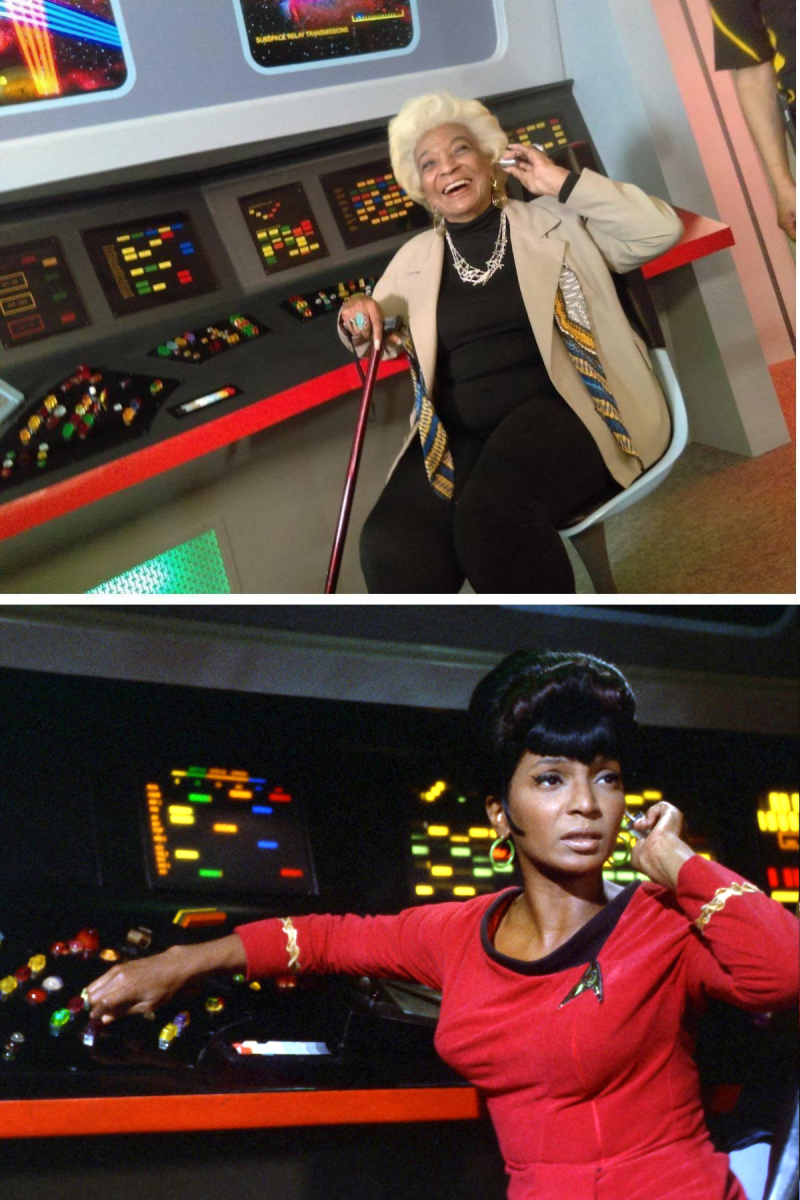
That was Nichelle Nichols‘ most famous role, but prior to Star Trek she sang with Lionel Hampton’s and Duke Ellington’s bands. I searched for an early recording, but found something entirely unexpected. If you are a fan, Do NOT click this link.
You’ve been warned.
[Images found here.]