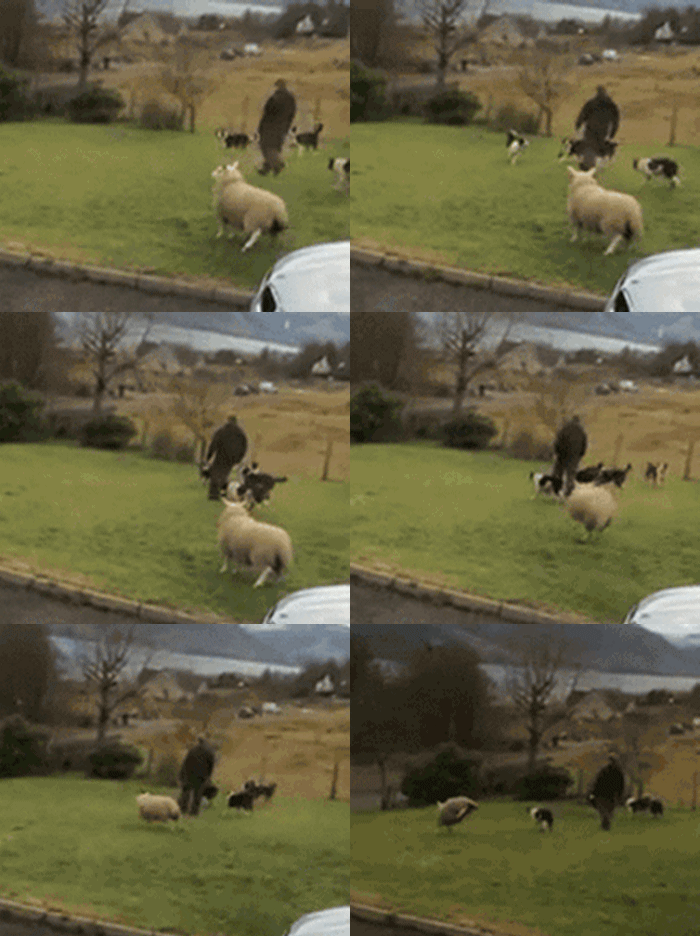


[Found in here, in here, and here via here.]


[Found here.]

Josh Jennings for Congress. He speaks truth to power as far as he knows.
4 November 2016 – Fayetteville, NC: Twenty hold-ups in 2-1/2 minutes by same man. No arrests, suspect at large.
This omni-directional conveyor belt is called a Celluveyor. Here’s another one with a jumpy jivey music track [via].
Here’s what happens if you dress up as your dog’s favorite toy for Halloween.
I quit watching TV decades ago because the family arguments on what to watch weren’t worth it. Recently they introduced me to The Walking Dead on Netflix and I got hooked. Three weeks later I’m overruled again, and The Walking Dead has been preempted by reruns of Roseanne. Now I’m back to not watching TV.
Ever feel like you’re merely a walking protein?
El peinado del emoticono de la caca. (Hint: it’s a hair-doo.)
John Lydon [aka Johnny Rotten of the Sex Pistols] once appeared before Judge Judy. Here’s the vid.
Noodling. Yeah, we posted the vid before, and you’ll never do it in your lifetime, unless you really want to.
Don’t forget to reset your calendars tonight.
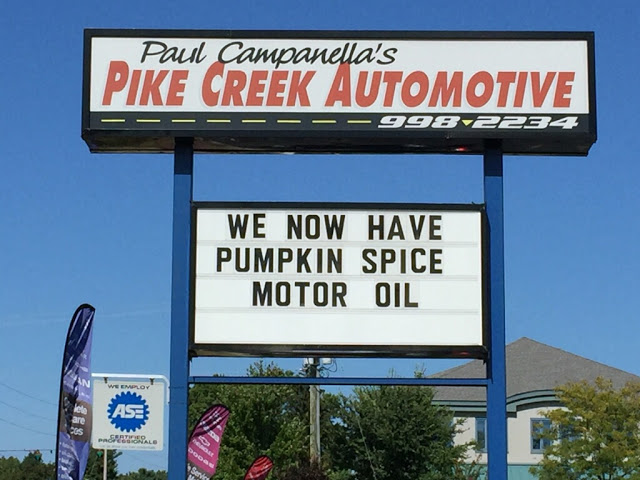
Didn’t even know this was a meme until Bunkessa gave me the lowdown. I’m so lasterday.
[Found here.]
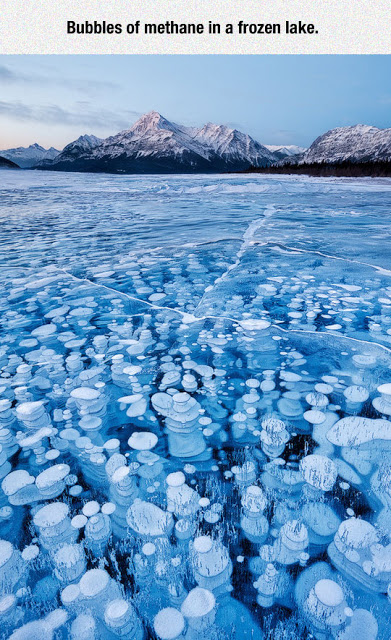
… Scientists suggest that the greater contribution to skyrocketing methane levels has more to do with biological sources of the gas. Methane molecules are made of carbon and hydrogen atoms, and the carbon in biological methane tends to be slightly lighter than the carbon in methane associated with fossil fuels. And over the past decade or so, the proportion of lighter methane in the atmosphere compared to heavier methane has been rising. “I think this perspective is basically right,” said Martin Helmann, of the Max Planck Institute for Biogeochemistry, in Jena, Germany, in an email. Helmann was not involved in the research.
The authors of the Science paper have some ideas about why biological sources of methane may be increasing. “In the southern hemisphere especially,” Nisbet said, “but also in the northern tropics, a series of really wet years has caused wetlands to expand”—and vegetation decomposing in swamps and shallow lakes is a well known source of natural methane emissions. Another is cows, which generate methane as they digest their food, then belch it out into the air.
These explanations, however, aren’t at all definitive — another key point Nisbet and his co-authors make in the Science paper. “The measurements we make in the air are direct,” he said. “Estimates of where methane is coming from, by contrast, is much less reliable. You estimate the contributions from gas leaks, count up the cows, estimate the emissions from wetlands. There’s obviously going to be a lot of error.”
And in fact, there is: the estimates of how much methane should be going into the atmosphere are greater than what actually ends up there. Tracking methane emissions more accurately is crucial, said the scientists, and not just as an academic exercise.
“If we want to control greenhouse-gas emissions,” Nisbet said, “it’s obviously important to know where the emissions are coming from.”
Global vegetation decomposition, wetlands, the oceans, rice paddys, rain forests, patio hibachis, your neighbor’s annoying little yapping kikmi dog and Humpback whales are all part of the mix.
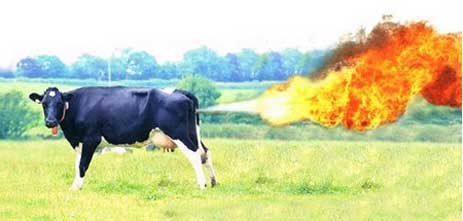
Q: So, what happens if atmospheric methane triples?
A: Click on the image of the Flaming Cow Fart to find out.
[Commentary excerpt found here; top image found in here; snarky related posts here.]





 Tacky Raccoons