Authentic Saloon Decor

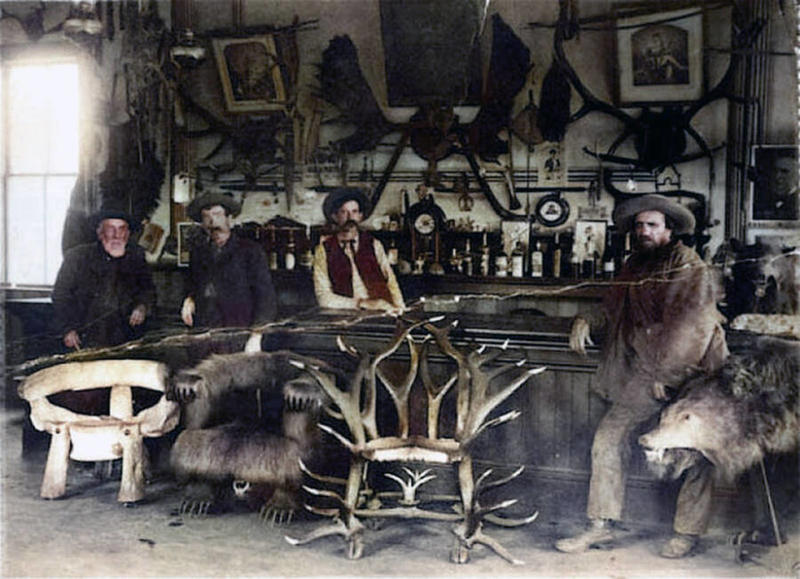
The Table Bluff Hotel and Saloon, Humboldt County, California. 1889

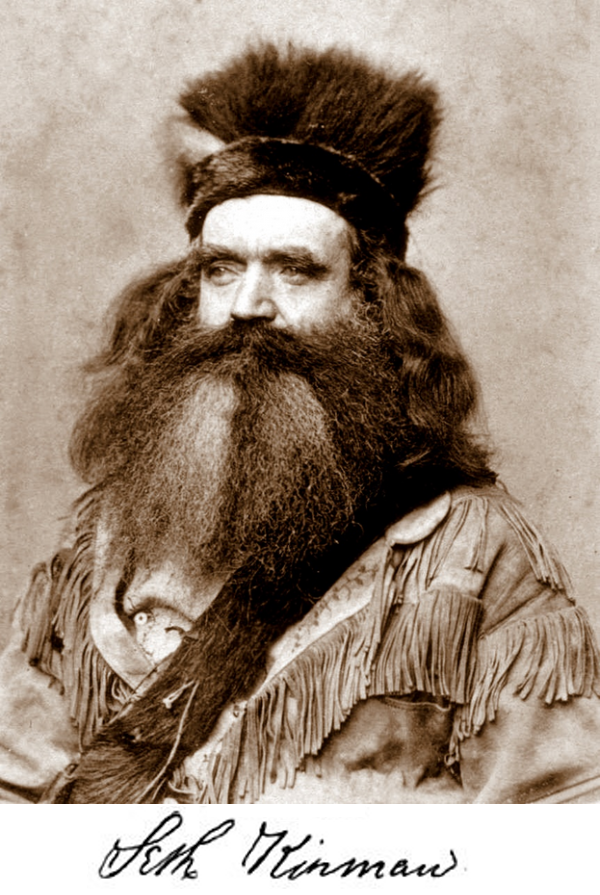
Seth Kinman (September 29, 1815 – February 24, 1888) was an early settler of Humboldt County, California, a hunter based in Fort Humboldt, a famous chair maker, and a nationally recognized entertainer. He stood over 6 ft (1.83 m) tall and was known for his hunting prowess and his brutality toward bears and Indian warriors. Kinman claimed to have shot a total of over 800 grizzly bears, and, in a single month, over 50 elk. He was also a hotel keeper, saloon keeper, and a musician who performed for President Lincoln on a fiddle made from the skull of a mule.

[Interior of Seth Kinman’s Table Bluff Hotel and Saloon in Table Bluff, California, 1889, found here.]

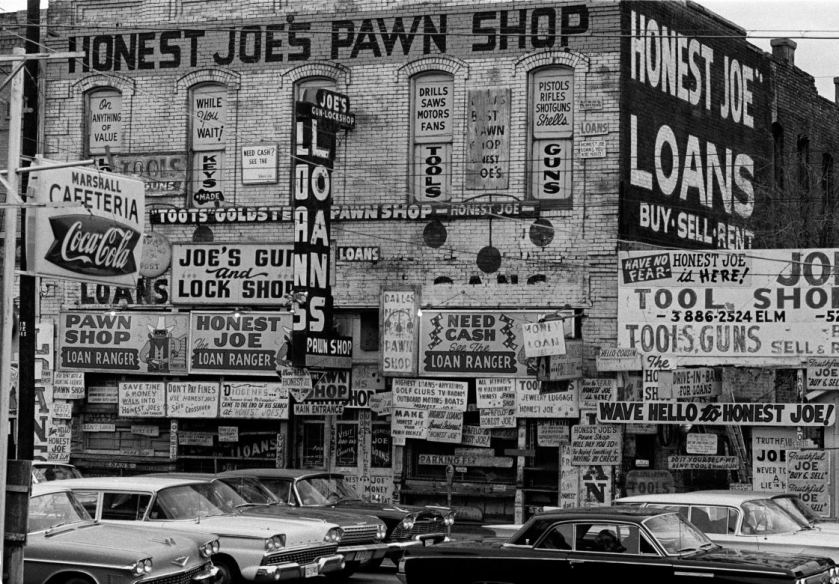
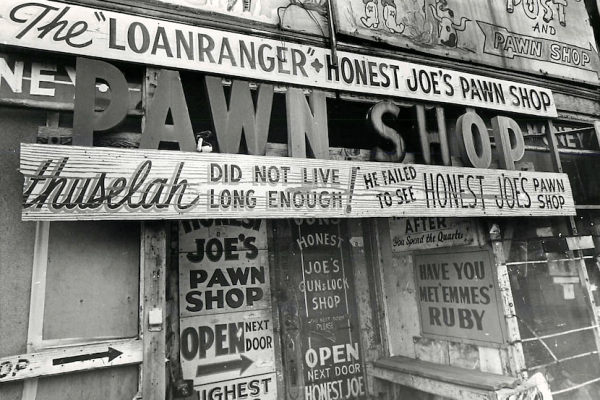
Wave Hello To Honest Joe – Rubin Goldstein

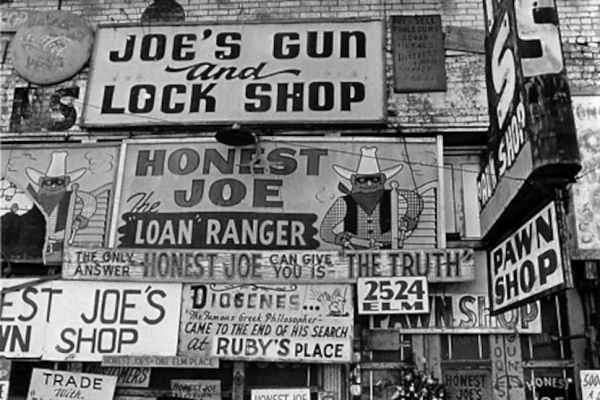
“Nobody outside his family knew his real name. Dallas knew him as Honest Joe. For nearly three decades Honest Joe’s pawn shop was one of the central hubs of activity in Deep Ellum. He sold everything from gold watches to prosthetic limbs to automatic weapons. His two-story building was covered in hand-painted signs and hubcaps – or was it? It was covered in signage and hubcaps, but as for the two-story part . . . well, that’s another story . . .”

[Top photo by Thomas Hoepker (1963) found here. Second photo found here (with a must-read history); third here; fourth here.]

Harry’s Airplanes


Beat culture musician, filmmaker and avant-garde artist Harry Everett Smith collected things, including paper airplanes.

The Collections of Harry Smith, Catalogue Raisonné
“Volume one features richly detailed photographic documentation of 251 paper airplanes gathered by Smith from the streets of New York City over an approximately 20-year period. Whimsical and weird, the paper airplanes rank among Smith’s most mysterious collecting pursuits. This extensive compendium presents the fruits of his extraordinary aeronautic pursuit and highlights the tangled history and myths that accompany them.”

[Found here, description from here, h/t Chuck S.]

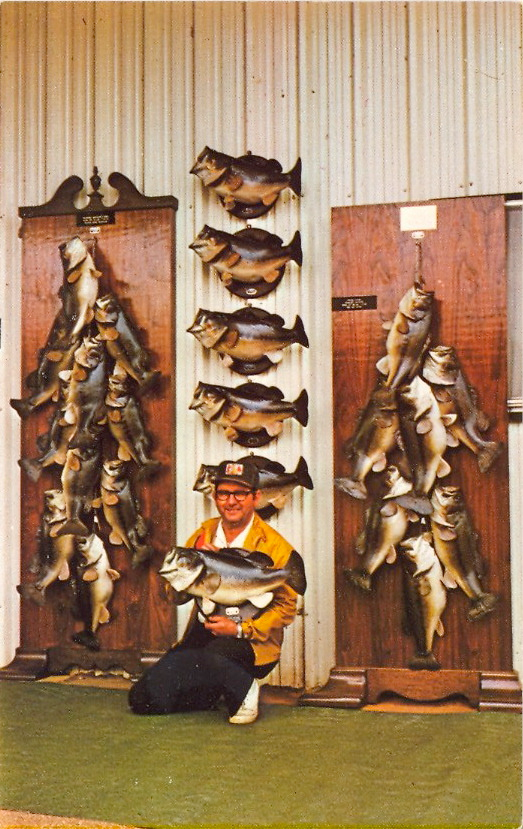
Ray the Bass Man

THE POT OF LUNKER BASS AT THE END OF THE RAINBOW
Raymond Gauthier has reached the end of the rainbow and has been justly rewarded with the fisherman’s pot of gold in these lunker bass caught on Toledo Bend Lake. On July 3, 1973, while fishing near Pendleton Bridge he hauled in 7 bass that tipped the scales at 56 pounds even. Since then he has caught 63 bass in a 2 acre area. 20 of these weighed over 6 pounds each, 20 more weighed over 7 pounds each and 12 of these weighed over 8 pounds each with the 2 biggest weighing 9 pounds 14 ounces each. Since then he has caught many more in the same weight range that have not been mounted.

[Postcard with caption found here.]

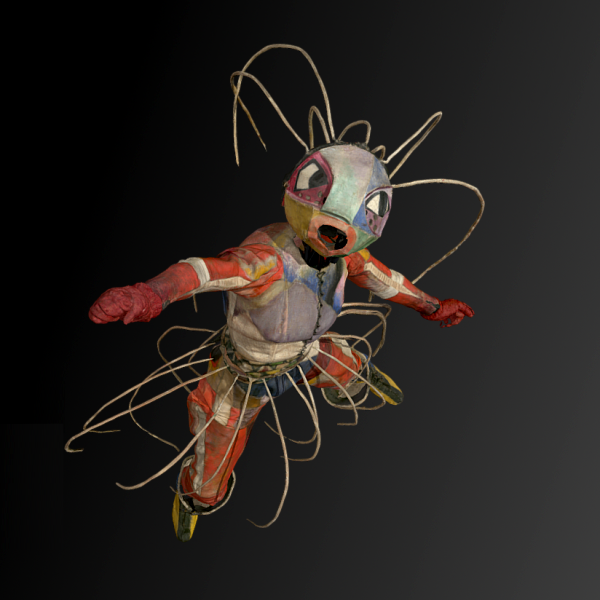
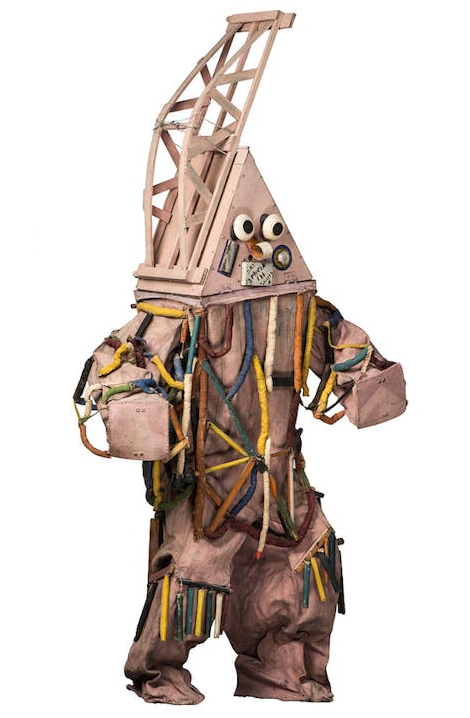
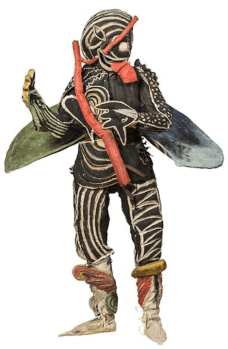
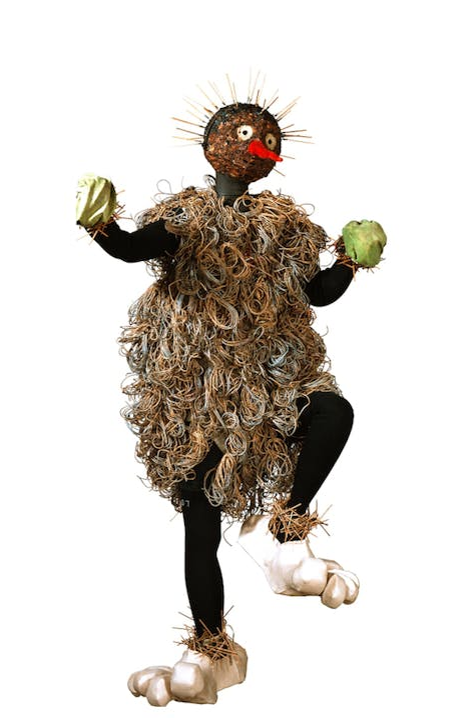
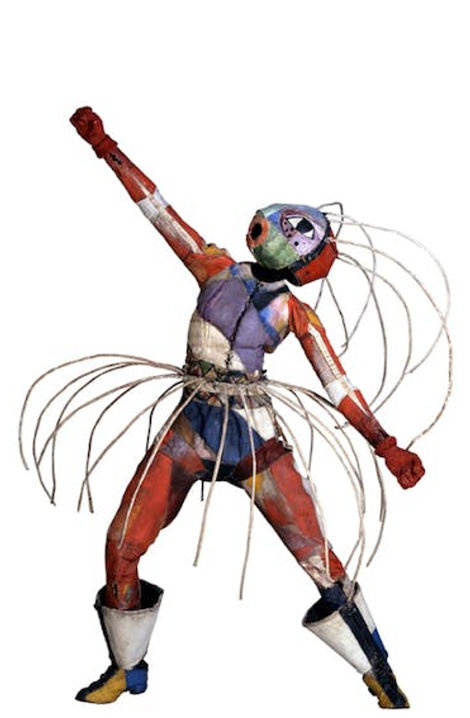
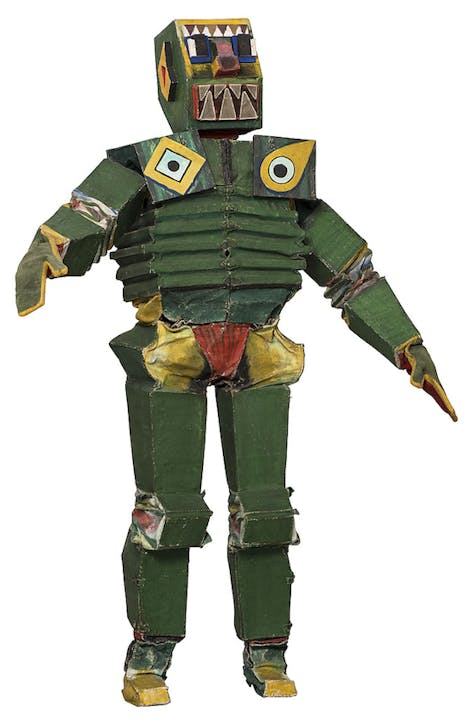
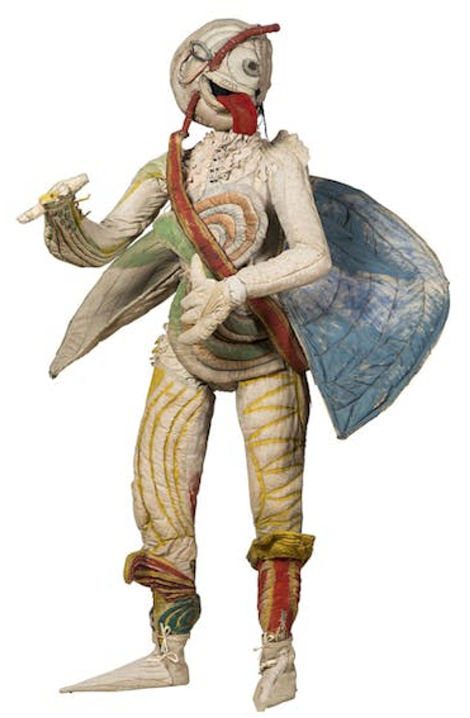
The Tanzmasken of Lavinia Schulz and Walter Holdt (ca. 1924)

Schulz and Holdt made these costumes for dancing; they performed under the name Die Maskentänzer (The Mask Dancers). The outfits are more sculpture than clothing, and they entirely swallow up the wearer. Some suggest a mongrel collision of characters — a buggy-eyed insect meets a jester meets a bearded tomato — and others allude to zippy motion, with eyeballs cartoonishly pulling off the face. Wires poke out and wooden blocks dangle, a bridge seesaws from shoulder to shoulder. Many of the geometric silhouettes defy anatomy; hands, feet, and heads are all boxed in, with no apparent exit.

The story doesn’t stop there. Schulz and Holdt were insane.
https://publicdomainreview.org/collection/tanzmasken/

Bonus: Interactive 3D images of Maskentänzer
Toboggan Mann
Toboggan Frau

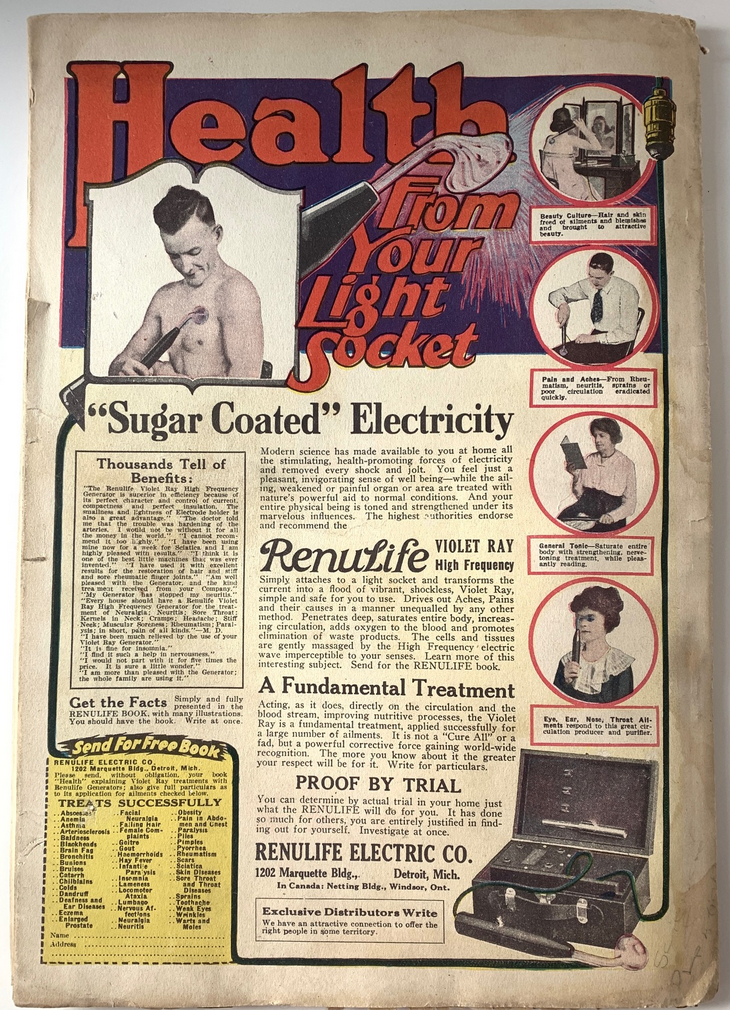
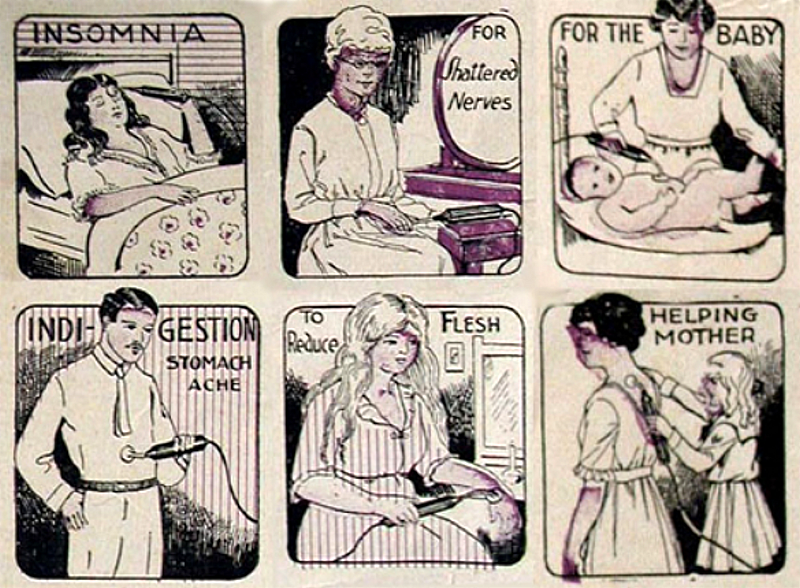
The RenuLife Violet Ray ca.1917

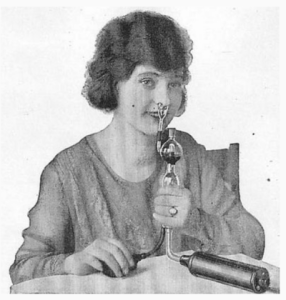
James Henry Eastman, a Detroit inventor who held several patents for violet ray machines, established the RenuLife Electric Co., in Detroit, in 1917. The device was a hand-held Tesla coil with glass tubes to (theoretically) protect the user:

“Treatment with a violet ray machine involved attaching one of a various set of evacuated glass tubes to a handle, holding it to whatever part of your body was troublesome, and then switching it on. This caused a high voltage, high frequency, low electrical current to run through the body. Similar technology is actually still used today in TENS machines that zap low currents into a targeted area of the body to relieve pain through nerve stimulation, though modern machines are safer and their use is monitored by trained professionals who use them only for specific types of pain. A violet ray machine, on the other hand, was capable of creating a powerful electric arc that could cause serious skin burns.”

[History and images found here.]

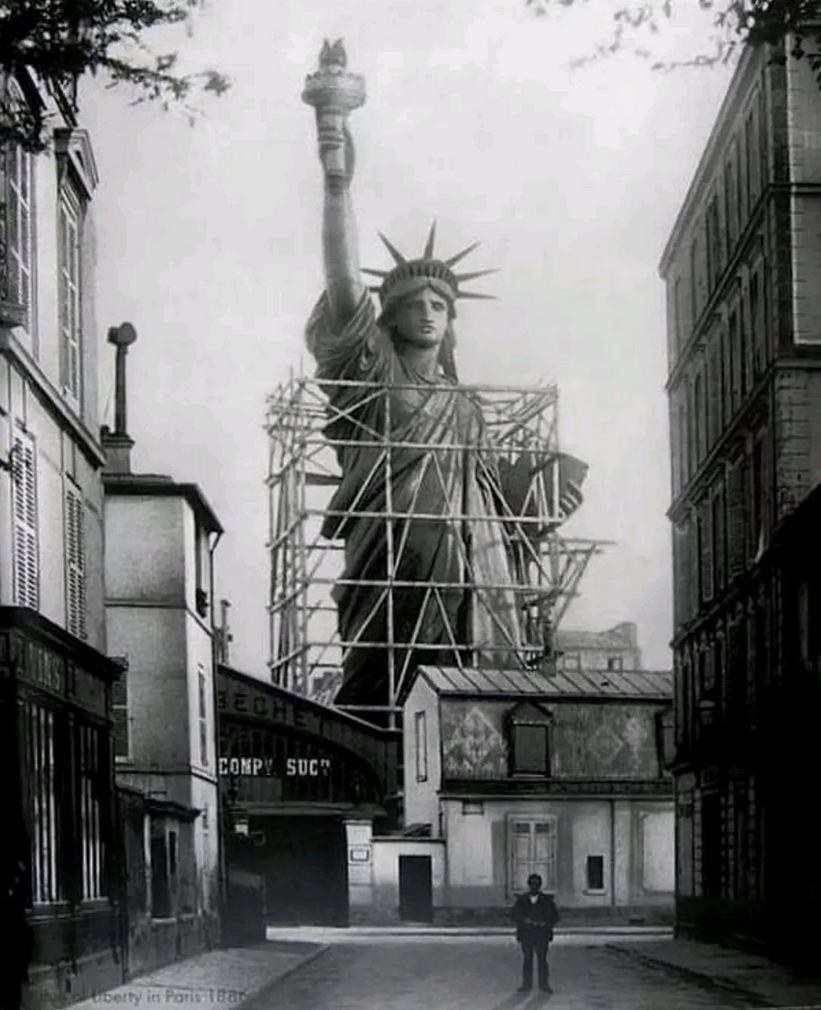
Liberty [updated]

[Update: Image is NOT Isabella Eugénie Boyer; see below.]

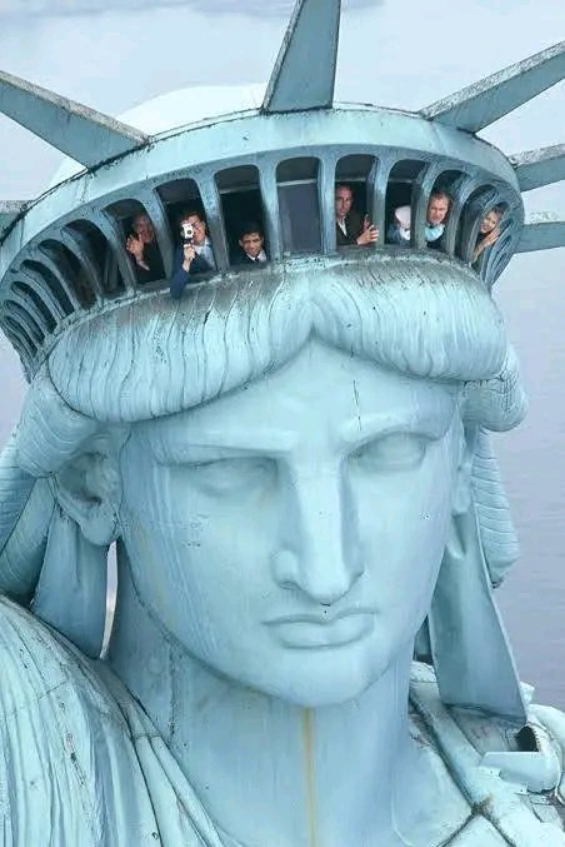
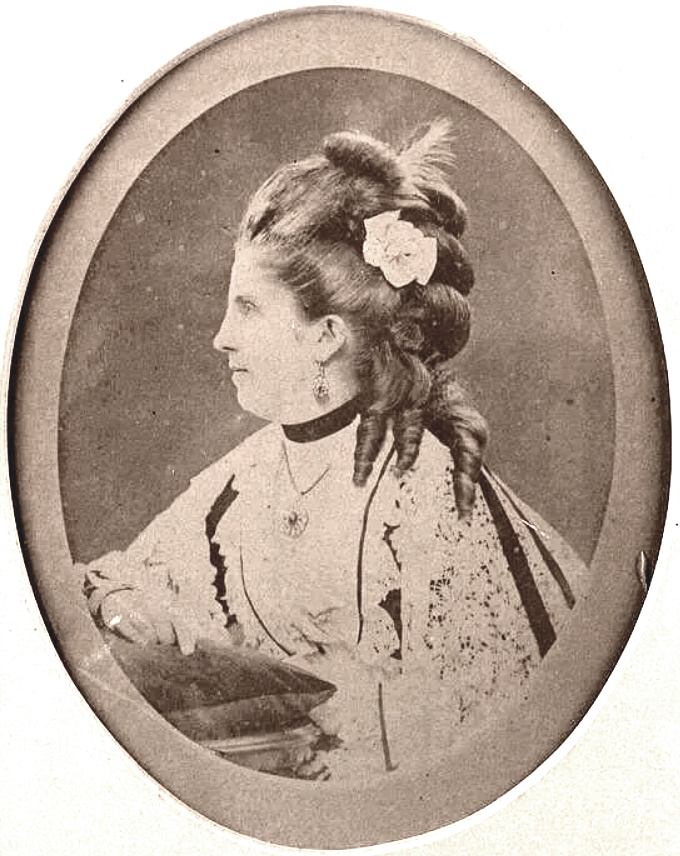
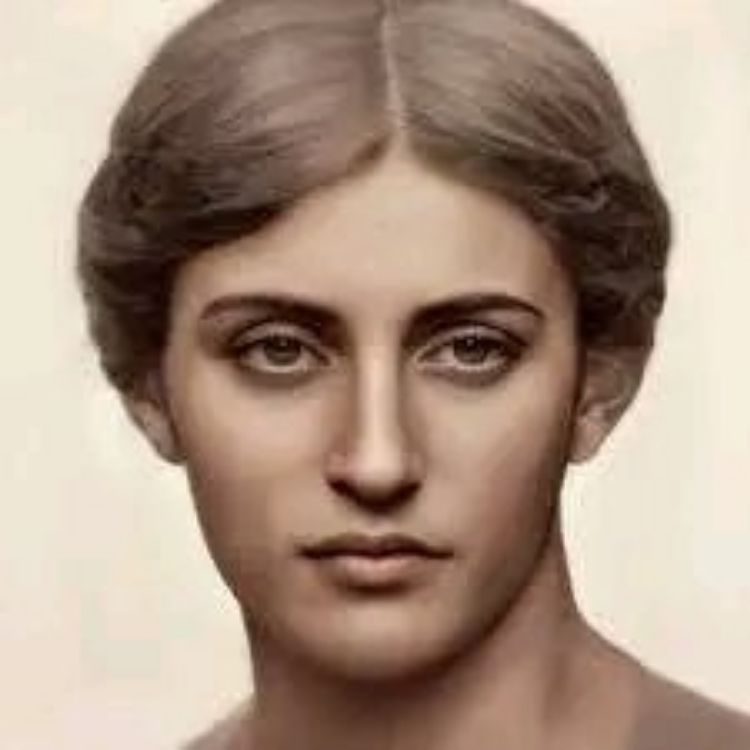
The face of the Statue of Liberty. Isabella Boyer’s life is like an exciting novel. She was born in Paris, the daughter of an African pastry chef and an English mother. Isabella had a special beauty and, at age 20, she married Isaac Singer, the sewing machine maker, who was 50 years old. After Singer’s death, Isabella became the richest woman in the country. It is not surprising that she was chosen as the model for the Statue of Liberty, as she embodied the American dream. Widowed, Isabella traveled the world and married the Dutch violinist Victor Robstett, becoming a countess. He became a prominent figure in America and Europe, and met the French sculptor Frédéric Bartholdi at a world event. Bartholdi, impressed by her beauty and history, used her face as a model for the Statue of Liberty. Isabella married a third time and died in Paris in 1904 at age 62, but her face lives on in the iconic statue in New York, symbolizing freedom and American pride.

[Found here, h/t Eaglesoars]


UPDATE: The top image appears to be the work of Bas Uterwijk and is an A.I. generated image of Aphrodite, not Isabella Eugénie Boyer (who may or may not have been the model for the Statue of Liberty).

Isabella Eugénie Boyer (1841-1904)
More about the viral photo here, here and here.
[h/t Gabriel]

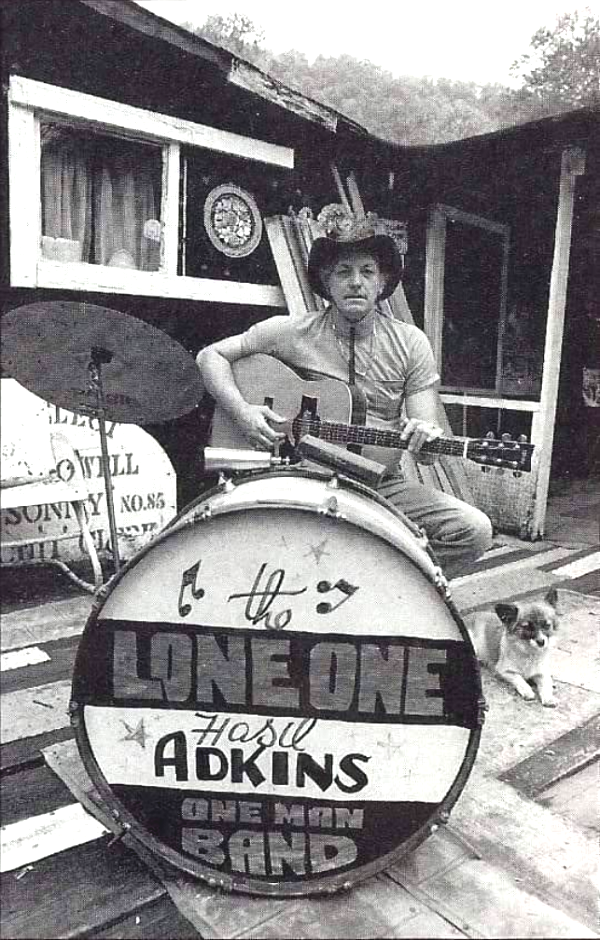
Hasil Adkin’s Contribution To The World

“We salute one of the great outsiders in R&R: Hasil Adkins was born in Boone County, West Virginia on April 29, 1937, where he spent his entire life. He was the youngest of ten children of Wid Adkins, a coal miner, and Alice Adkins, raised in a tarpaper shack on property rented from a local coal company. Born at the time of the Great Depression, Adkins’ early life was stricken by poverty. His parents were unable to provide him shoes until he was four or five years old. Some reports say he attended school for a very brief time, as few as two days of first grade.

His genres include rock & roll, country, blues and more commonly rockabilly, and because of his unusual playing and singing style, he is often cited as an example of outsider music. He generally performed as a one-man band, playing guitar and drums.

Adkins was born during the Great Depression and grew up in poverty. His spirited, unusual lifestyle is reflected in his music. His songs, which he began recording and distributing locally in the mid-1950s, explored an affinity for chicken, sexual intercourse, and decapitation, and were obscure outside of West Virginia until the 1980s. The newfound popularity secured him a cult following, spawned the Norton Records label, and helped usher in the genre well known as psychobilly.”

[Found here via here, and there’s a documentary trailer here.]

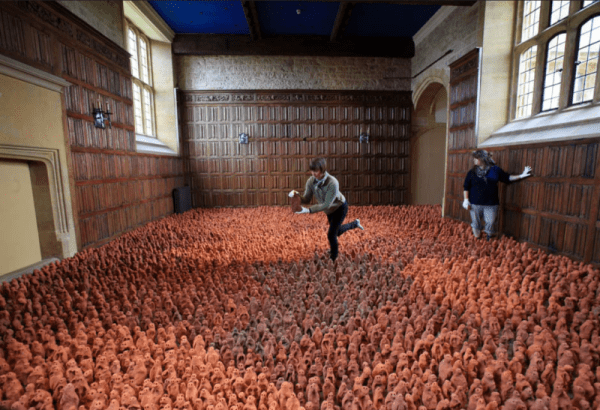
Antony Gormley’s Contribution To The World: 40K+ Clay Peeps

“By Antony Gormley, just some of the 40,000 clay figures from part of the ’Field for the British Isles’  on loan from Arts Council Collection, it’s being shown in three of the National Trust’s Barrington Court rooms currently in Ilminster, England.”

[Installation circa 1991 found here.]
Woolson Morse’s Contribution to the World: Mechanical Elephant Head 1891


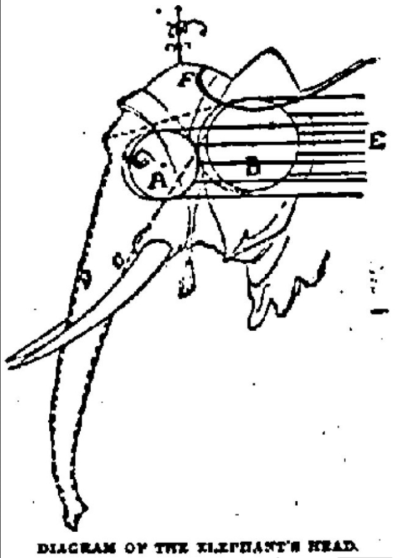
DIAGRAM OF THE ELEPHANT’S HEAD

A. Wheels for the eyes.
B. Wheels for the trunk.
C. Cord for drawing trunk inward.
D. Cord for drawing trunk outward.
E. Leather thongs for operating wheels.
F. Hook from which head is suspended.

[Full story here.]