
Veterans Day gives Americans the opportunity to celebrate the bravery and sacrifice of all U.S. veterans. However, many Americans confuse this holiday with Memorial Day.
A Brief History of Veterans Day
Veterans Day, formerly known as Armistice Day, was originally set as a U.S. legal holiday to honor the end of World War I, which officially took place on November 11, 1918. In legislation that was passed in 1938, November 11 was “dedicated to the cause of world peace and to be hereafter celebrated and known as ‘Armistice Day.'” As such, this new legal holiday honored World War I veterans.
In 1954, after having been through both World War II and the Korean War, the 83rd U.S. Congress — at the urging of the veterans service organizations — amended the Act of 1938 by striking out the word “Armistice” and inserting the word “Veterans.” With the approval of this legislation on June 1, 1954, Nov. 11 became a day to honor American veterans of all wars.
In 1968, the Uniform Holiday Act ensured three-day weekends for federal employees by celebrating four national holidays on Mondays: Washington’s Birthday, Memorial Day, Veterans Day, and Columbus Day. Under this bill, Veterans Day was moved to the fourth Monday of October. Many states did not agree with this decision and continued to celebrate the holiday on its original date. The first Veterans Day under the new law was observed with much confusion on Oct. 25, 1971.
Finally on September 20, 1975, President Gerald R. Ford signed a law which returned the annual observance of Veterans Day to its original date of Nov. 11, beginning in 1978. Since then, the Veterans Day holiday has been observed on Nov. 11.
Category: History
Saturday Matinee – Redwood Logging in 1946, Maxim Zhestkov, The Count Five, The Cramps, Tom Petty & The Heartbreakers
Redwood logging in 1946. Dangerous work. [Found here.]
Hypnotizing art “installations.”
Maxim Zhestkov (b.1985, Russia) is a media artist and director whose practice centres around the influence of digital media on shifting the boundaries of visual language.
He grew up in a small town on the Volga river named Ulyanovsk. From childhood, Maxim was fascinated by art, physics and computers which led him to university, where he studied architecture and fine art.
I’m kinda in an odd mood, change of the seasons, sun angles and all, so let’s roll with it.
“Psychotic Reaction” by The Count Five, peaked at No. 5 in 1966 on the Billboard Hot 100. Classic garage band / early psychedelic rock. Since then it’s been covered by a number of indy/punk/rock bands, including this one by The Cramps in 1983:
Meh. I can do without that, but this one’s not too bad:
Tom Petty & The Heartbreakers probably did the best cover of ‘”Psychotic Reaction” in 1991, preserved the soul of the original.
The intro is cool, song starts at 2:20.
Have a great weekend, folks. Be back here tomorrow for more stuff and stuff.
Joseph W. Grimes Rides The Cleveland Bicycle
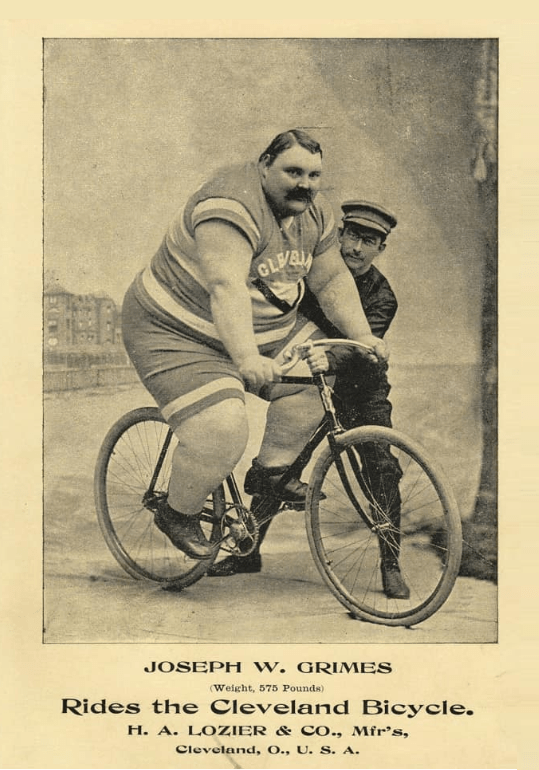
[Found here.]
John Harrison’s Contribution To The World
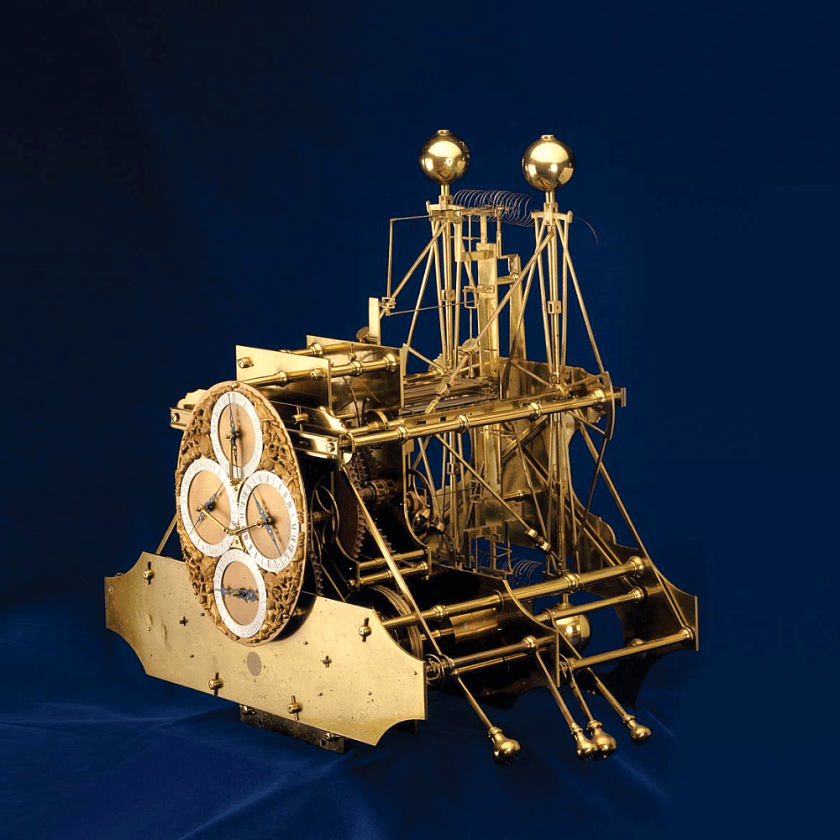
Self-taught John Harrison spent 43 years overcoming engineering challenges to develop the first marine chronometer. Harrison won a British competition to resolve deep sea navigation problems, but it took him several years to win the full prize.
In 1714, the British government offered a longitude prize for a method of determining longitude at sea, with the awards ranging from £10,000 to £20,000 (£2 million to £4 million in 2019 terms) depending on accuracy. John Harrison, a Yorkshire carpenter, submitted a project in 1730, and in 1735 completed a clock based on a pair of counter-oscillating weighted beams connected by springs whose motion was not influenced by gravity or the motion of a ship. His first two sea timepieces H1 and H2 (completed in 1741) used this system, but he realized that they had a fundamental sensitivity to centrifugal force, which meant that they could never be accurate enough at sea. Construction of his third machine, designated H3, in 1759 included novel circular balances and the invention of the bi-metallic strip and caged roller bearings, inventions which are still widely used. However, H3’s circular balances still proved too inaccurate and he eventually abandoned the large machines.
Harrison solved the precision problems with his much smaller H4 chronometer design in 1761. H4 looked much like a large five-inch (12 cm) diameter pocket watch. In 1761, Harrison submitted H4 for the £20,000 longitude prize. His design used a fast-beating balance wheel controlled by a temperature-compensated spiral spring. These features remained in use until stable electronic oscillators allowed very accurate portable timepieces to be made at affordable cost.
£20,000 in 1714 = ±£3,837,000 in 2018 = ±$4,733,000 USD.
$110k/year is not a bad payoff for a 45 year-long side project. Harrison began as a 21 year-old, and was 66 when he resolved the problem and received the full amount of the prize. He died 17 years later in 1776.
“Mum’s the word. Keep it to yourself and don’t tell a soul, but I heard from a reliable source that someone seems to have said…” Hot Links
THIS should alarm every U.S. Citizen.
[Corrective Update below.]
Andy Ngo is a real journalist.
Dr. Thomas Sowell dispels some modern myths.
Baal’s grumpy and he’s not touching his breakfast.
I dreamt that I had Flexible Sweat-Powered Biofuel Cells.
A camel sat on her face so she bit him right in the crackerbockles.
Like the series “Black Mirror“? Check out Lockheed Martin’s new toys.
The song of the mole cricket:
A Humble Request. Hip surgery is scheduled, we’re still paying her rent out of pocket. Thanks to all who contribute – every little bit helps.
From the Archives: 1 year ago. 5 years ago. 10 years ago.
[Top image: “How Propaganda Works.” Found here.]
[CORRECTIVE UPDATE: Apparently the story posted by The Federalist on 27 September 2019 (linked at top) is inaccurate. The US Intel Community accepts hearsay (info from second-hand sources) but won’t act on it unless they uncover first-hand corroboration. If there’s no corroboration, the hearsay is dismissed as such. In other words, the rules did not change, but their website and the reporting form did.]
USMC Dental Office, Saipan, WWII
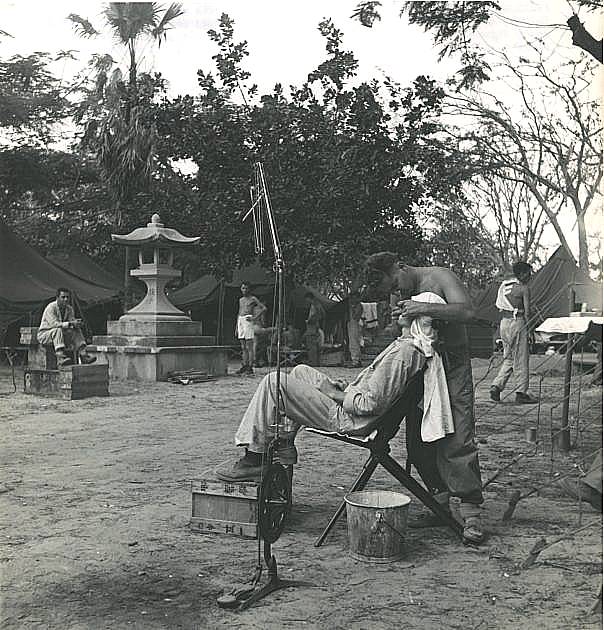
“A Marine dentist sets up his office on Saipan, using a Japanese box as a footrest, a Japanese pail as a waste-bucket, and a Japanese shrine (left background) as decor for his waiting room. In order to keep his dentistry really ‘painless’ a Marine patrol nearby kept on the alert for Jap snipers.” (U.S. Naval Institute Photo Archives)
[Caption and image found here. Story at the link.]
11 September 2001 – REMEMBER ALWAYS

Державне підприємство “Антонов” 1961
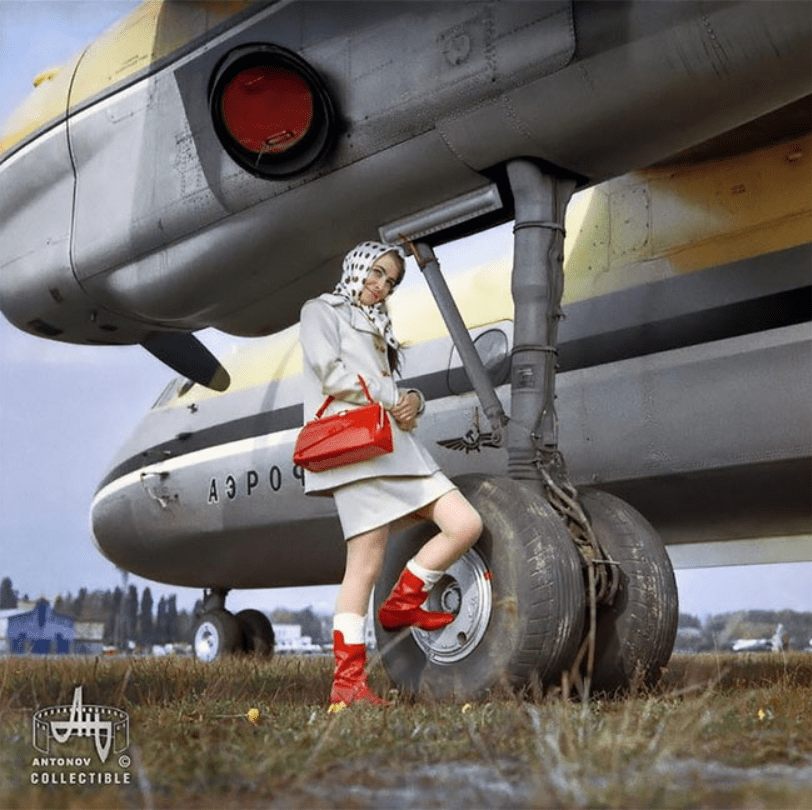
“In the mid twentieth century there was made a series of photographs advertising Soviet “An” planes to western buyers. Some of these photos have been revealed just recently. Party leaders didn’t allow them to be used abroad and the photos were kept in the archives of “Antonov” company.”
[Image and caption found in here. More about the Ukraine-based company here.]
Happy Labor Day!
I’m not an historian, but here’s the gist.
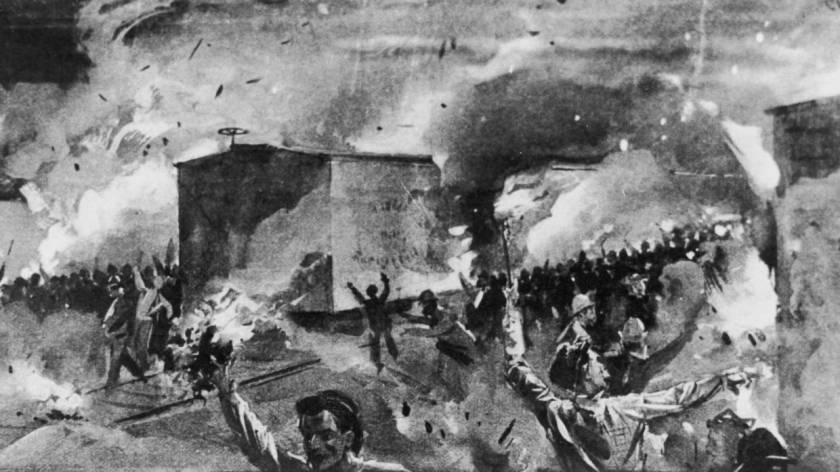
In 1894 there was a recession in the US, and Chicago engineer, industrialist and developer George Pullman had to lay off a large chunk of his workforce (yet he kept about 2/3rds on the payroll).
Some of those laid off were anarchists, socialists and Marxists (the Progressive Movement was on the march) and they organized a strike, not only for the layoffs, but because Pullman wouldn’t reduce the rent for the housing he built and owned. But they did more than protest. They turned to violence and arson.
They burned the buildings and product of their employer (The Pullman Car Company) and others. The damage affected the rail commerce of 27 states, the US Postal Service, and thousands of workers and their families not directly affected by the layoffs. Dozens were killed during the riots.
Note that the arson and violence didn’t affect Pullman nearly as much as it did to the thousands of people who benefited from Pullman’s brilliance, including engineering underground sewage systems for the city of Chicago.
In that year, democrats controlled the House, the Senate AND the Presidency. What did President Cleveland do? He gave the “strikers” an Official Holiday. Then a few days later, he sent in the U.S. Military to kick ass on his own constituents.
Even as Pullman Company and railroad workers were striking, Congress passed legislation in June 1894 making the first Monday in September a federal legal holiday to recognize and celebrate labor. President Grover Cleveland signed the bill into law June 28, 1894, a few days before sending federal troops to Chicago.
“It was a way of being supportive of labor. Labor unions were a constituency of the Democrat Party at the time, and it didn’t look good for Cleveland, who was a Democrat, to be putting down this strike.”
[Richard Schneirov, professor of history, founder of the local chapter of the SDS, 1966, Grinnel University.]Federal troops were recalled from Chicago on July 20, and the Pullman strike was declared over in early August. Eugene V. Debs, arrested at the height of the violence along with several other ARU leaders, was charged with violating the injunction and served six months in jail. Though the ARU disbanded, Debs would emerge as the leader of the nation’s growing socialist movement, running for president five times on the Socialist Party ticket.
And Karl Marx smiled.
13,000 Years BC Hot Links
When a post hits your eye
Like a big pizza pie,
That’s a Moire.
Bear necessities [h/t bekitschig].
Twilight Zone Radio Show Episode 61.
Gillette lost billions after a bigoted ad campaign.
It’s only 4th Grade Science. (Brilliant captions, too.)
Hans Prinzhorn’s Artistry of the Mentally Ill (1922).
“We spoke with many people today who say that the President should consider coming here to Baltimore … to see for himself.” [via]
READ CHAPTER X and explain to me how the U.S. Democrat Party (and Bernie Sanders’) platform differs from that of mass murderer Josef Stalin. Describe the results.
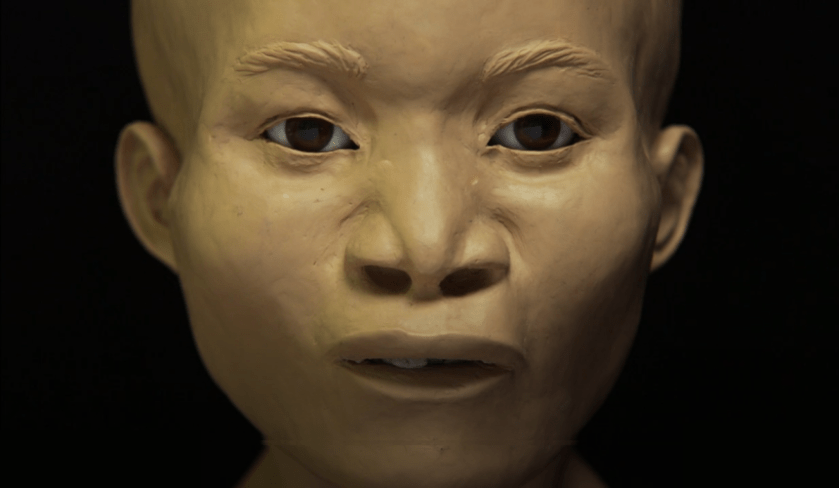
[Top image from here: “One unlucky day 13,000 years ago, a slight, malnourished teenager missed her footing and tumbled to the bottom of a 100-foot pit deep inside a cave in Mexico’s Yucatán. Rising seas flooded the cave and cut it off from the outside world—until a team of divers chanced upon her nearly complete skeleton in 2007.”]
 Tacky Raccoons