Rock Roll

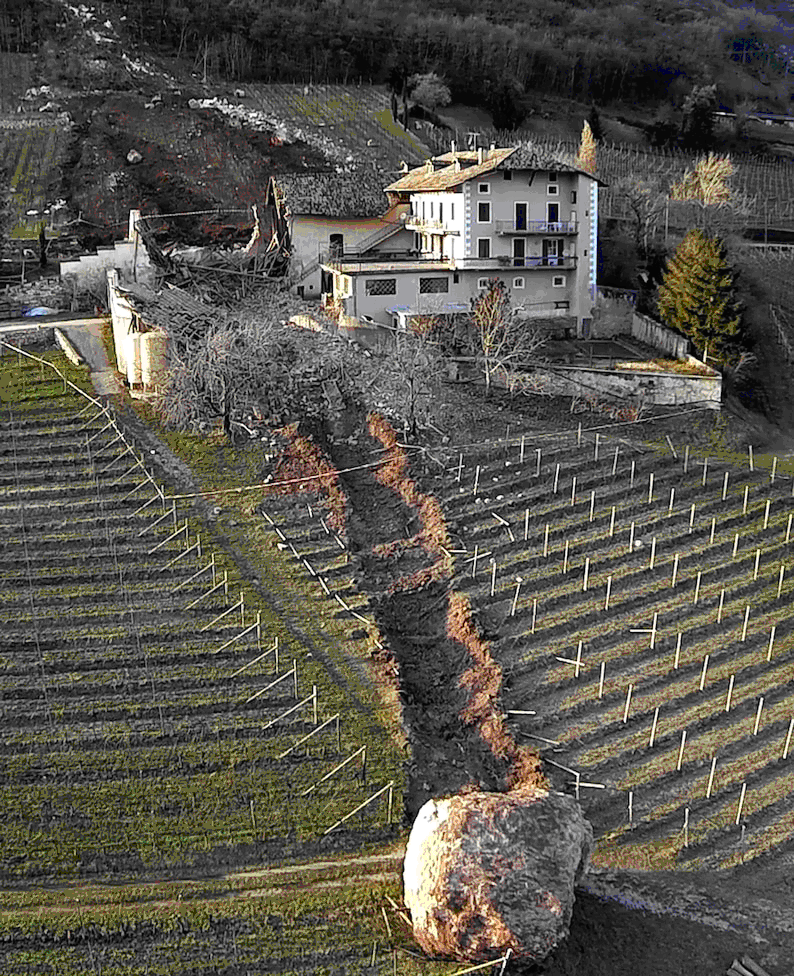
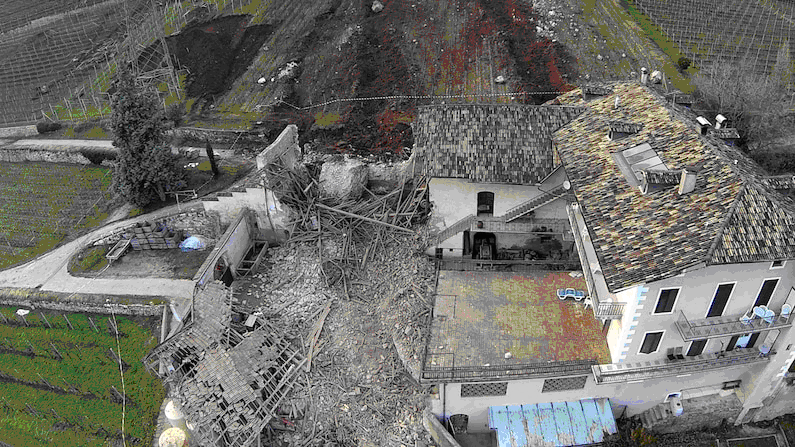
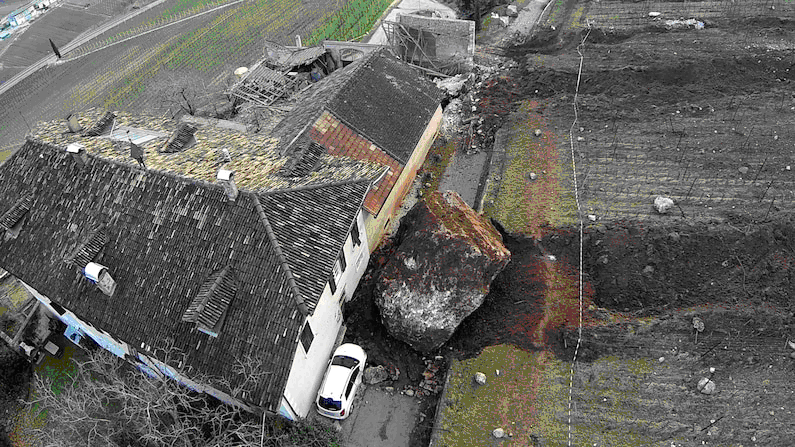
A landslide in Ronchi di Termeno, Italy, January 2014, sent two boulders down a cliff, one destroyed the barn. The boulder in the foreground was already there from a previous slide.

From NatGeo:
Two huge boulders sent tumbling by a landslide narrowly missed a farmhouse in Ronchi di Termeno in northern Italy on January 21, 2014. The above photo, taken two days later, shows one of the boulders after it rumbled down the hill and destroyed the barn before coming to rest in the vineyard—halted within a meter of the house. The second boulder, hidden behind the house, stopped just short of the building.
[…]
While smaller boulders tumble down cliffs often, [geologist Ben Mackey of NZ] says, huge rockfalls like this one are fairly rare. In a given location, boulders of this size would fall maybe once in many thousands of years. “Generally, it would not be advisable to live under a cliff prone to rockfall like this,” Mackey says.

[Found in here.]

Sound Mirror

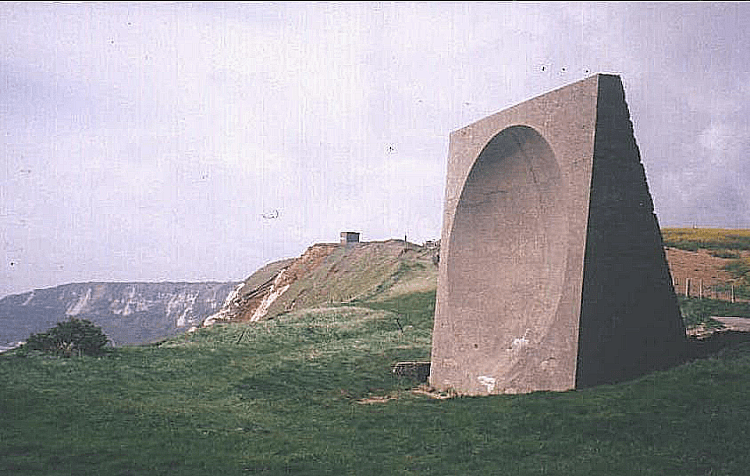
Sound mirror, Abbott’s Cliff, England, 1928

Sound or acoustic mirrors were one of the first early warning detection systems invented to give advanced notice of an approaching enemy aircraft. These worked by focusing the sound from the plane’s engine so it could be heard before it was visible.

Sound mirrors worked using a curved surface to concentrate sound waves into a central point, which were picked up by a sound collector and later by microphones. An operator using a stethoscope would be stationed near the sound mirror, and would need specialist training in identifying different sounds. Distinguishing the complexity of sound was so difficult that the operators could only listen for around 40 minutes.

[Image found here. Caption and more here.]

My WebEx Meeting Notes 29 July 2022 – 13 October 2022

9am daily. Pen on paper, 8-1/2 x 11, approx. 2 square inches per each 30 minute teleconference.

WWI & Led Zep II

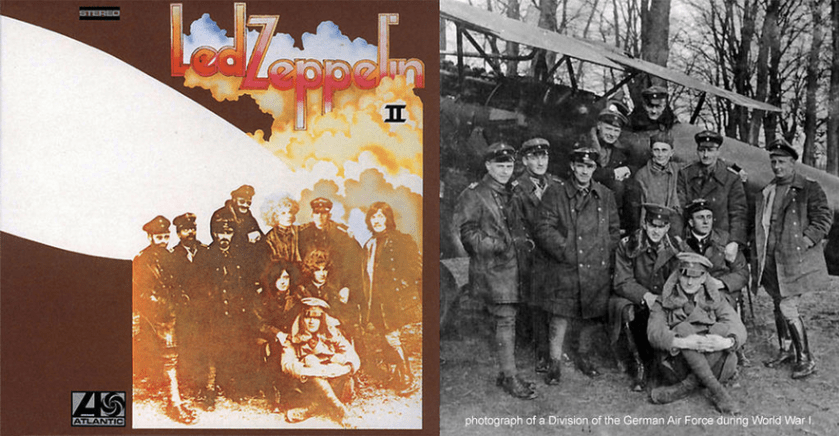
At right:
Baron Manfred Freiherr Von Richthofen sits in the cockpit of his Albatros fighter for a photograph with his squadron, Jagdstaffel III. Richthofen was credited with downing 80 Allied aircraft before being shot down over the Somme, Northern France, during what was known by pilots on both sides as ‘Bloody’ April, 1917. Manfred’s brother, Lothar, is seated at front (fur collar).

At left:
Album cover art from 1969, with silhouette of the 1937 Hindenburg disaster and a bit of proto-photoshopoopage.

[Found here, caption from here.]

Update: From the wikiness:

Humicubational Hot Links

Manhunt, Frank Weir and his Werewolves (1962) A dark suspect is spotted by a posse of rodeo clowns riding Shetland ponies and the manhunt is on. British orchestra leader Frank Weir had several hits during his career, but this tune wasn’t one of them.

The Painting.

Gator chomps it.

This is Awesome.

This is Pure Awesome.

This is Pure Trolling Awesome.

Not everyone wanted to be a Pepper.

Intro to Facebook 2009 – a commentary.

Hydraulic Press Girl [via Memo Of The Air].

And just where do you think you’re going?”

Remember those three circles [h/t Bunkerville].

I get email notifications whenever we get a new follower, and Admiral Bill made my day.

[Top image: The Cheetle. Story here, h/t Nate L.]


From the Archives: 1 year ago. 5 years ago. 10 years ago.

Moose Wars

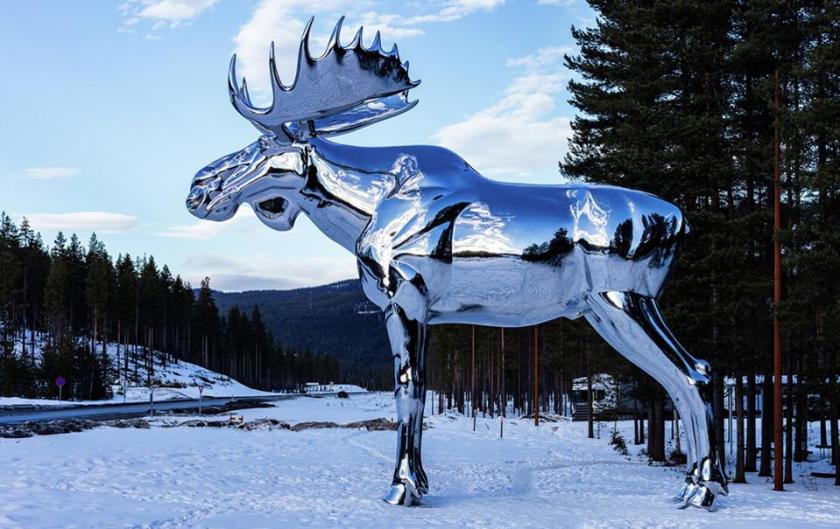
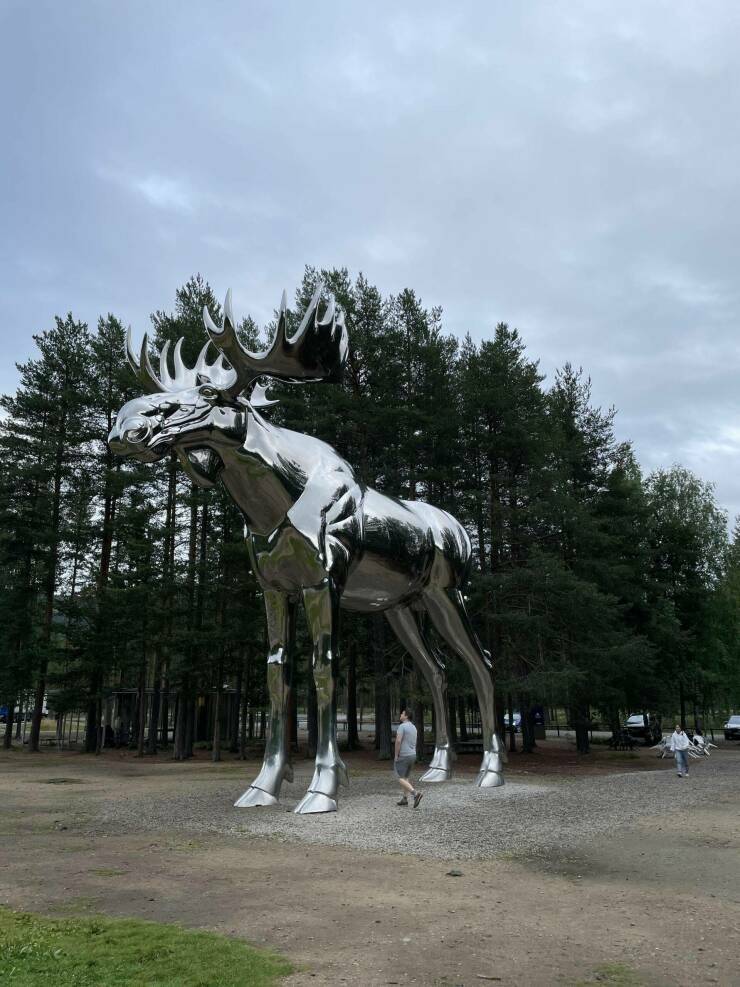
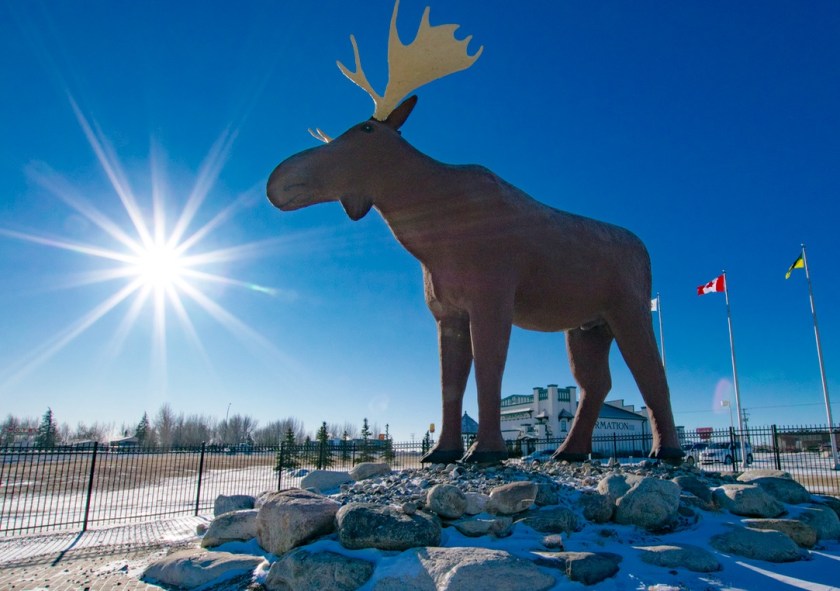
Mac the Moose, of Moose Jaw, Canada, was the world’s tallest moose sculpture at 32′-2″ until  he was dethroned in 2015 by a Norwegian chrome moose  (pictured above). He resides at a rest stop off the RV3 road in Stor-Elvdal, Norway, and stands 33′-1″ tall .

Residents of Moose Jaw were pissed, so they replaced Mac’s antlers with larger ones in 2019. Mac now stands at 34 feet tall. Here he is.

Mac attracted national attention in 2004 when part of his jaw fell off.

[Found here, stories here and here.]

Photo Restoration

The story behind the picture: Someone posted restored photos on r/interestingasfuck and I made a comment that received no replies or likes, but despite that photo restoration artist u/LadyAkane reached out to me via DM and offered their help.

My comment: “My uncle died way back in 1937, 2 years before my dad was born. He was only 5 years old and my grandparents went through hell all around that time—they lost him to polio, then lost their home and most of their belongings to the Ohio River flood.

Only one photo of him survived—one of him with my grandmother just weeks before he fell ill. [I realized when I took the photo out this was wrong since he’s too young in the pic. I was mixing up illnesses—my grandmother contracted TB shortly after this pic and would spend the next few years in a sanitarium.] We found while going through my dad’s things after he died, but it got put in a back jeans pocket then in the chaos of the time went through the washing machine. It made us all sick to see it so faded.

That little pic has been stashed inside my jewelry box ever since, hoping to find a way to restore it (and for technology to advance to where it could be successfully done) over the last 13+ years.”

[Found here.]

Fred G. Johnson’s Contributions To The World: Sideshow Banners

The Picasso of circus art.

Fred G. Johnson’s (1892 – 1990) banners were used to illustrate A Century of Progress for the 1933 Chicago World’s Fair His artwork also advertised the Ringling Brothers, Barnum & Bailey and Clyde Beatty circuses.

Hired by banner painter Harry Carlton Cummins to clean equipment and stick up banners, Cummins taught Johnson how to paint them, which he did, producing as many as four a day. The art is fast, subjective and made to deadline.

Not to be confused with the great Fred Johnson, bass singer for The Marcels.

[Images and story found here, via here. ]

Sixth Avenue Between 43rd and 44th Streets, New York, 1948

Todd Webb composed Sixth Avenue Between 43rd and 44th Streets, New York, 1948 from eight separate images. It depicts the west side of Sixth Avenue between West 43rd and 44th Streets, taken on the afternoon of March 24, 1948. Realizing he had to work fast to retain the same light, Webb plotted the shoot beforehand, lining up the edges of each photo with chalk marks on the sidewalk. The image was exhibited at the 1958 Brussels Worlds Fair, and he became internationally recognized as the “historian with a camera.”

“Where am I off to? Gonna check out a record store on 6th. I’ll be back in  a few. Weeks.”

What a treat for the earballs. Imagine what the people of 1948 considered oldies.

[Record store photo found here. Panorama (with caption) and others from here thanks to a Tineye search.]

A Never Completed Film: The House at the Last Lantern

The House at the Last Lantern

“Doing some research, I happened to come across a rare cache of stills from a never completed film by Hans Richter [1888-1976] which is possibly the only example of an actual dadaist horror film. It seems the film was a parody of sorts of Goethe’s The Sorrows of Young Werther, but is ostensibly a tale of the life of Gustav Meyrink. The title of the film was to be ‘The House at the Last Lantern’.” – Lanny Quarles

Date of the movie stills unknown, possibly late 1920s. More images with story here.

[Via this isn’t happiness.]