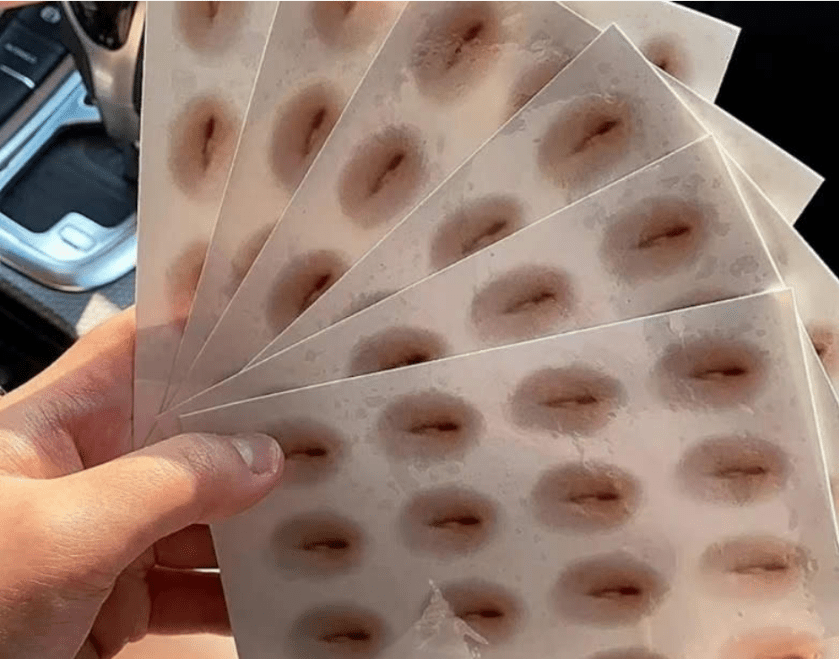
Collect Them All!


“These stickers are not easy to drop off; they’re non-reflective and even waterproof. I’m willing to call them the most successful invention of 2023!”

Some Chinese news outlets credited the unexpected popularity of belly button stickers to Chinese traditional medicine, which states that the lower abdomen must be kept warm to preserve the overall health of the body. By keeping the fake navel exposed, users can wear high-waisted pants that cover much of the stomach, while still rocking garments like crop-tops.

ONLY 1/2¢ PER BB!
A pack of 96  3/4″ x  1″ Chinese belly button decals for only 50 cents is one helluva deal. Confuse people by moving them around, or wear several at the same time and claim as many birthdays as you want. So many possibilities.

[Images and story found here.]

R.I.P. Al Jaffe (1921-2023)

Al Jaffe in 2011. Stephen Morton/AP Photo

Long time writer and comic artist for Mad Magazine, Al Jaffe’s cartoons were some of the most recognizable in the business. Jaffe passed away on 10 April at the age of 102. Full story here.

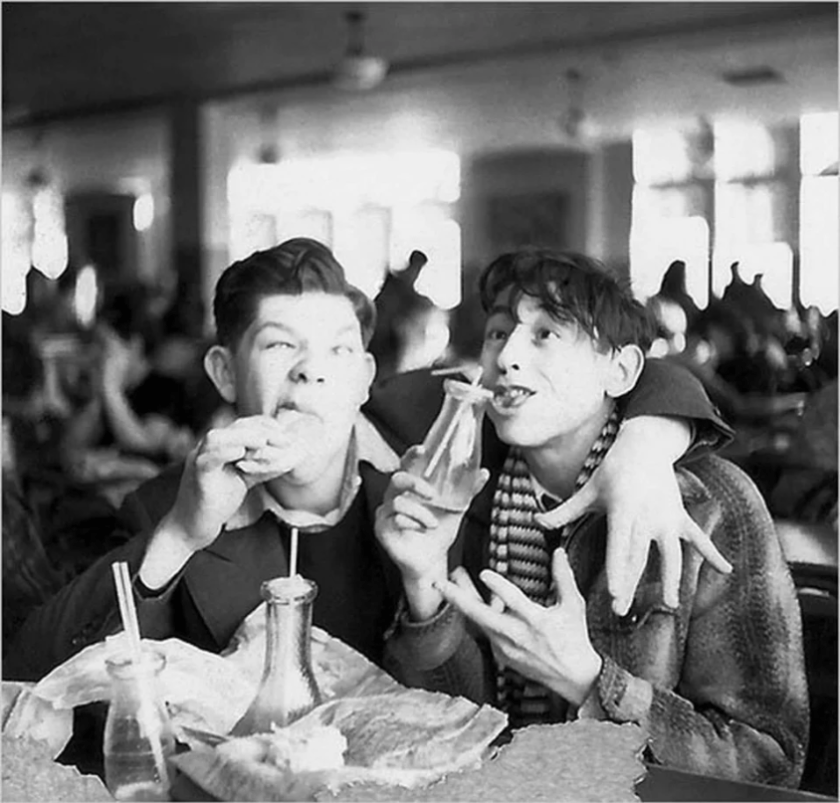
Al Jaffe & Will Elder, future cartoonists for Mad Magazine, early 1940s.

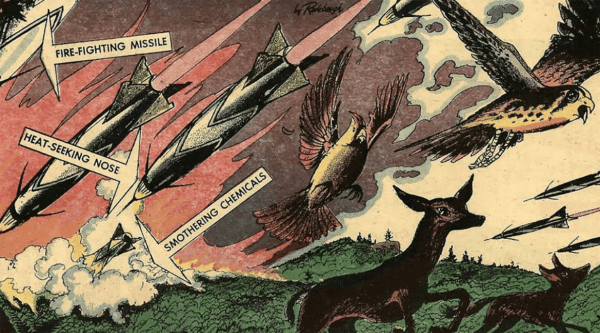
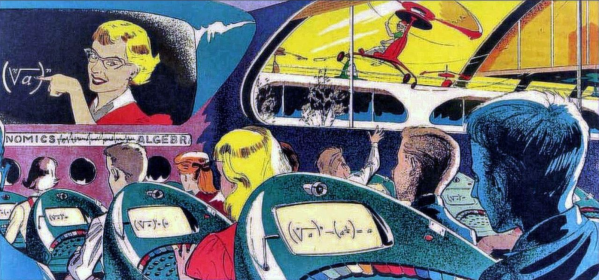
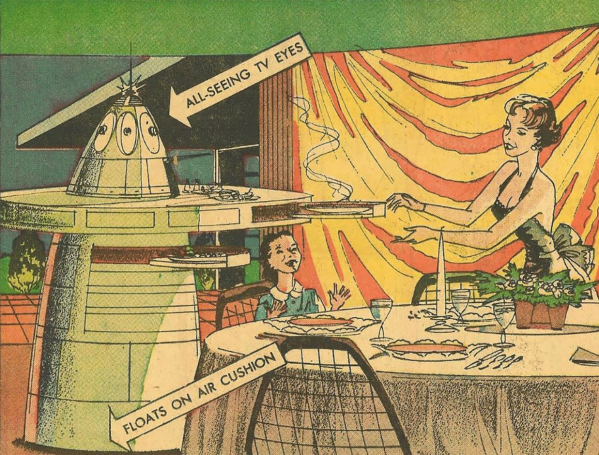
The future of Arthur Radebaugh

Fighting forest fires to save the wildlife… with ICBMs.

NOMICS@%^&*(^*>ALGEBR isn’t taught in school anymore.

Mom is always ready… for something.

From Closer Than We Think, Arthur Radebaugh, 1950s.
[Images found here, via here.]

Fred G. Johnson’s Contributions To The World: Sideshow Banners

The Picasso of circus art.

Fred G. Johnson’s (1892 – 1990) banners were used to illustrate A Century of Progress for the 1933 Chicago World’s Fair His artwork also advertised the Ringling Brothers, Barnum & Bailey and Clyde Beatty circuses.

Hired by banner painter Harry Carlton Cummins to clean equipment and stick up banners, Cummins taught Johnson how to paint them, which he did, producing as many as four a day. The art is fast, subjective and made to deadline.

Not to be confused with the great Fred Johnson, bass singer for The Marcels.

[Images and story found here, via here. ]

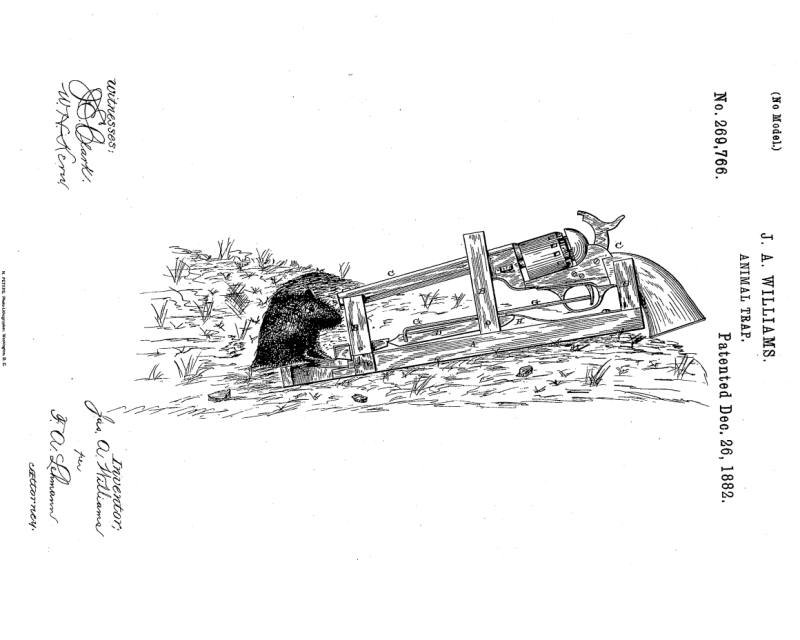
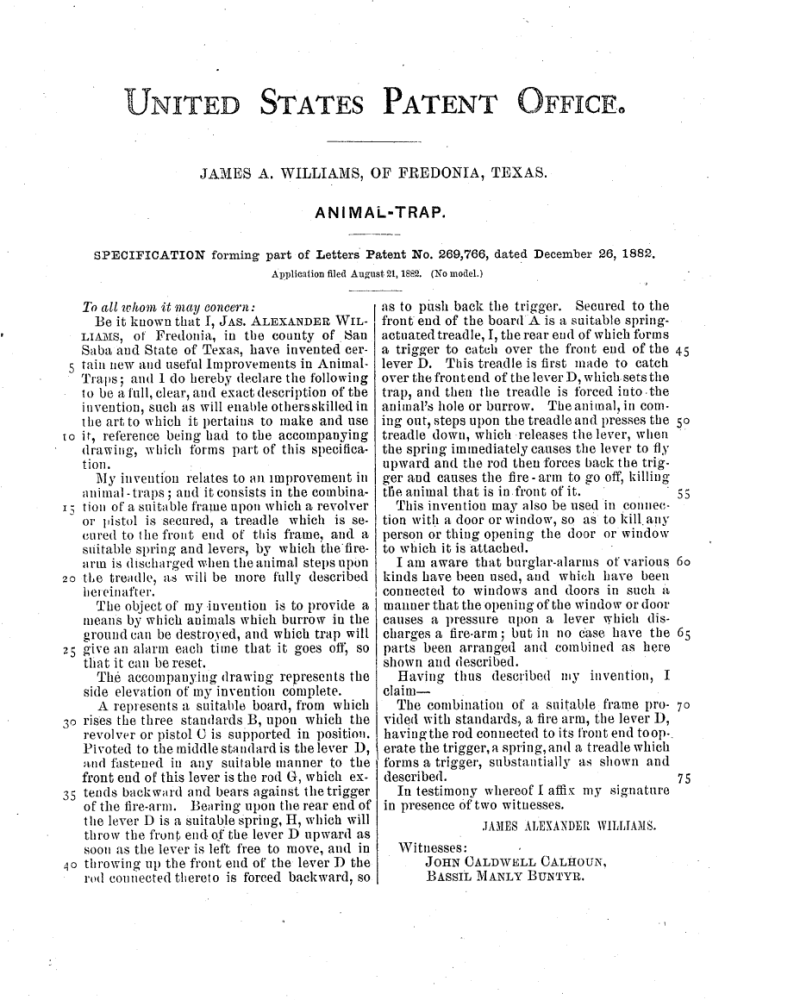
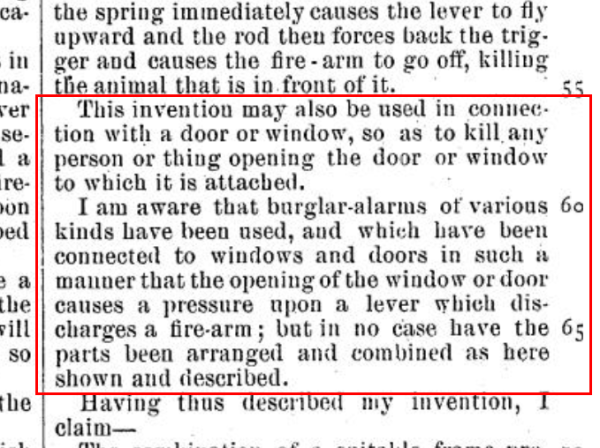
James A. Williams’ Contribution To The World: Automatic Varmint Killer & Burglar Alarm

[h/t L. Dez D.]

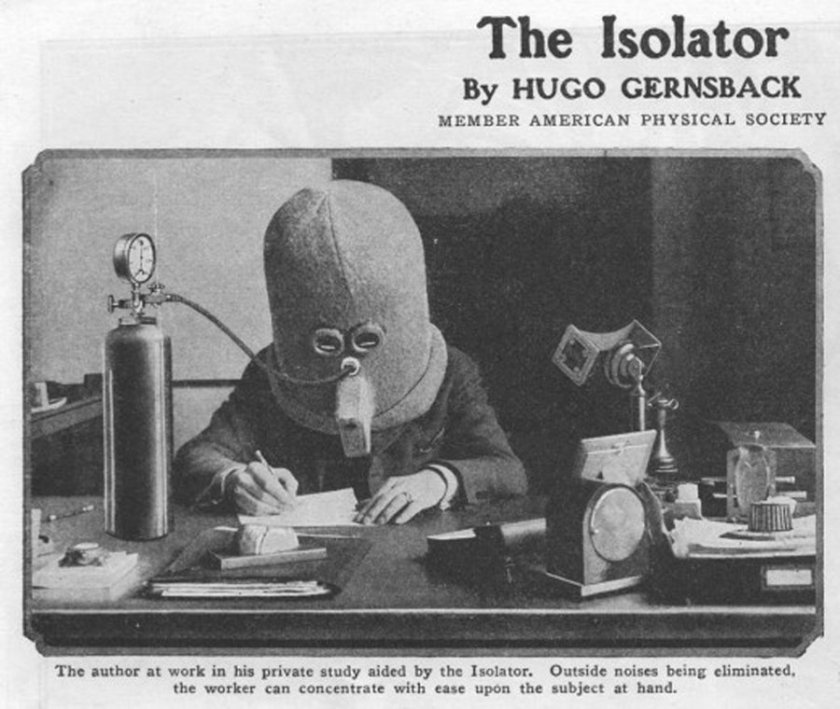
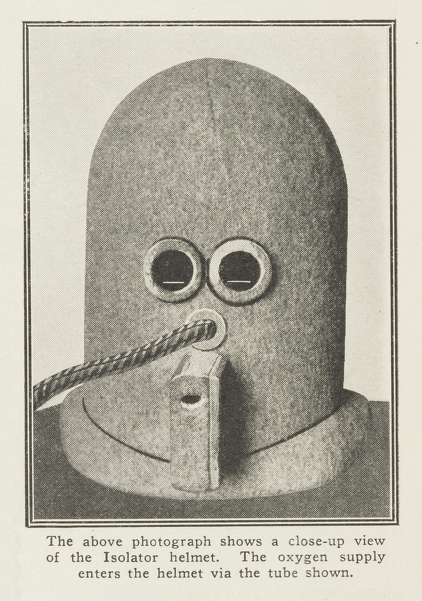
Hugo Gernsback’s Contribution To The World: The 1925 Isolator

"The greatest difficulty that the human mind has to contend with is lack of concentration, mainly due to outside influences.

If, by one stroke, we can do away with these influences, we will not only be benefitted greatly thereby, but our work would be accomplished more quickly and the results would be vastly better.

[...]

It will be noted that the glass windows directly in front of the eyes are black. The construction involved the use of ordinary window glass, the outer glass being painted entirely black. Two small white lines were scratched into the paint, as shown. The idea of this is as follows:

The writer thought that shutting out the noises was not sufficient. The eye would still wander around, thereby distracting attention. By having the two white lines scratched on the glass, the field through which the eye can move is comparatively small."

Prescient satirical concept… or perhaps he was serious:

According to [Steve Silberman, author of NeuroTribes: The Legacy of Autism and the Future of Neurodiversity, 2015] Gernsback himself may have been “an undiagnosed Aspergian”: “His peers regarded him as an unsociable figure who remained coolly distant from the communities he created. The people he counted as friends tended to be prominent scientists, influential politicians, and other notable figures with whom he corresponded by mail; historian James Gunn observed in Alternate Worlds that he was ‘a strange mixture of personal reserve and aggressive salesmanship’.

Silberman refers to the Isolator in particular as Gernsback’s “most blatantly autistic creation”.

Read the full description of The Isolator from the July 1925 edition of Science and Invention.

The Hugo Awards were named after Hugo Gernsback, who is regarded as “The Father of Science Fiction”.

[Found here.]

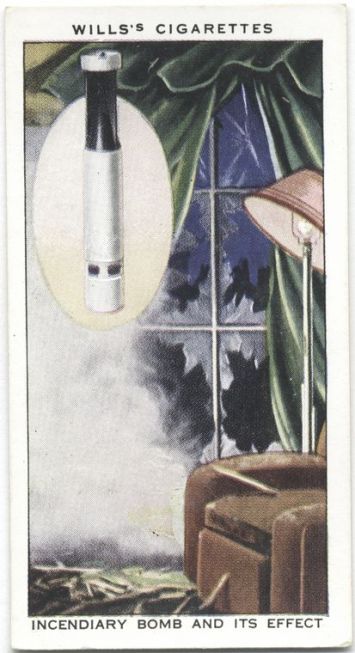
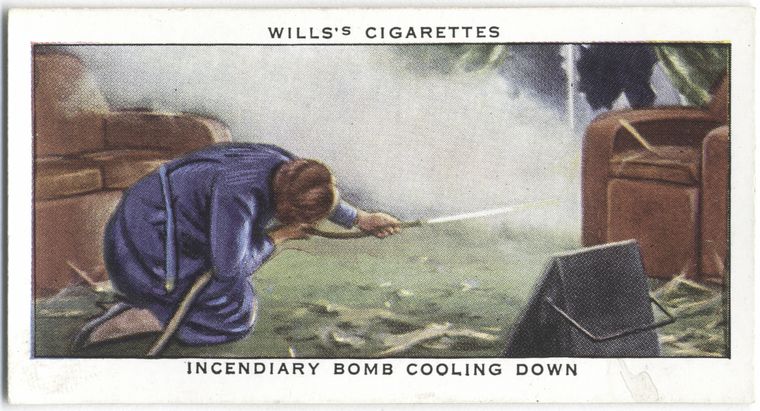
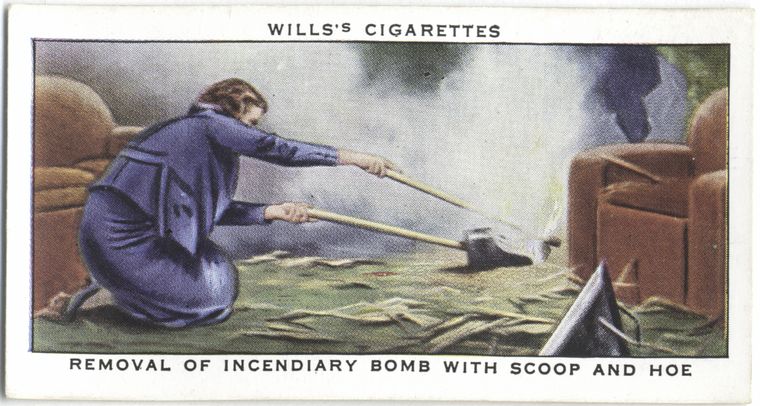
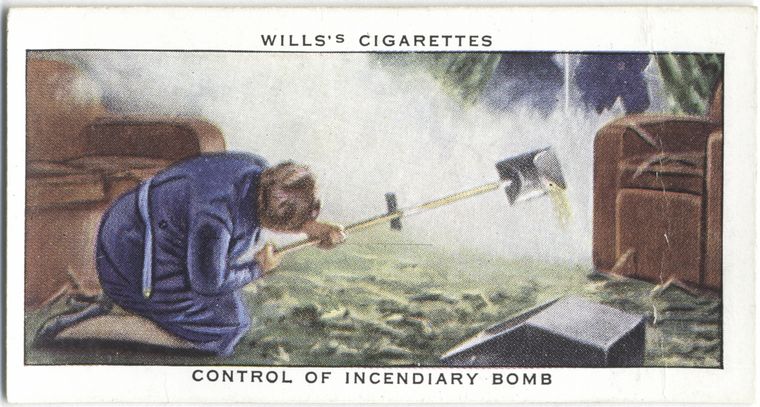
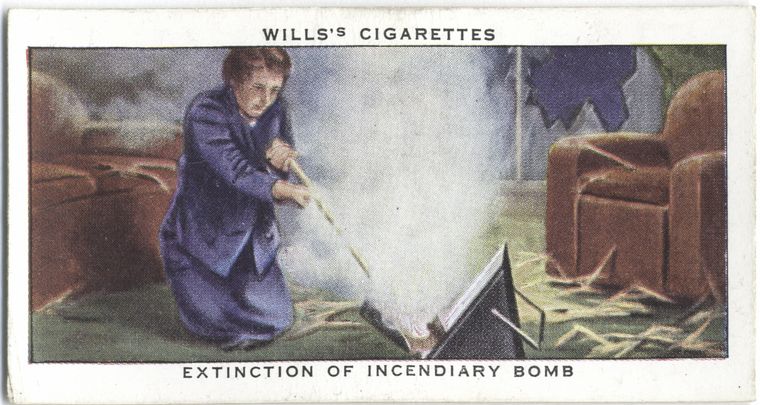
More Wills’ Cigarette Cards – Civilian Defense Tips in WWII Britain

For many years it was the practice for cigarette manufacturers to put what was called a ‘cigarette card’ inside each packet of cigarettes. These and others were produced by the cigarette company ‘Wills, in collaboration with the ARP (Air Raid Precautions), an organisation dedicated to the protection of civilians from the danger of air-raids.

[Images found in here. Related post here.]

Wills’ Cigarette Cards – Civilian Defense Tips in WWII Britain

For many years it was the practice for cigarette manufacturers to put what was called a ‘cigarette card’ inside each packet of cigarettes. These and others were produced by the cigarette company ‘Wills, in collaboration with the ARP (Air Raid Precautions), an organisation dedicated to the protection of civilians from the danger of air-raids.

[Found in here. Related post here.]

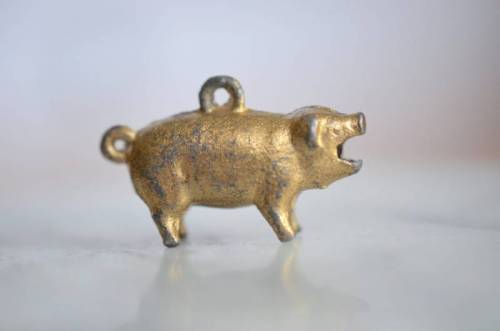
Little Porky Peeper

In the mid-19th Century, not long after the invention of photography, John Benjamin Dancer (1812 – 1887) began printing tiny photographs onto glass slides at his studio in Liverpool, England. In Paris, René Dagron (1817 – 1900) wondered how to circumvent the need for an expensive microscope to view them. In 1859, Dagron patented the first Stanhope lens mounted with a mini-photograph.

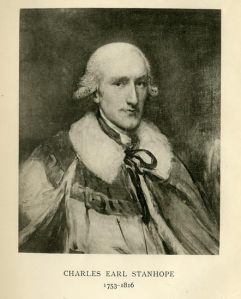
He named it after the magnifying device invented 50 years earlier by Charles Stanhope, Third Earl Stanhope (1753-1816). In the late-18th century, Stanhope invented lenses which allowed all sorts of “viewers” to house images in secret. Stanhopes, also called Bijoux Photomicroscopiques, became known as ‘peep holes’, ‘peep-eye views’ or ‘peeps’.
And this little piggy had a secret…

Continue reading “Little Porky Peeper”

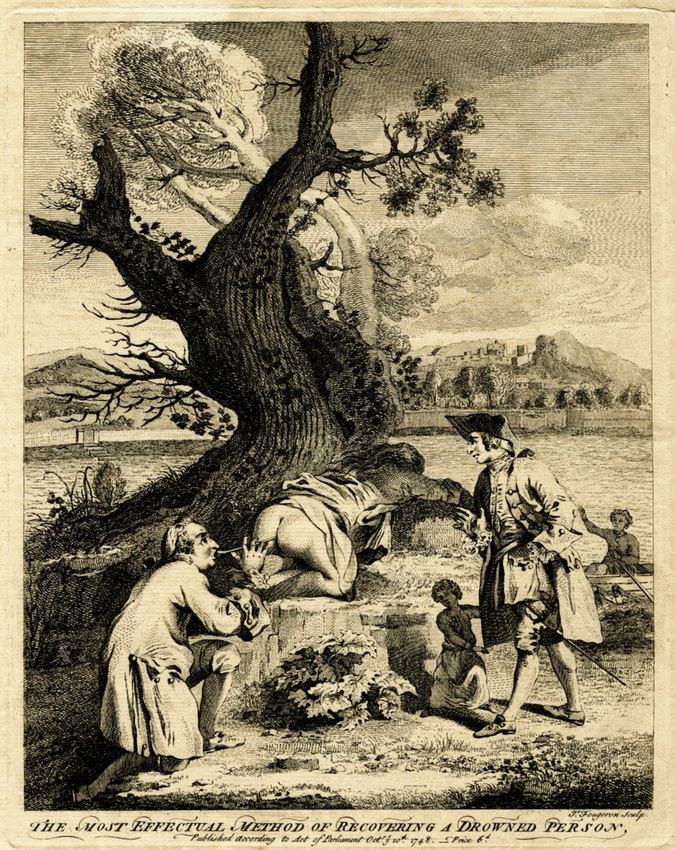
The Most Effectual Method of Recovering a Drowned Person

The Most Effectual Method of Recovering a Drowned Person, a print made by John Fougeron, satirising the French technique, 1747

In the 1730s, René Antoine Ferchault de Réaumur popularized a recent discovery: the seemingly lifeless could be revived with a wealth of strategies. This “Pliny of the Eighteenth Century” (Réaumur invented a precursor to the Celsius scale, influenced methods of silk production in China, and pioneered the process of metallic tinning still used today) wrote a pamphlet titled Avis pour donner du secours à ceux que l’on croit noyez (Advice to aid those believed drowned).

After debating the pros and cons of tickling the nose with feathers and filling a drowning man’s mouth with warm urine, Réaumur reveals what he believes to be the best technique: using a pipe stem to blow stimulating tobacco smoke into the intestines through the rectum. Louis XV found the pamphlet dazzling and encouraged its wide distribution. Startlingly, as Anton Serdeczny discusses in his recent book on reanimation, soon riverbanks across Europe were lined with “resuscitation kits”, as close-by as a contemporary defibrillator, which contained all the necessary supplies for giving a nicotine enema (and later, thankfully, included bellows as a substitute for breath).

[Source.]