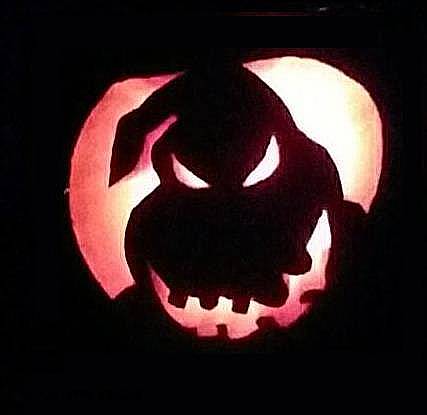
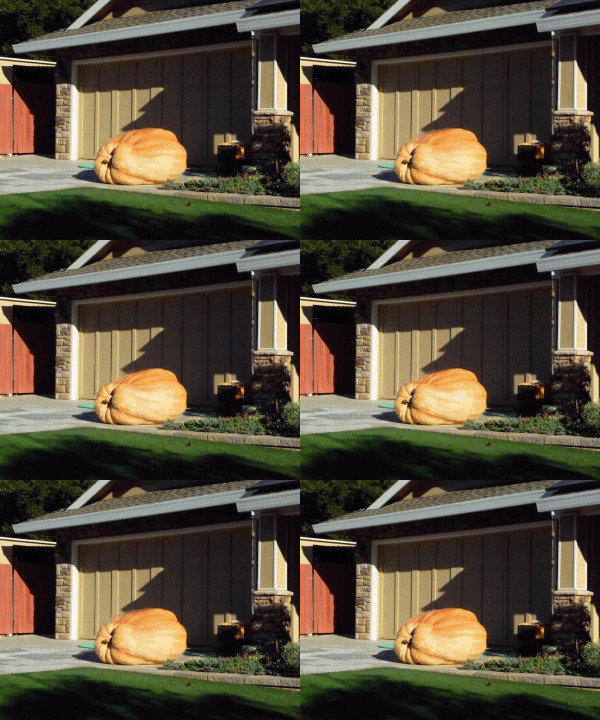
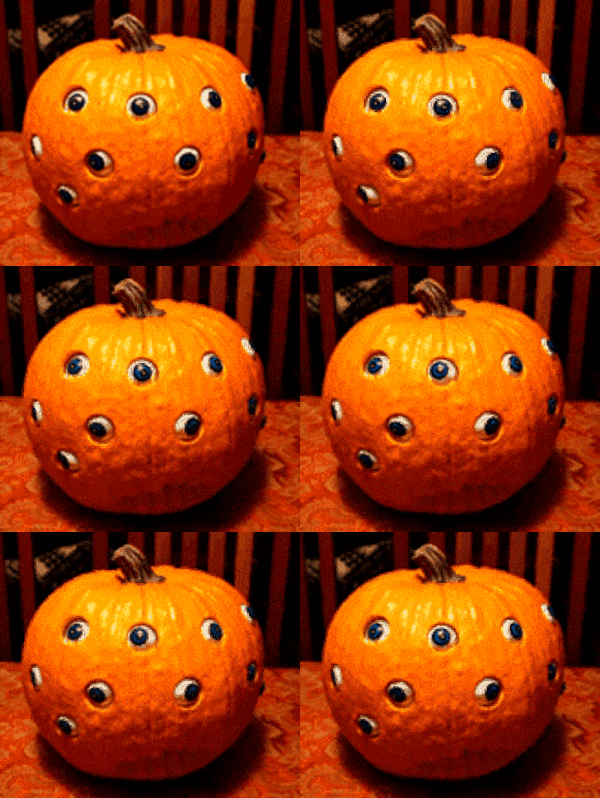
The missus carved this one freehand.
It’s the Oogie Boogie Man (as if it wasn’t obvious).

The missus carved this one freehand.
It’s the Oogie Boogie Man (as if it wasn’t obvious).
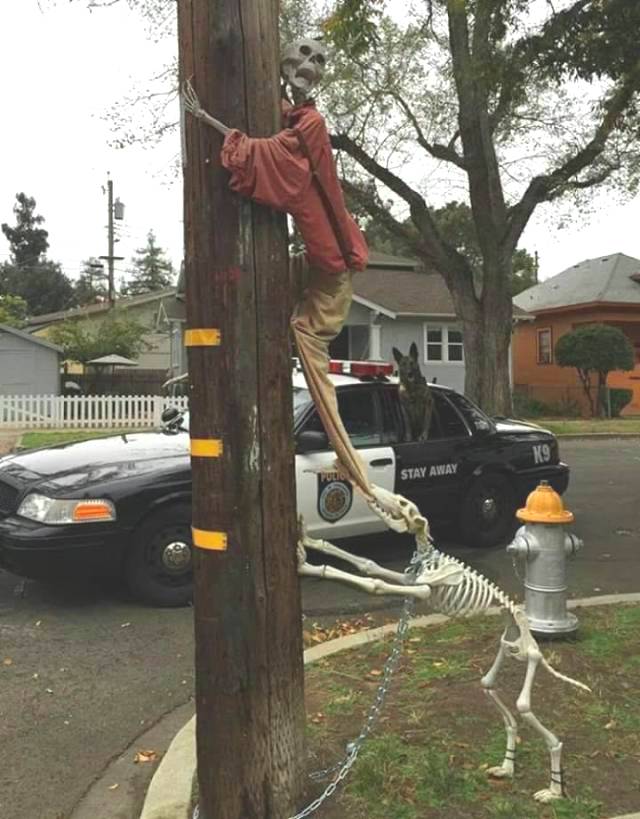
[Found here.]
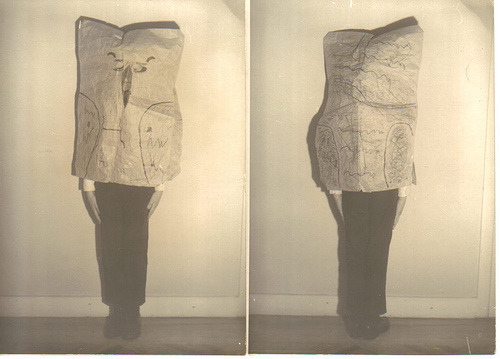
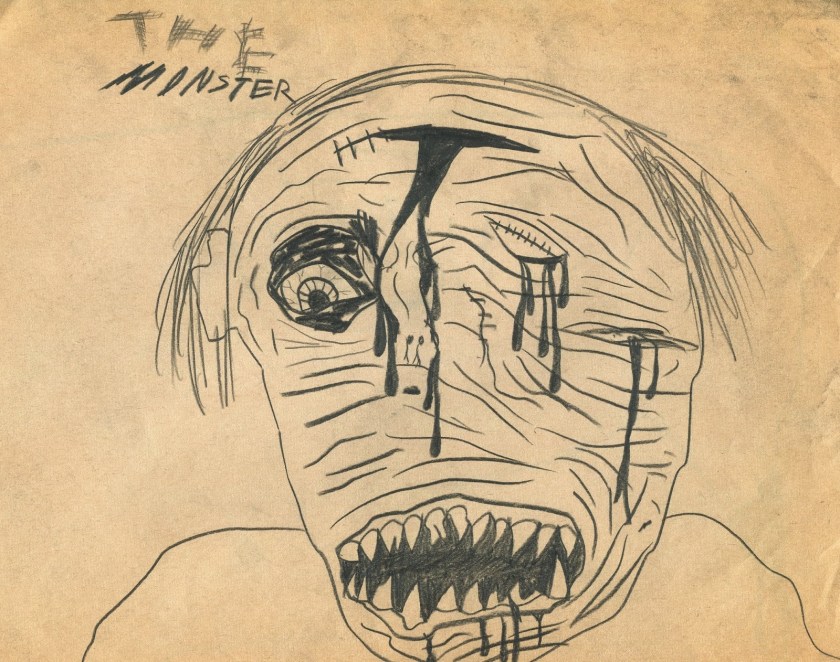
At least he tried, but that he was proud enough to get his missus to take a photo of this creepy atrocity is a different story.
[Image found here.]
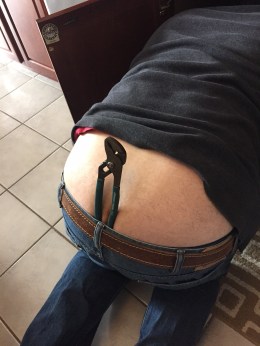
Very cool trio from Williams, Arizona, not to be confused with the Midnight Howlers of Madera, California.
Very cool trio from unknown regions, not to be confused with Ivory Joe & the Midnight Howlers of Nashville, Tennessee.
Very cool party band from Nashville, Tennessee, not to be confused with the inane and expensive Halloween costume called the Midnight Howler.
Inane and expensive Halloween costume called the Midnight Howler, not to be confused with Midnight Howler.
Okay, I’ll stop. Have a great weekend, folks. See you back here in a few short hours.
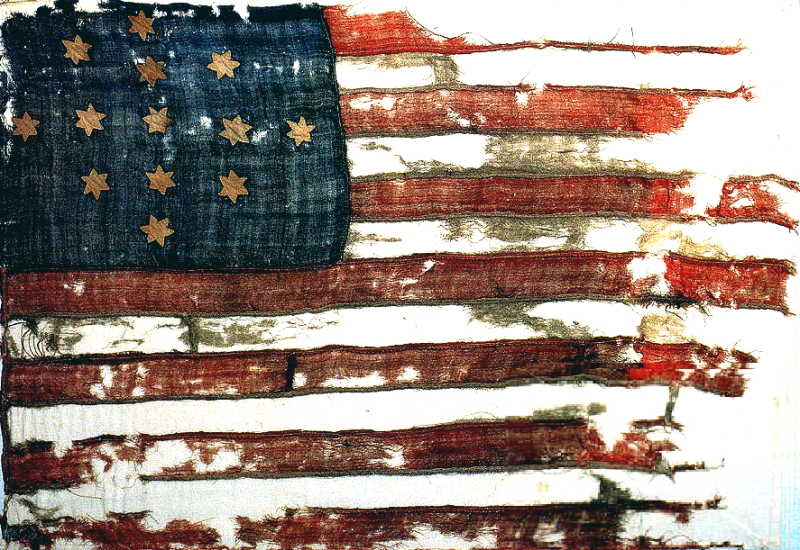
That’s the first known recording of John Philip Sousa‘s “The Stars And Stripes Forever March.” It was recorded by Kendle’s First Regiment Band on 29 December 1901 and published by Victor Records [source]. Sousa wrote in his autobiography that he composed the march on Christmas Day, 1896, while crossing the Atlantic, after he learned of the death of his band’s manager.
In 1987, an Act of Congress declared the song to be the Official National March of the United States of America.
Every person who supported cessation and fought for Independence from England was a British subject. Every person who fought against them were also subjects of The Crown. The American Revolution was fought by the British against the British.
The abuse of power by the King had become intolerable, and 13 individual colonies eventually banded together as one to fight the tyranny. The odds were not in their favor, and those colonists in the fray knew that they would be hung (or tortured to death) if they failed.
The Second Continental Congress convened in Philadelphia in the summer of 1775, shortly after the war with the British had begun. It was preceded by the First Continental Congress in the fall of 1774.
The Congress appointed George Washington as commander of the Continental Army, and authorized the raising of the army through conscription.
On July 4, 1776, the Congress issued the Declaration of Independence, which for the first time asserted the colonies’ intention to be fully independent of the mother country.
The Congress established itself as the central governing authority under the Articles of Confederation, which remained in force until 1788.
While sitting in pre-holiday traffic, I listened to The Mark Levin Show, and he played the audio of those two videos with commentary. I re-learned some history.
[More Independence Day posts in our archives.]
 Tacky Raccoons