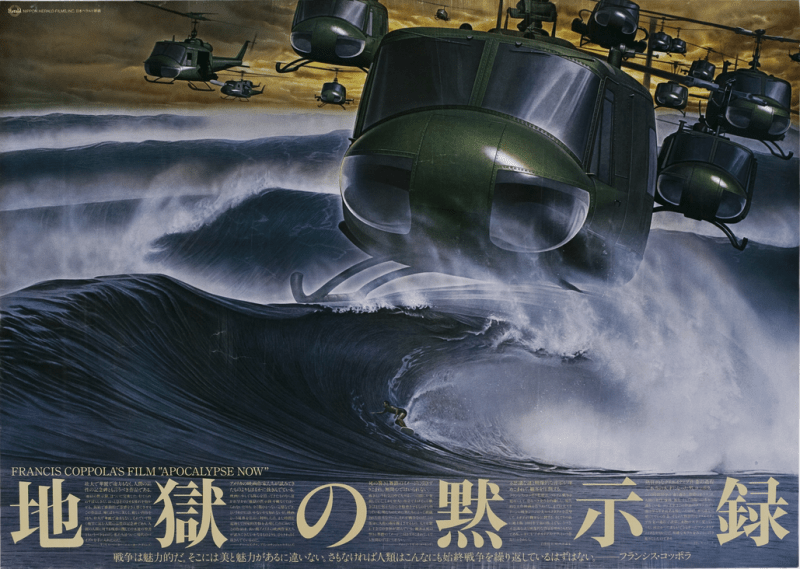
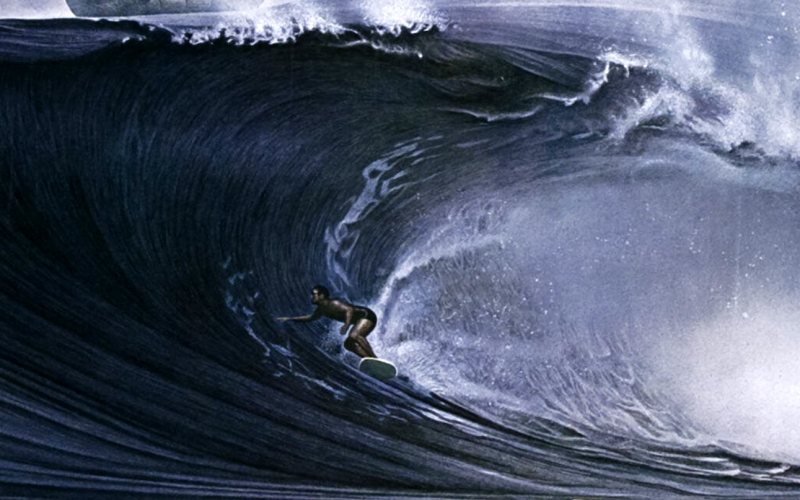
This Japanese poster for the movie Apocalypse Now (1979) was sold by Heritage Auctions on 22 March 2009 for $1,792.50 USD. The large font translates to Apocalypse of Hell.
[Found here.]

This Japanese poster for the movie Apocalypse Now (1979) was sold by Heritage Auctions on 22 March 2009 for $1,792.50 USD. The large font translates to Apocalypse of Hell.
[Found here.]
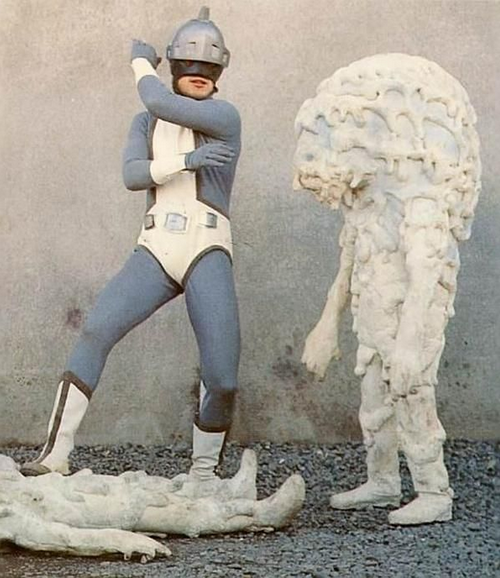
Silver Kamen was a Japanese television series in the early 1970s. It’s available on DVD.
[Image found here.]
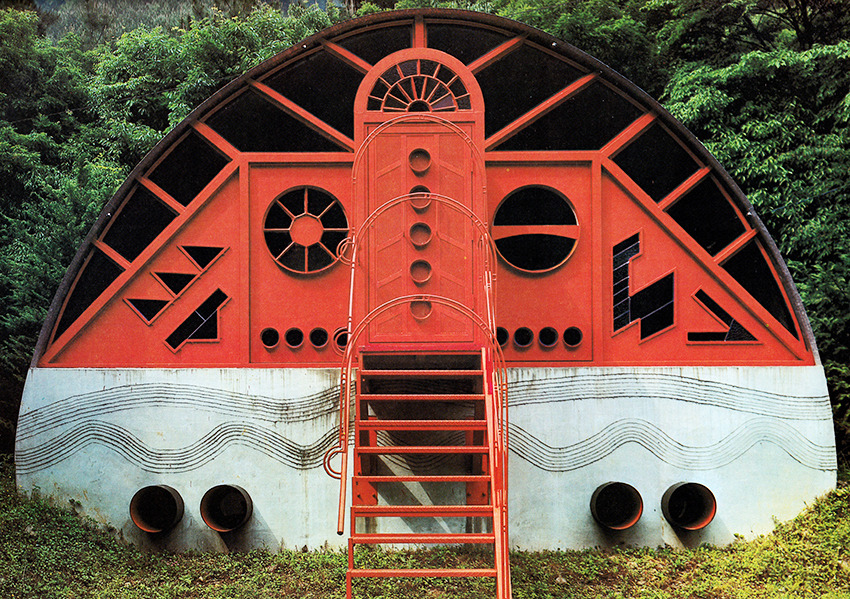
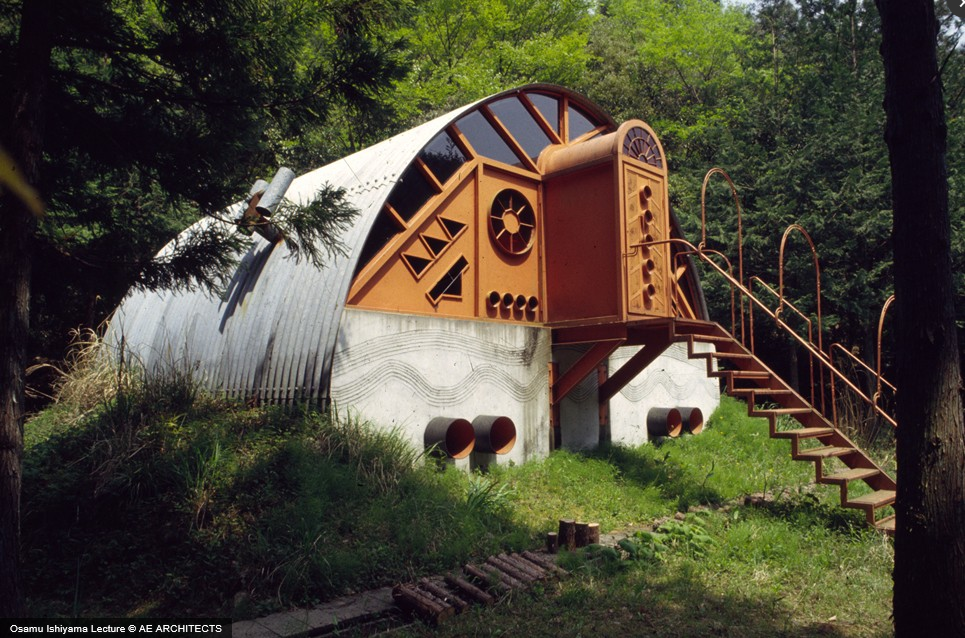
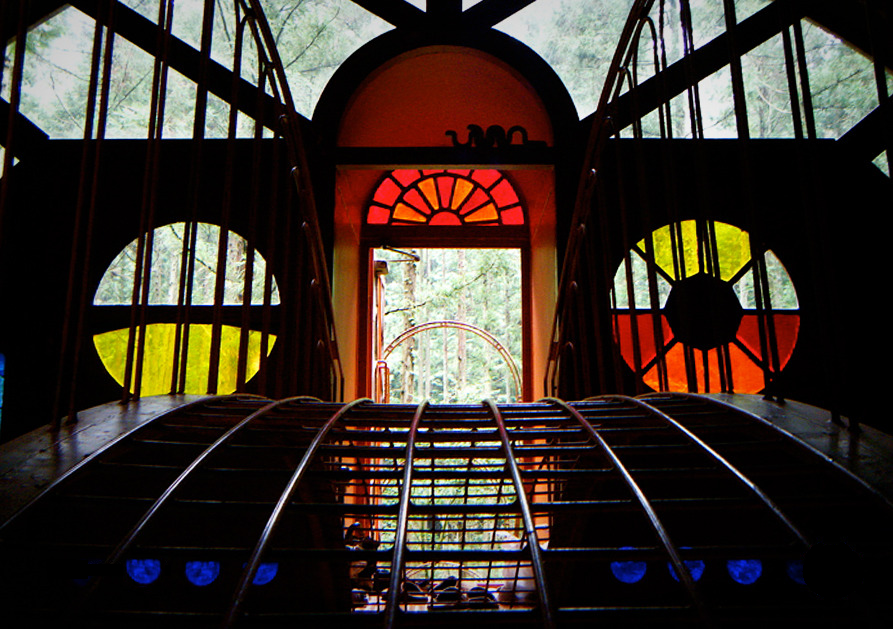
Gen-an (Fantasy Villa) house, Shinshiro, Aichi Prefecture, Japan, designed by Japanese architect Osamu Ishiyama in 1975.
Ishiyama used unconventional and industrial materials for its construction, such as giant corrugated steel tubing typically used for civil engineering projects. The house was inspired by a monk’s minimal dwelling cell.
[Images found here, here and here; description from Google AI Overview.]


[Found here via Everlasting Blört].
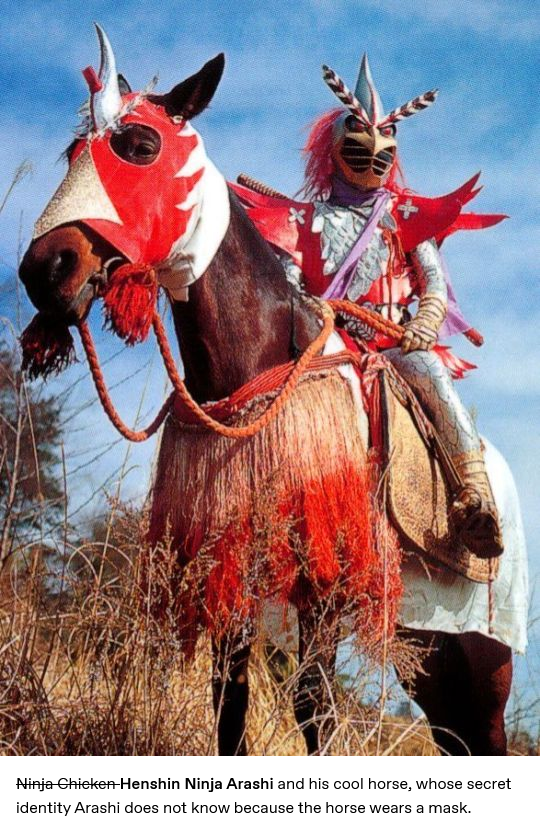
Henshin Ninja Arashi (変身忍者 嵐, roughly translated as “Storm the Transformed Ninja”) is a 1972 Jidaigeki Toku series created by Shotaro Ishinomori.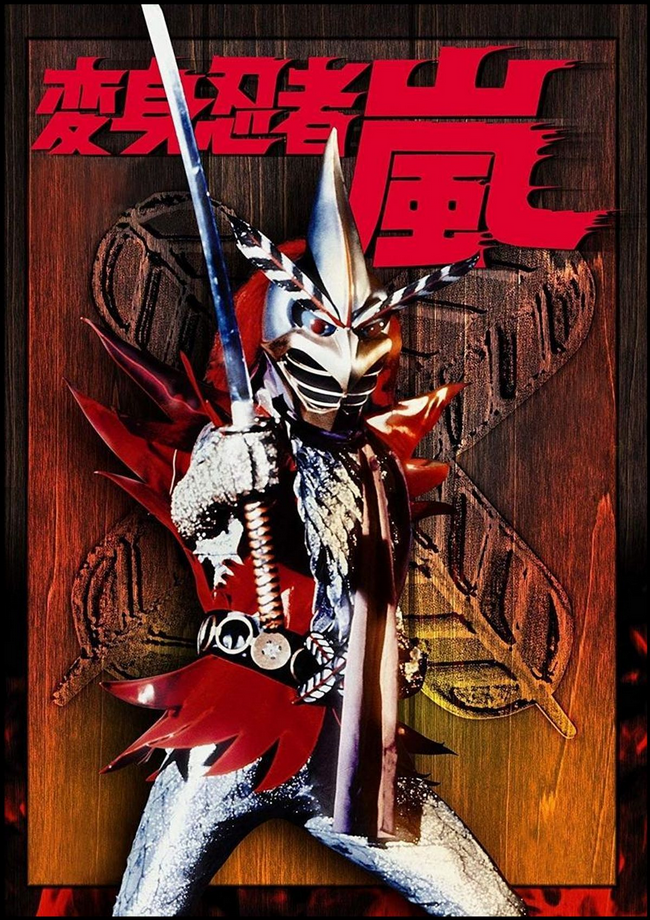
“Set in the Edo Period of Japan, the series follows a young ninja named Hayate, who is the son of a man who developed a special technique called the “Transformation Jutsu” capable of granting a superhuman form. However, their Ninja clan, the warmongering Blood Wheel Clan, begins using the Transformation Jutsu to spread fear and terror all throughout Japan as part of their campaign to conquer it.”
Riverside, The Beat Farmers (1990) From their album Loud, Plowed & Live. The Beat Farmers (1983–1995) were a great band from San Diego, California (best experienced live with lots of beer) and featured the late Country Dick Montana.
‘Sup.
Crip Walk demo.
Native American Crip Walk.
“Normally it’s pretty simple.”
Lunch Boxes [via Everlasting Blört].
She’s a grinder [via Thompson, blog].
Poor little thieves [via Nag on the Lake].
Miss Transportation [via Memo Of The Air].
“911? You may not believe this… “ [via The Feral Irishman].
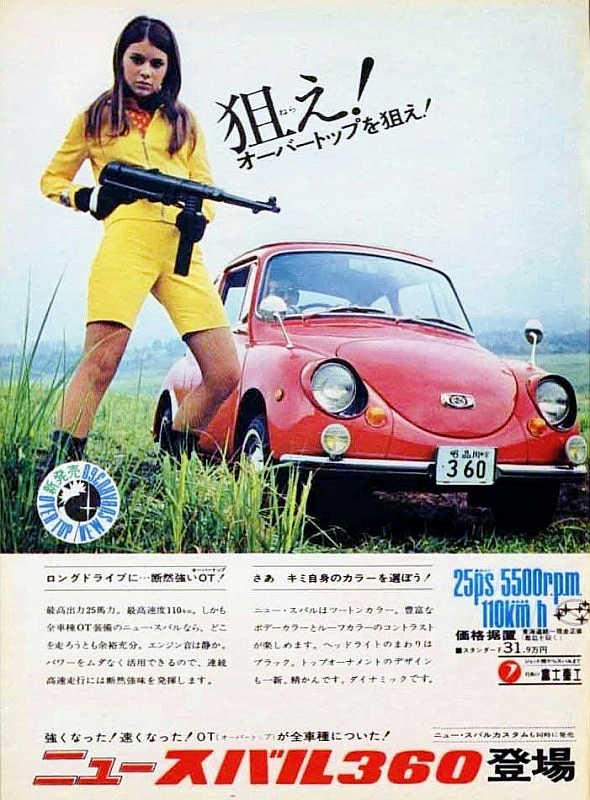
[Top image: 1967 Subaru 360 advertisement found here.]
From the Archives: 1 year ago. 5 years ago. 10 years ago. 15 years ago.
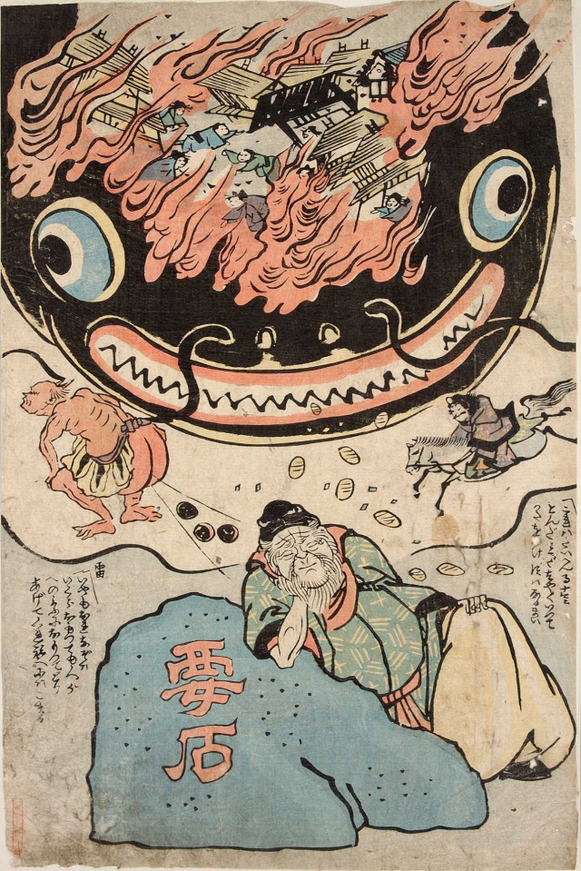
In November 1855, the Great Ansei Earthquake struck the city of Edo (now Tokyo), claiming 7,000 lives and inflicting widespread damage. Within days, a new type of color woodblock print known as namazu-e (lit. “catfish pictures”) became popular among the residents of the shaken city. These prints featured depictions of mythical giant catfish (namazu) who, according to popular legend, caused earthquakes by thrashing about in their underground lairs. In addition to providing humor and social commentary, many prints claimed to offer protection from future earthquakes.
Namazu are normally kept under control by the god Kashima using a large rock known as kaname-ishi. The Great Ansei Earthquake of 1855 is said to have occurred when Kashima went out of town and left Ebisu (god of fishing and commerce) in charge. In this print, the giant subterranean catfish unleashes destruction on the city while Ebisu sleeps on the job. Kashima rushes home on horseback while the city burns, and Raijin the thunder god defecates drums. Large gold coins fall from the sky, symbolizing the redistribution of wealth during the rebuilding phase.
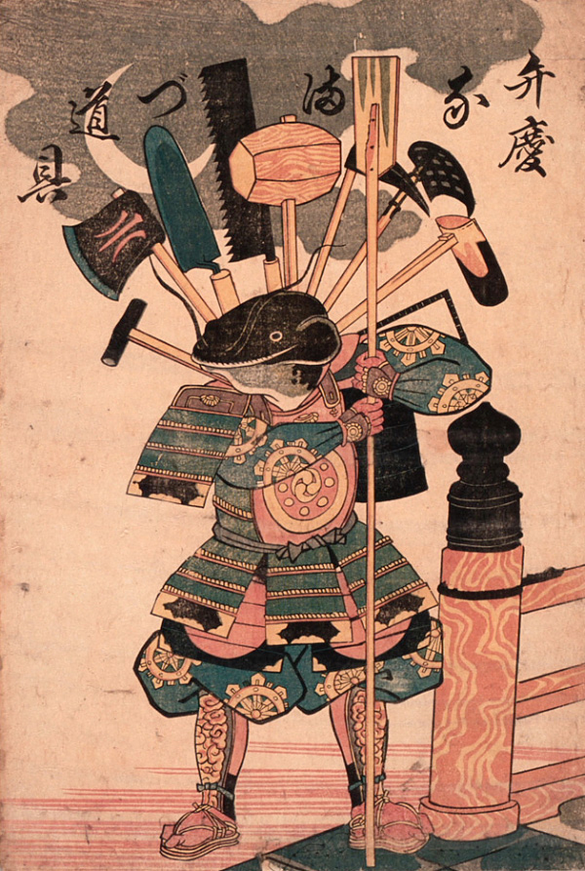
[Full story and more images found here.]

[Found here.]
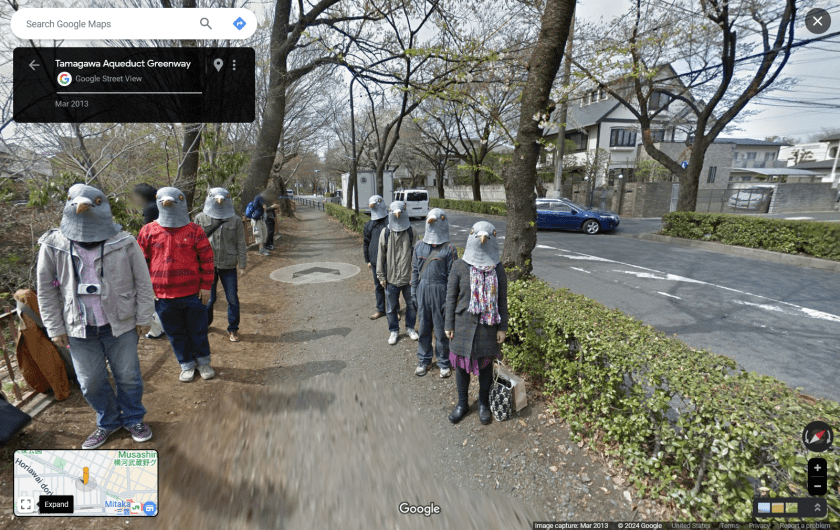
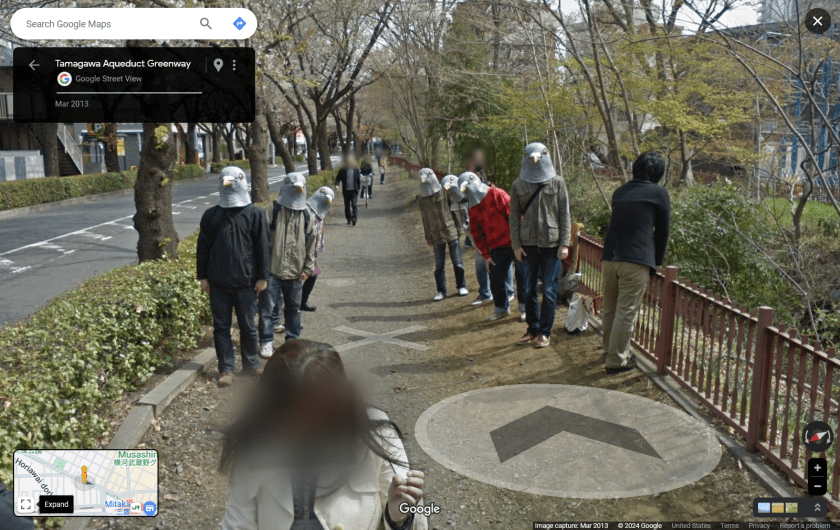
In March 2013, a Google Street View Trekker captured a flock of Pigeon People along the Tamagawa Aqueduct Greenway, Mitaka, Tokyo, Japan.
[Found here.]
 Tacky Raccoons