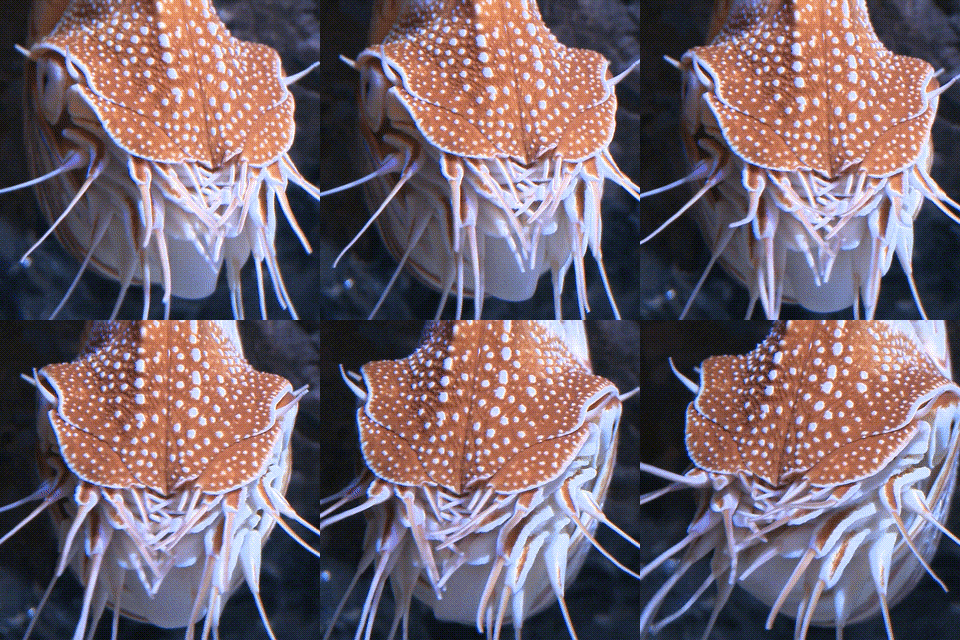



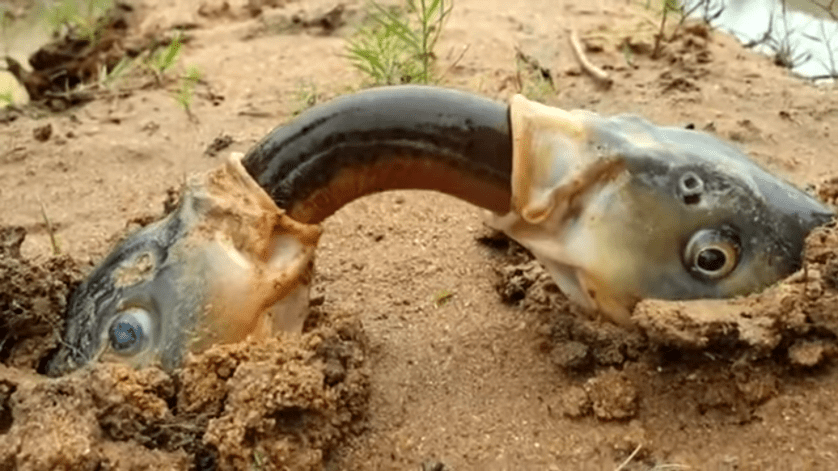
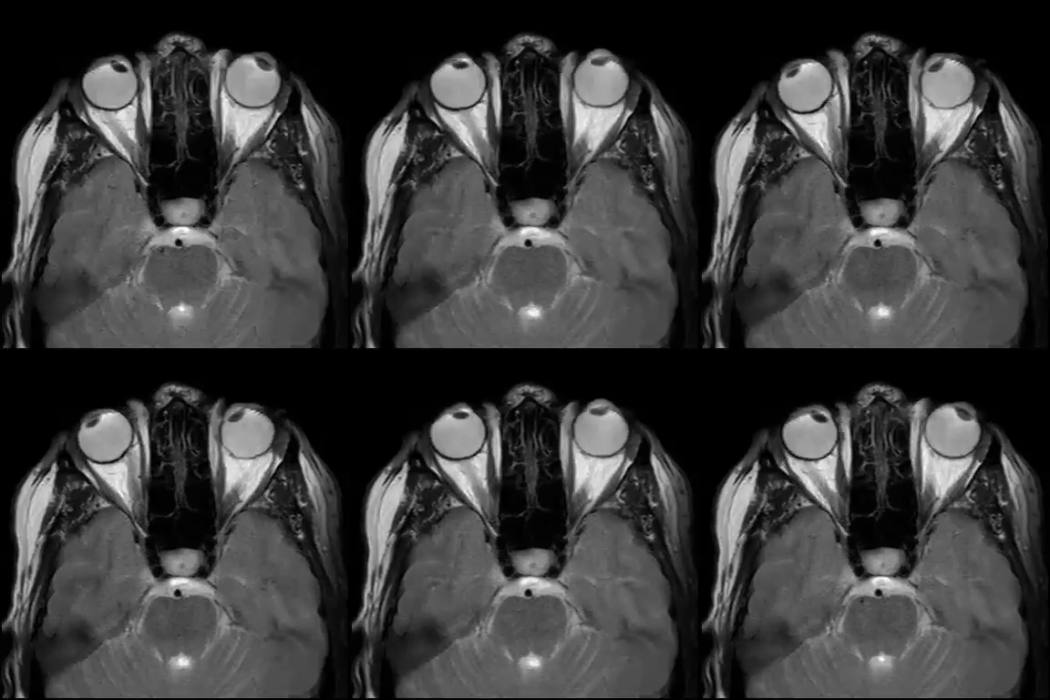
[Still from this video, linky found here. Not sure about the authenticity.]
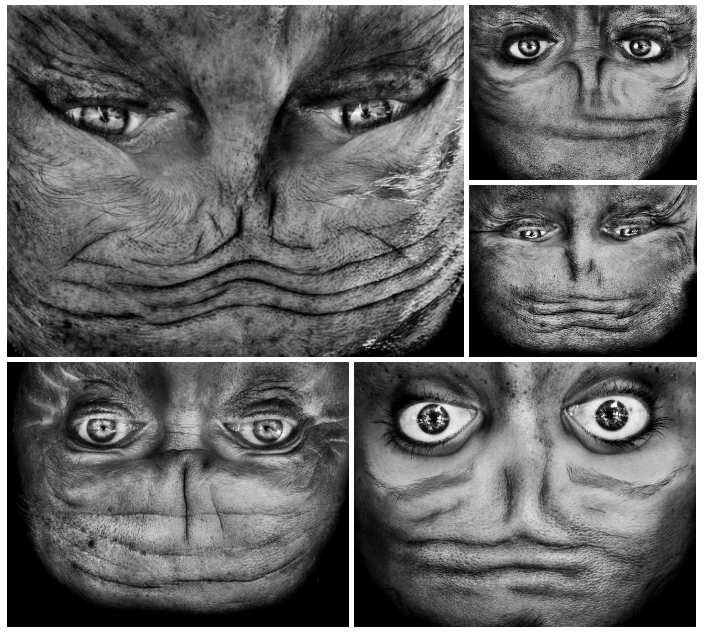
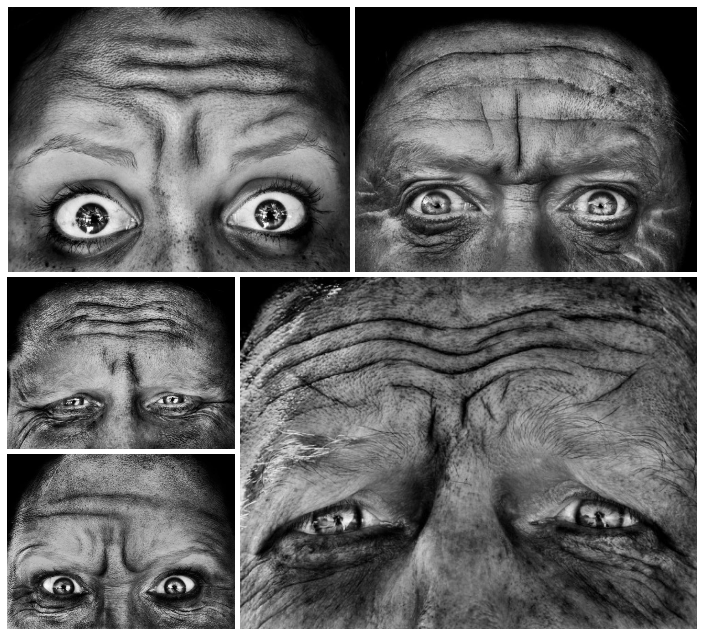
[Images by Anelia Loubser found here.]














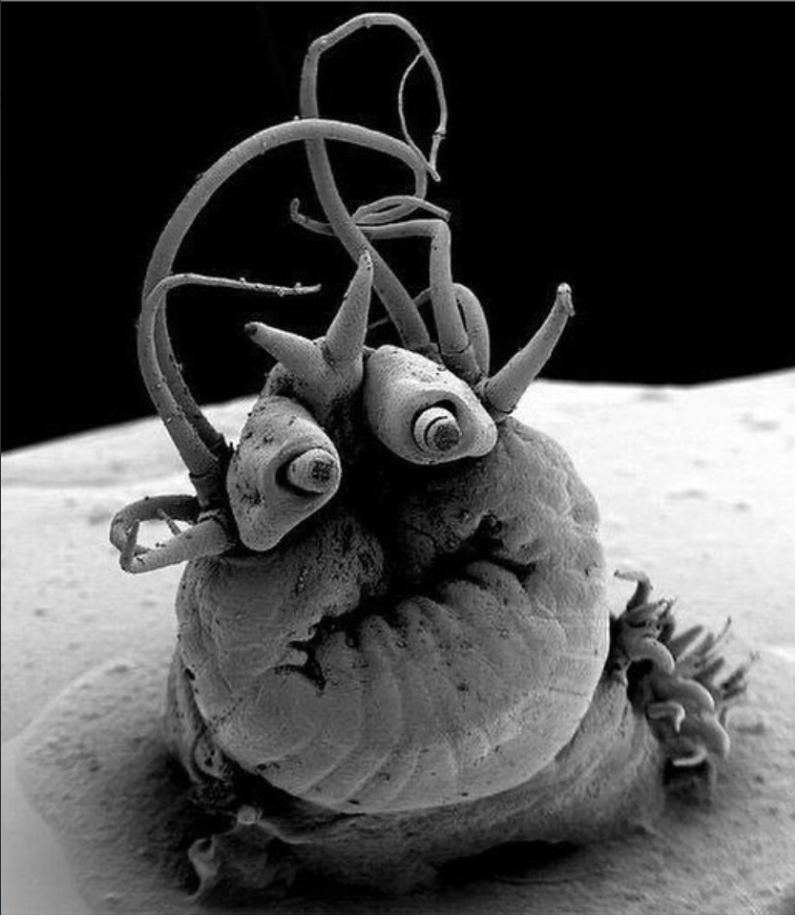
Photograph by Nicolas Gayet of the Paulo Bonifacio lab was a 2015 FEI contest winner.
Polychaetes worms are fascinating. One species are called “Zombie Worms” and includes the Osedax mucofloris, discovered in 2005. Its name translates to “bone-eating snot flower.”
[Image found here.]
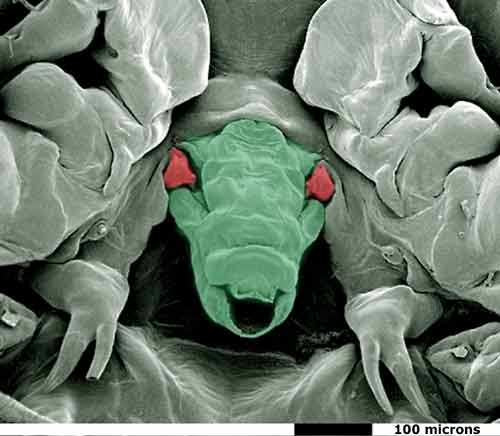
The term sea lice was inappropriately coined by residents who suffered strange rashes after swimming in coastal waters in the 1950s, according to the Florida Department of Health. (There is such a thing as actual sea lice, it turns out, but they are tiny parasites that affect fish, not humans.)
The rash that humans tend to get, on the other hand, “is caused by miniature jellyfish larvae trapped under bathing suits when in the water,” states a 2017 brochure available on the Health Department’s website.
“If pressure occurs from exercising, surfboards, lying on the beach, etc., stinging cells are released and cause itching, irritation, and welts,” the brochure continues. The larvae also like to hang out in people’s hair, so the back of the neck—where hair hangs down and touches the skin—is a common place for lesions.






 Tacky Raccoons