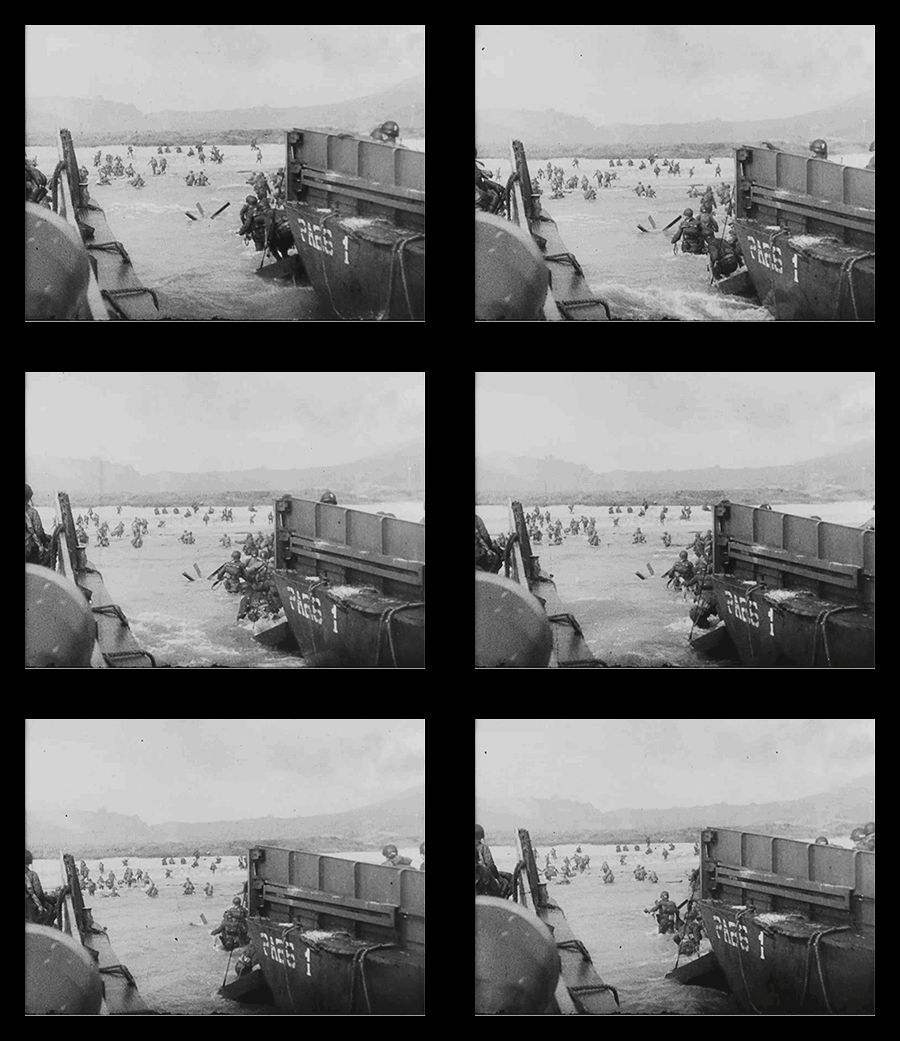
Many lives were lost
to save the lives of many more.

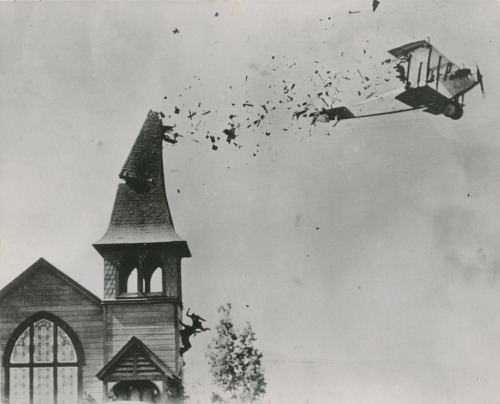
He meant to do that. Stunt pilots Lt. Ormer “Lock” Locklear and co-pilot Milton “Skeets” Elliot were filming The Skywayman, a silent movie released in 1920, and crashing the church steeple was part of the script.
From Wiki:
Principal photography on The Skywayman began on June 11, 1920, with DeMille Field 2 as the main base of operations. Despite Locklear’s public claim that new stunts “more daring ever filmed” would be involved, the production would rely heavily on models and less on actual stunt flying. Two stunts, a church steeple being toppled by Locklear’s aircraft and an aircraft-to-train transfer were both problematic and nearly ended in disaster.
Their final stunt did end in disaster, a nighttime dive that killed both Locklear and Elliot instantly when they didn’t pull up in time.
[Image found here.]

Amazing Naval weaponry: Lasers, Railguns and Hypervelocity Projectiles. If this is unclassified, just think of the stuff that is.
Greek Fire was a weapon used successfully to thwart invasions by muslim pirates in the early 7th century.
The Crusades were fought in response to Islamic aggression in the 11th century.
Who were the Barbary Pirates?
Okay, so the carpet caught fire. Big deal. It was an act of God.
Here are the rules for Kingyo-sukui.
Ruining Rock Paper Scissors. Look. Just throw the same 3 times in a row, then double your bet and throw the one that beats your previous three. Pocket your winnings and leave the neighborhood asap. Coming up next: How to get dibs on a baseball bat.
Wild Man From Borneo by Kinky Friedman. One of these days he’s going to have a Tribute band.
I’m not a “gamer” so I’m not sure what to make of The Stanley Parable, but it looks pretty cool.
[Top image from The Greatest Rock Video Under Two Minutes Ever.]
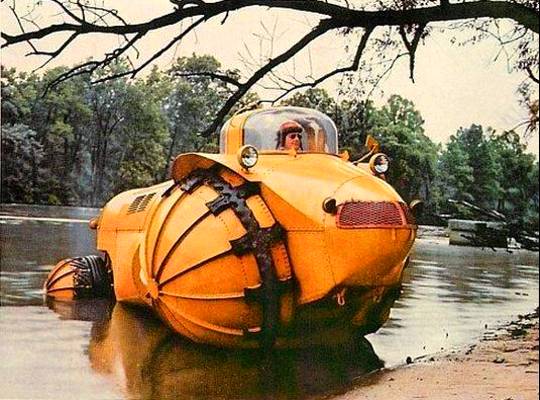
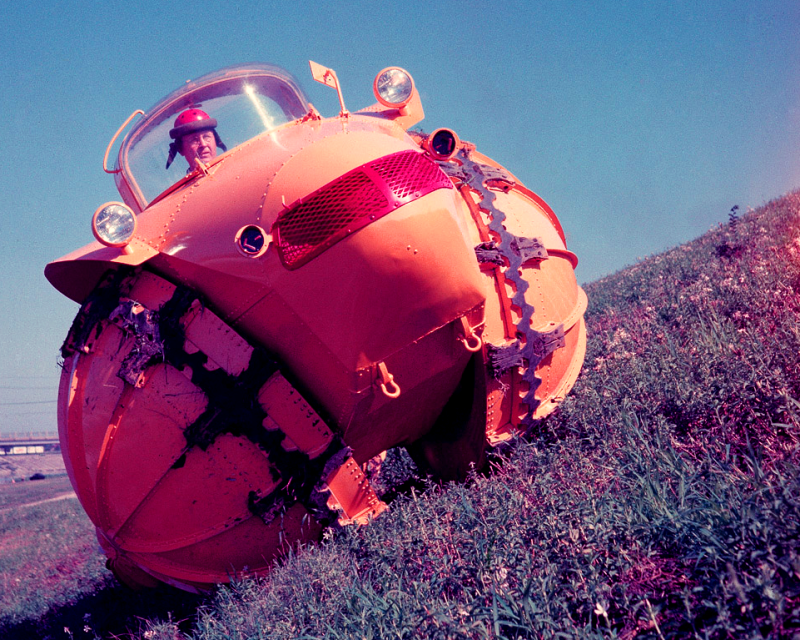
Greek-American inventor Elie Aghnides amassed a fortune coming up with clever inventions.
One of his more unusual creations was the “Rhino,” an amphibious four-wheeled vehicle designed to patrol and defend the vast roadless wastes of Alaska and Canada.
Weighing in at five tons, the four-wheel-drive machine could hit speeds of 45 miles per hour on the highway.
Defining features were its massive front wheels, which had six-foot diameters and weighed 1,500 pounds each. Their hollow, hemispherical shape gave the Rhino its unique all-terrain capability. As the vehicle sank into mud, sand, or other soft surfaces, the bearing surface of the ribbed wheels increased, giving it greater traction.
The Rhino’s massive wheels and low center of gravity also meant it could tip 75 degrees to either side without toppling over.
In the water, the hollow wheels provided flotation, while a rear water jet provided propulsion at speeds of about four miles per hour.
The Marmon-Herrington Company of Indianapolis built one prototype of the Rhino for demonstration. The United States military declined to purchase any, reportedly out of concern that the wheels could be punctured by gunfire, sinking the vehicle [via].
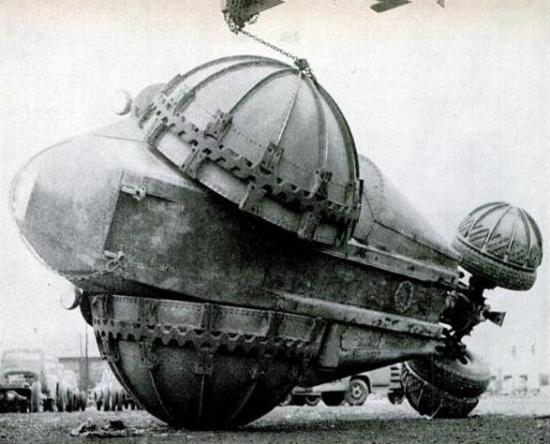
Not only could it float, it had such a low center of gravity that it was nearly impossible to overturn. Here it is in action:
Elie Aghnides didn’t stop there. He created another prototype amphibious vehicle named “The Cyclops,” but for some reason the prototype construction failed. Aghnides won a $120.5K settlement with The Marmon Group in 1972.
I want one, if only to crash Burning Man without paying.
[Images from here, here and here. Found here.]
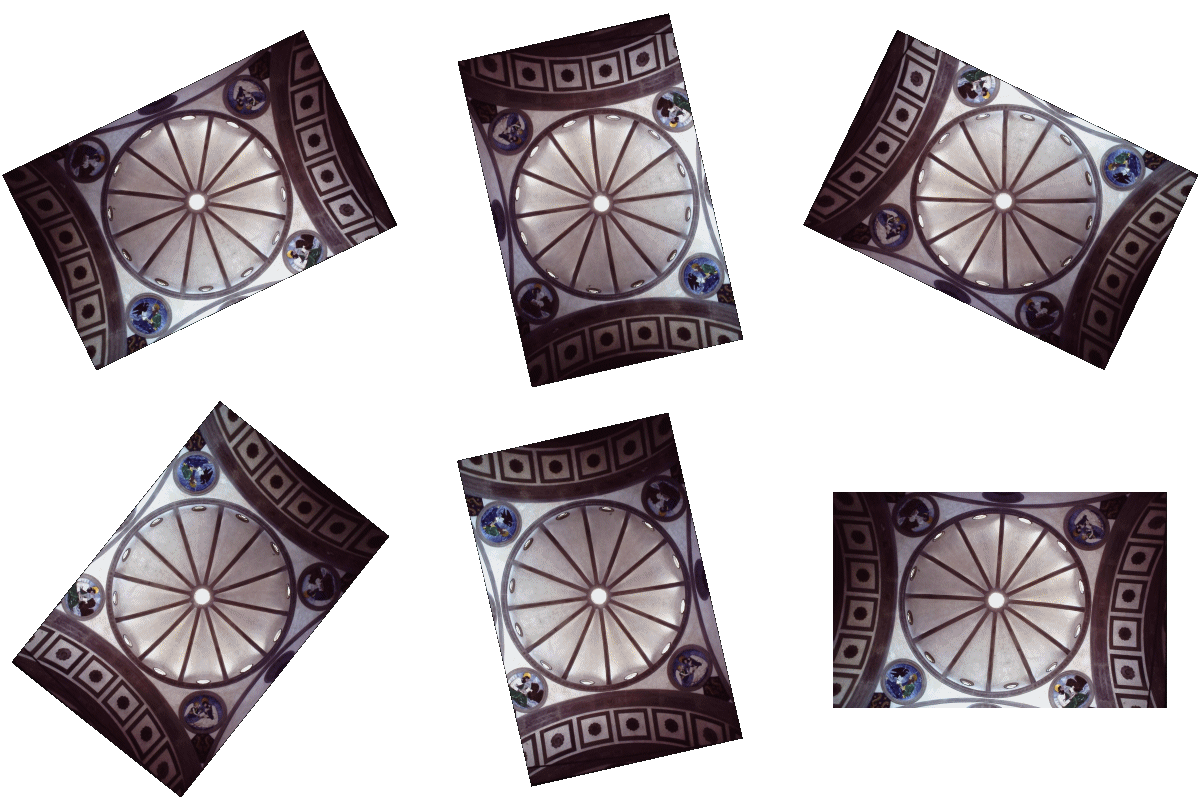
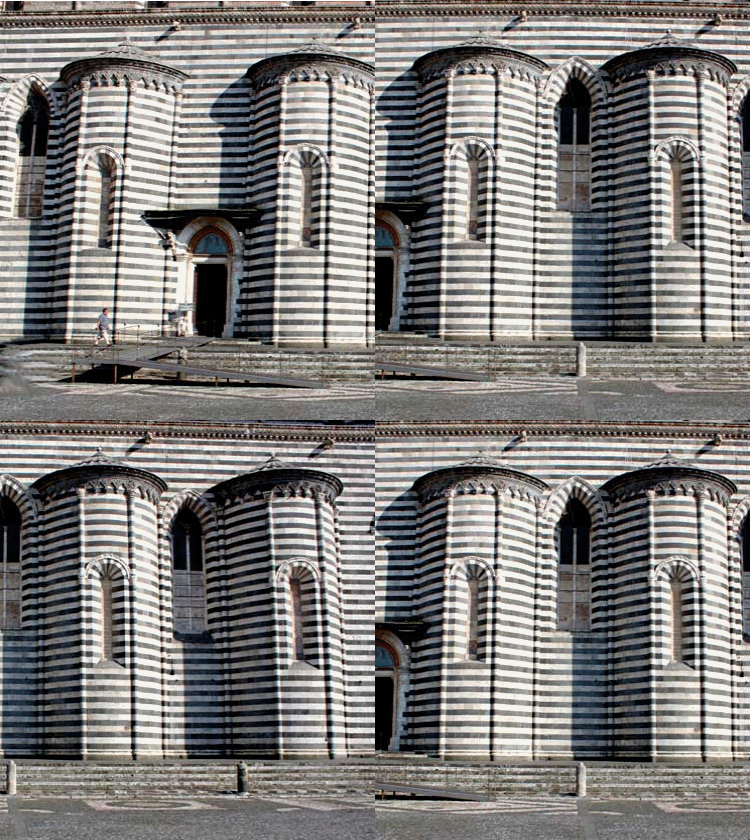
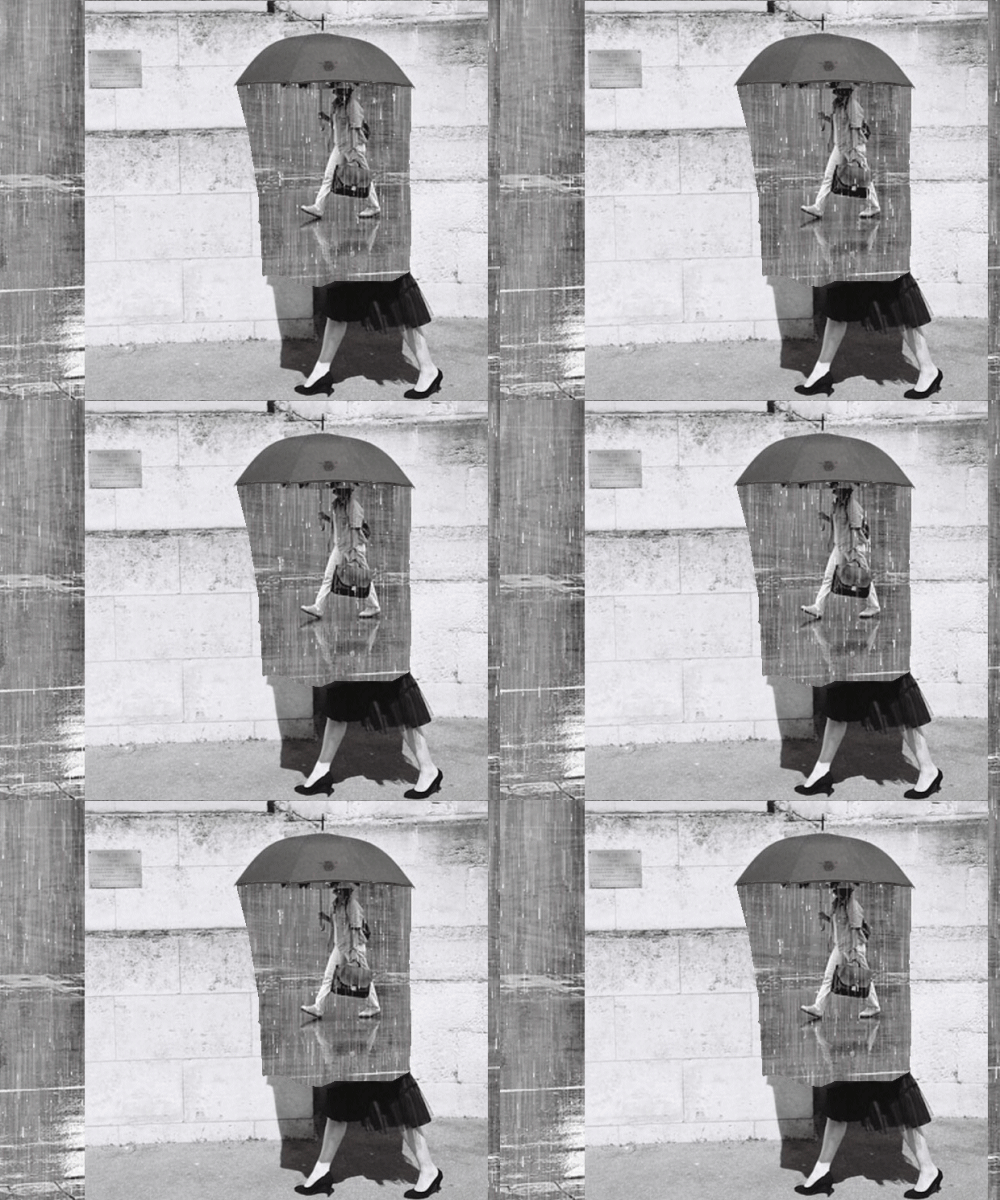
[All the above are my own contraptions.]
Update: Image sources below the break. Continue reading “The .Gif Friday Post No. 434 – Oculus Spin, Duomo Rock & Rain Brain [Updated}”
USNI News asked its readers, “What is the greatest warship of all time and why?” Though what makes a warship great is highly subjective, our readers offered their education and expertise to put forth their ideas as to what the answer to that question should be. And with nearly 900 reader-generated answers and more than 26,000 votes, the results are in.
The results are interesting, and this one amazed me.
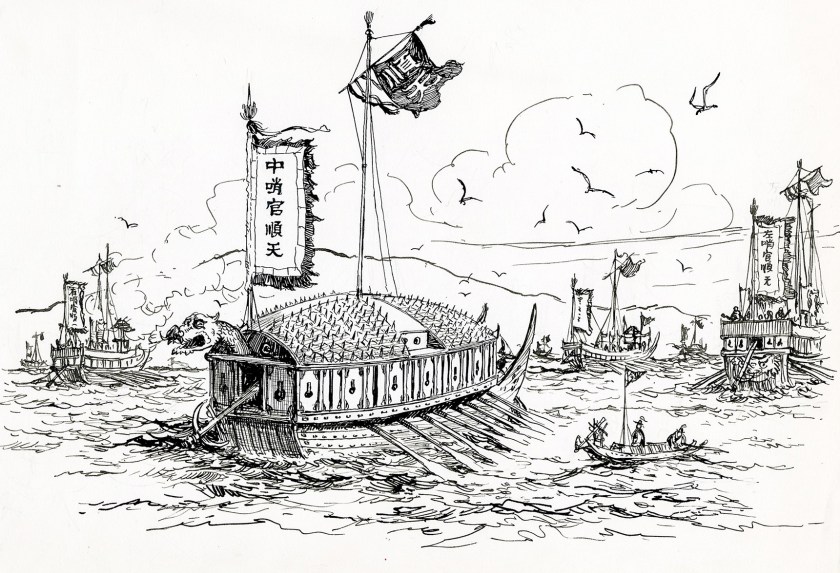
Readers also held particular esteem for the uniquely Korean “turtle boats” that came into form under Admiral Yi Sun-Shin, who in 1591 resurrected and modified the best features from designs from nearly two centuries prior to produce the Kohbukson — “turtle ship” — whose convex-covered decks resembled a turtle shell. Averaging in length from 70-110 feet, these flat-bottomed, boats, studded with spikes to prevent board and spaced with gunports, loopholes for muskets, and sporting a a powerful psychological weapon — a smoke-spewing dragon’s head at the bow — were not only virtually impenetrable, but also fast and maneuverable. The ships played a decisive role in defeating regent Toyotomi Hideyoshi’s numerically-superior fleets during Japan’s invasion of the Korean peninsula of the Imjin War of 1592-1598. The ramifications of that defeat still resonate to this day.
More on the Turtle Ships (including a link to a History Channel vid) here. See the rest of the poll winners here.
Everybody’s Marty Feldman [via].
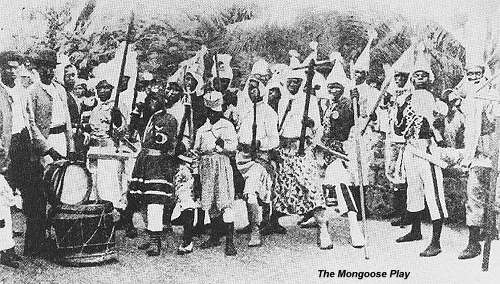
St. Kitts and Nevis. After the Spanish Conquest, mongooses were introduced to hunt and kill rats and snakes, but then they began going after chickens and became vermin themselves.
The Mongoose Play is a piece of folk theatre from Saint Kitts. The play is based around a battle against mongooses, who threatened the island’s chickens, an important food source, after having been imported to exterminate the then-raging snake and rat population. The Mongoose Play involves both dance and music performed by costumed masqueraders.
One would think that a “then-raging snake and rat population” might eventually take care of itself unless it were in equilibrium and self-supporting.
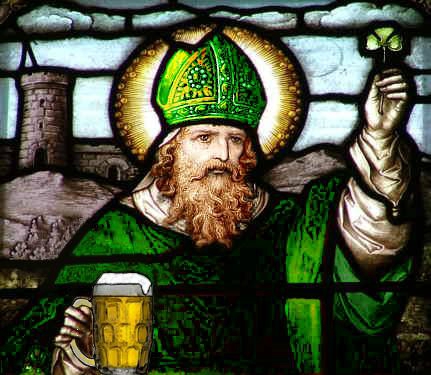
aka Saint Patrick.
[Image found here. For more St. Patrick’s Day stuff, click here and follow the links.]
 Tacky Raccoons