Classic Americana roadside advertisement of the southeast.
If you See Ruby Falls, you might as well See Rock City; both should be on everyone’s bucket list.
[Images above from all over the internest.]

Classic Americana roadside advertisement of the southeast.
If you See Ruby Falls, you might as well See Rock City; both should be on everyone’s bucket list.
[Images above from all over the internest.]
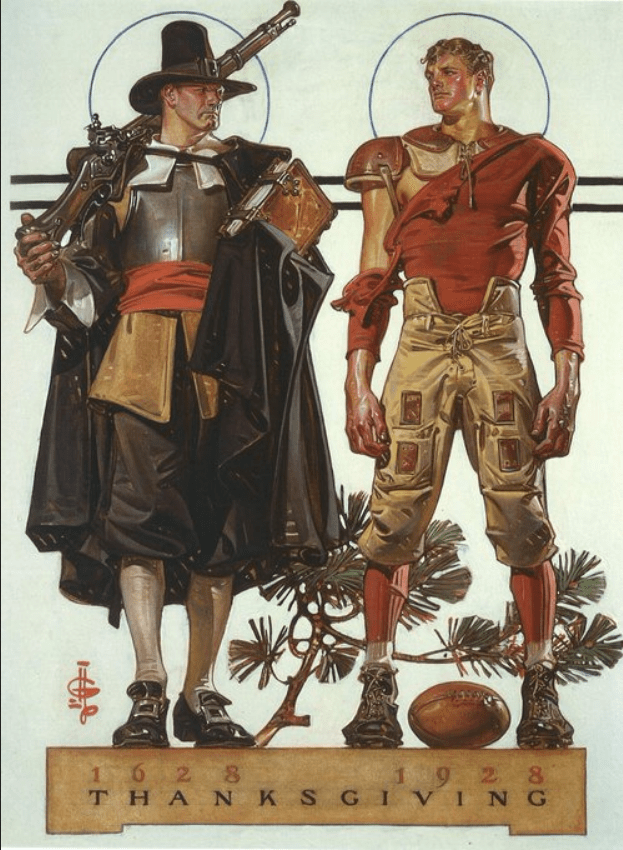
[More Thanksgiving stuff here.]
Mama Can I Go Out Tonight, Jo Ann Campbell (1959) Before you roll your eyes, Bo Diddley wrote that song – that’s him on guitar, with King Curtis on tenor sax and Jerome Green on the maracas. It was recorded for her 1959 album I’m Nobody’s Baby. Campbell had a promising career as a dancer when she transitioned to rock and roll. Promoted by Alan Freed (and appearing in his showcase movie Go Johnny Go!) she had a successful recording career, charting hits in the UK as well as the US.
When Worlds Collide Department: The Mastodon home invasion.
This cow.
[via Bunkerville}
Bibi & Fritz.
[via Mme. Jujujive]
Seatbelt safety flaw.
[via Feral Irishman]
The House of Taste.
[via Memo of the Air]
“Stop licking this toad.”
[h/t Suz P.]
4th century B.C. cat sculpture.
The Day After The Night Before.
Name 50 States in 17 seconds. Go.
When Worlds Collide: The Mastodon home invasion.
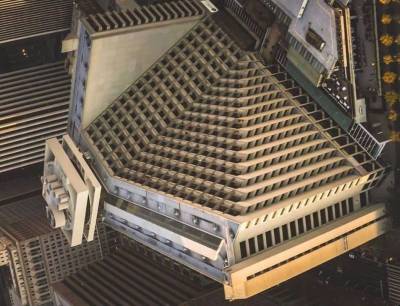
[Top image: Hyatt Regency Hotel, Zhenjiang San Francisco. found here.]
From the Archives: 1 year ago. 5 years ago. 10 years ago.

[h/t Sol R. Land]
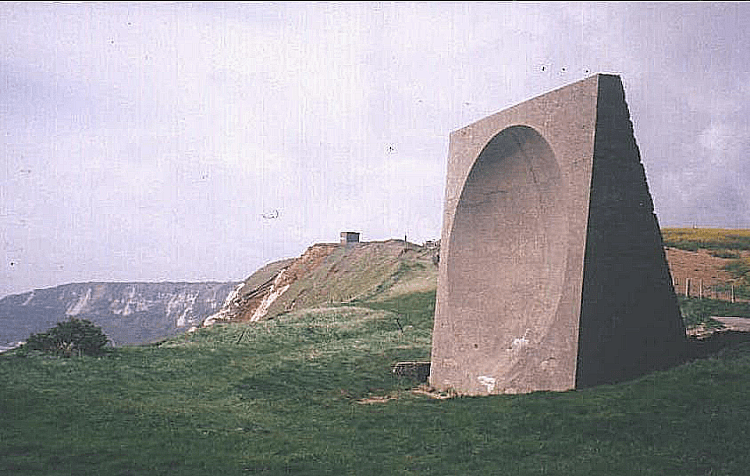
Sound or acoustic mirrors were one of the first early warning detection systems invented to give advanced notice of an approaching enemy aircraft. These worked by focusing the sound from the plane’s engine so it could be heard before it was visible.
Sound mirrors worked using a curved surface to concentrate sound waves into a central point, which were picked up by a sound collector and later by microphones. An operator using a stethoscope would be stationed near the sound mirror, and would need specialist training in identifying different sounds. Distinguishing the complexity of sound was so difficult that the operators could only listen for around 40 minutes.
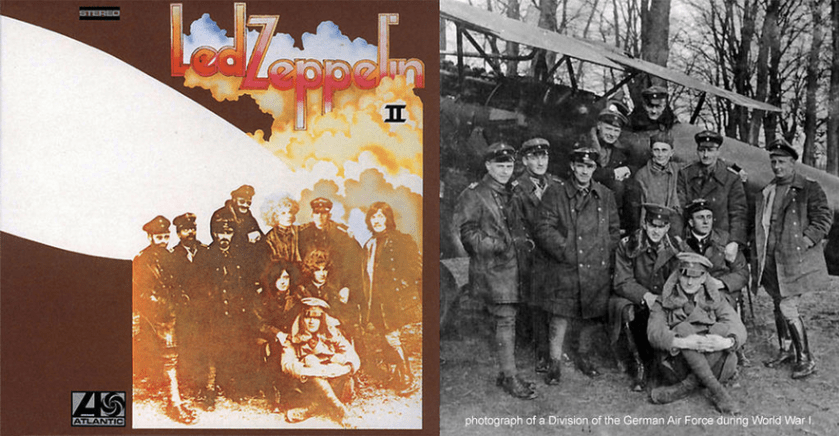
At right:
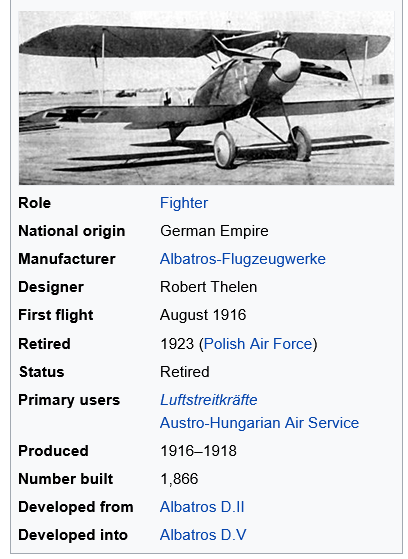
Baron Manfred Freiherr Von Richthofen sits in the cockpit of his Albatros fighter for a photograph with his squadron, Jagdstaffel III. Richthofen was credited with downing 80 Allied aircraft before being shot down over the Somme, Northern France, during what was known by pilots on both sides as ‘Bloody’ April, 1917. Manfred’s brother, Lothar, is seated at front (fur collar).
At left:
Album cover art from 1969, with silhouette of the 1937 Hindenburg disaster and a bit of proto-photoshopoopage.
[Found here, caption from here.]
Update: From the wikiness:


The Picasso of circus art.
Fred G. Johnson’s (1892 – 1990) banners were used to illustrate A Century of Progress for the 1933 Chicago World’s Fair His artwork also advertised the Ringling Brothers, Barnum & Bailey and Clyde Beatty circuses.
Hired by banner painter Harry Carlton Cummins to clean equipment and stick up banners, Cummins taught Johnson how to paint them, which he did, producing as many as four a day. The art is fast, subjective and made to deadline.
Not to be confused with the great Fred Johnson, bass singer for The Marcels.