
[Found here.]

[Found here.]


Robot Archie had “ARCHIE” emblazoned on his chest plate to make him easier to identify.
[Artwork by Ted Kearon found here. Click for uncropped images.]
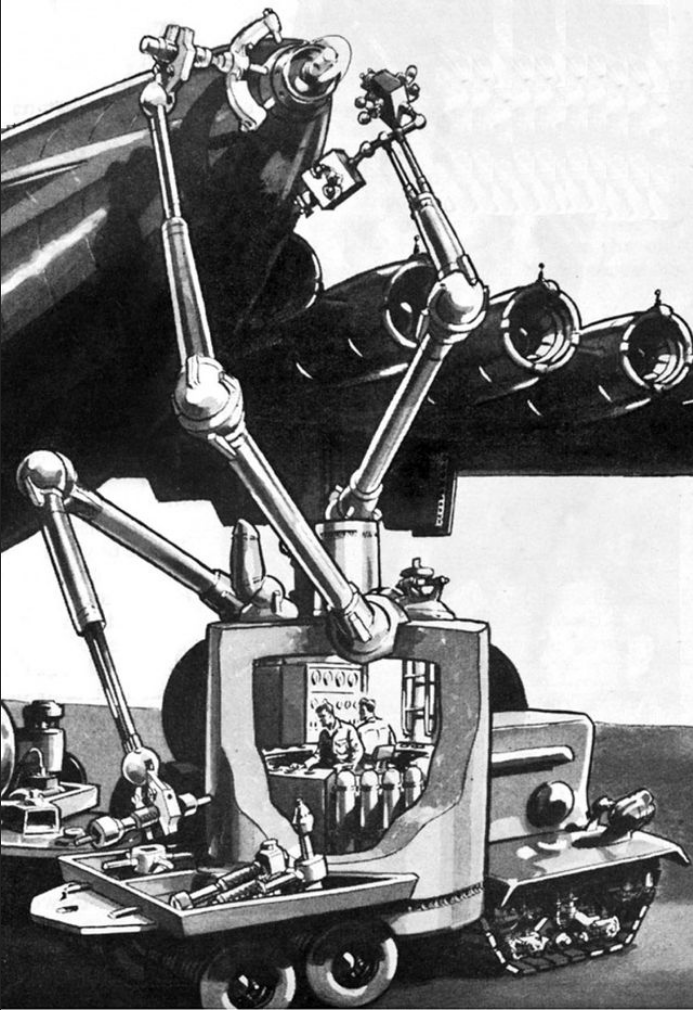
“Popular Mechanics (Sep 1956, p.90) drawing made by Frank Tinsley from designs by Lee A. Ohlinger of Northrop Aviation, Inc. of a robot mechanic for the proposed atomic-powered airplane, a star-crossed project that stumbled through 10 years and $500,000 without ever getting off the ground.”
Other designs were developed based on the concept, including the GE “Beetle” of 1961.
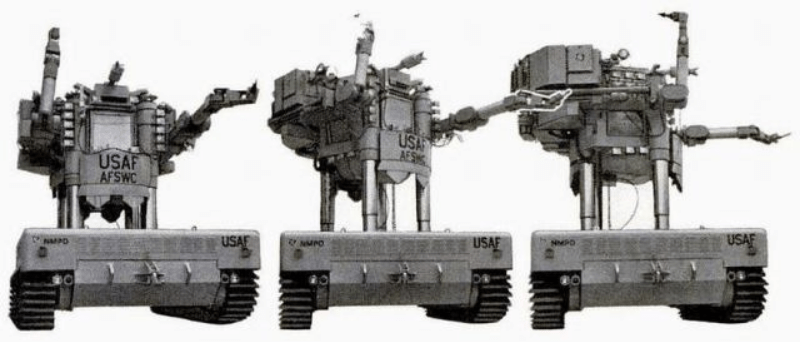

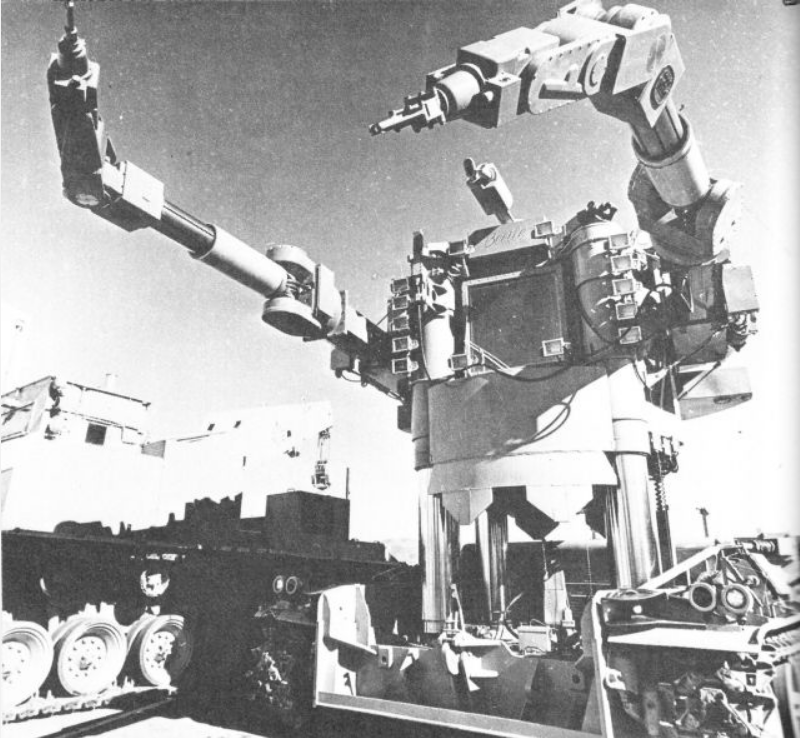
[Images & story found here.]
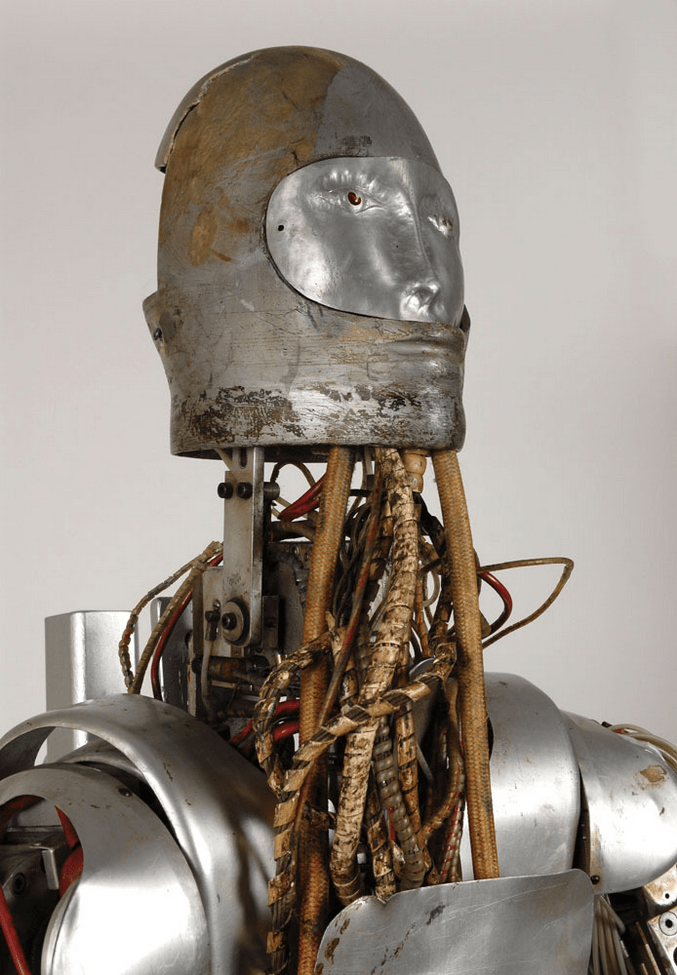


The ‘Power Driven Articulated Dummy’ project was under Contract No. NAS 9-1370 and ran from May 22, 1963 through July 31, 1965. It was originally built for Nasa’s Manned Spacecraft Center by the Illinois Institute of Technology.
The reason for a test dummy was officials hoped to use it during design and testing of a spacesuits, which might otherwise be painful, tedious or even dangerous for human beings.
The 1965 robot was able to simulate 35 basic human motions and used sensors to gather data on how the human body acted in a pressurized suit – but it never made it off the ground due to its tendency to leak oil.
Only two of these robots were created, the one selling for $80,000 and another that is owned by the Smithsonian’s National Air and Space Museum.


[Found here.]
My Good Pott, Doc Pomus & Curley Russell’s All Stars (1948)
Jerome Felder, better known as Doc Pomus, was one of the grandfathers of rock and roll. He wrote and performed rhythm & blues, a genre that belonged almost exclusively to black American artists whose 78s were often categorized as “race records.”
“By the late 1950’s he was established as one of the best songwriters in the business which is where he’d make his name and cement his legend. During that time it’s doubtful anyone buying his classic compositions performed by The Drifters, Dion & The Belmonts, Ray Charles and the ultimate white-Negro Elvis Presley, were even aware Pomus once sung this kind of music before any of those artists had even cut their first record.”
Spontaneous Lunacy – The History of Rock ‘N’ Roll – Song By Song
Another of Pomus’ contemporaries broke the R&B color barrier soon after: Ioannis Alexandres Veliotes, aka Johnny Otis.
“Doin’ dishes?”
Blowing up Stretch Armstrong.
[via Memo Of The Air]
Over 12,000 phone calls so far this year.
[via The VFLL]
Places to go: The best museum restrooms.
[via Mme. Jujujive]
#BadStockPhotosOfMyJob. (More on The Twitter.)
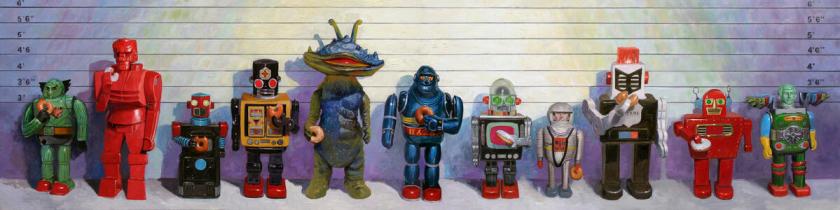
[Top image: Robot lineup found here.]
From the Archives: 1 year ago. 5 years ago. 10 years ago.




 Tacky Raccoons